


Portuguese creativity with German technology
Ritzenhoff – a world reference in designImages: Nuno Ladeiro

|
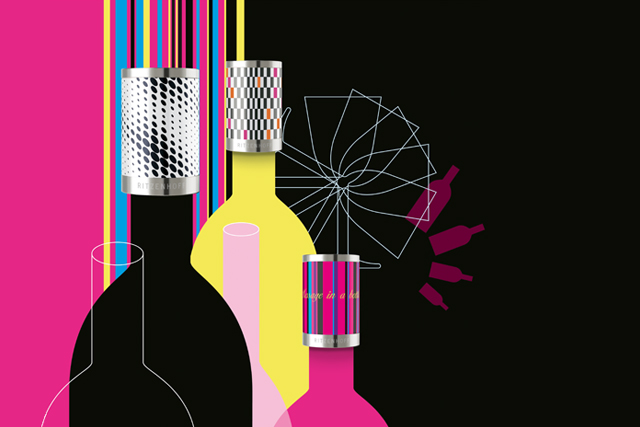
From "simply" glass manufacturer, the German brand Ritzenhoff has become, in just 10 years, a global icon in design, collaborating with more than 300 designers in creating more than 50 collections. In their list of contributors some names stand out like Alessandro Mendini, Ettore Sottsass, Karim Rashid, Michael Sieger, Massimo Iosa Ghini, Roger Selden among many others. But today, Ritzenhoff, also has Portuguese design. Angela, Helena and Nuno Ladeiro, travel through their creations to more than 50 countries, contributing to Ritzenhoff’s success story around the world, from Venezuela to Japan, China or Saudi Arabia.
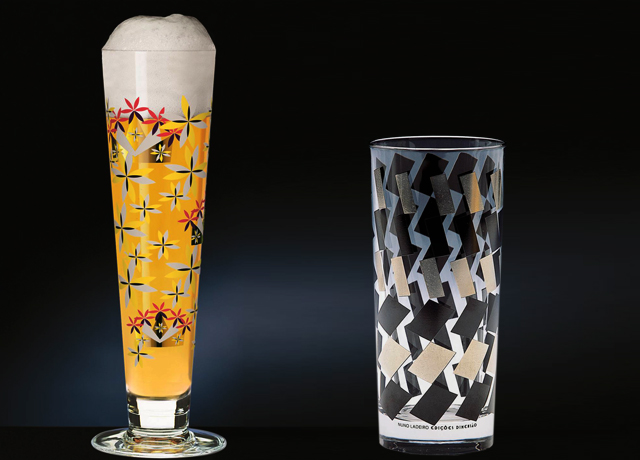
Beear and Egizia glasses - design by Nuno Ladeiro
In 1992 the Milk Association of North Rhine, Westphalia, invited Ritzenhoff glass manufacturers to develop a line of glasses to promote milk consumption. The proposal was not accepted but Ritzenhoff’s collaboration with the studio Sieger Design, the mastermind in the concept of Ritzenhoff, as we know it today, was successful. The first ten glasses decorations made a difference and caught the attention of designers, architects and art collectors. In 1994, the collaboration with two key designers, Massimo Iosa Ghini and Alessandro Mendini, launched the brand abroad, taking it to remote countries such as Iceland or Singapore.
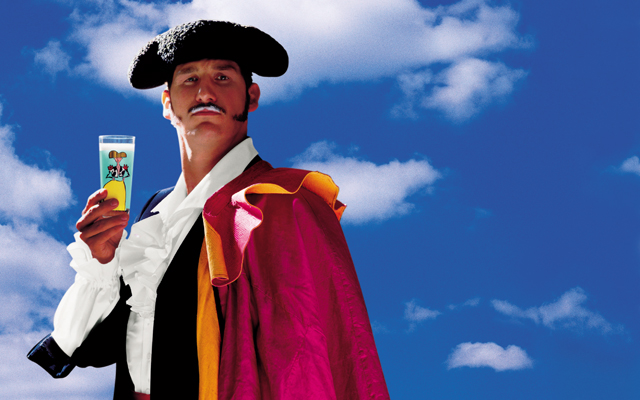
Ritzenhoff glass to promote milk consumption
Since 1995 the concept has expanded to other types of objects and glassware, "by coating them" with unique motifs and bold colours, as in works of art. Collections of beer glasses and spirit drinks were created, such as the small range "schnaps"; vases and dishes, the “champus” collection, recommended for champagne as another strong reason to celebrate, or the humorous series of ashtrays "smoking" and "light smoking", for cigars and cigarettes.
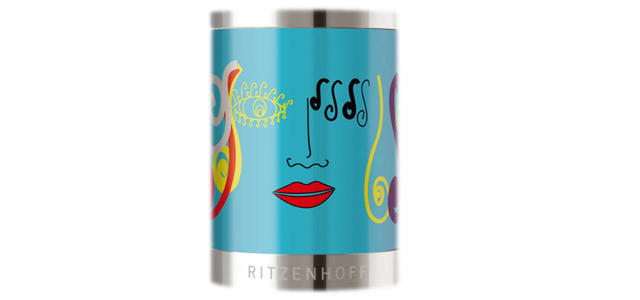
Tipsy bottle stopper - design by Nuno Ladeiro
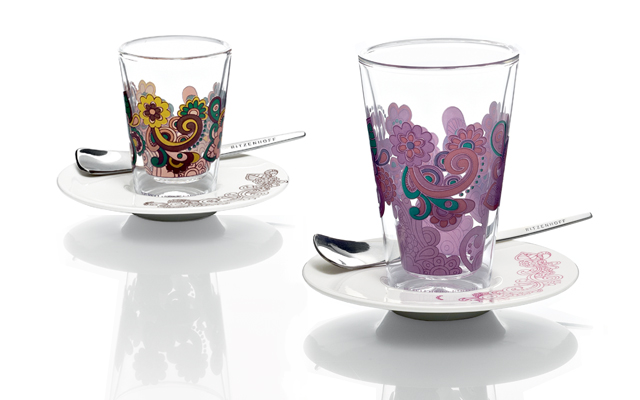
Bacino e Bacione glass cups - design by Helena Ladeiro
By the turn of the millennium the concept was extended to new materials and objects. From glass to ceramics and textiles, Ritzenhoff concept evolved and gained new dimensions: the same base form gave rise to numerous interpretations by designers, architects and artists. There are new themes, forms and decorations, creating a relationship of unprecedented closeness between the object and its user. And not only is the product itself that fascinates countless fans, originality of packaging small products that follow (as coasters or napkins, for example) and the complementarity of decorative motifs packaging / product. Thus, Ritzenhoff brand became not only a commercial success as a recognized cultural project worldwide.
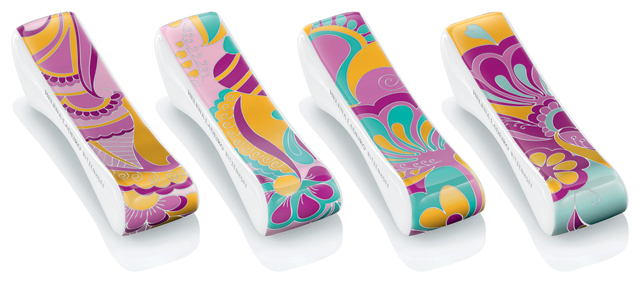
Canape cutlery holders - design by Helena Ladeiro
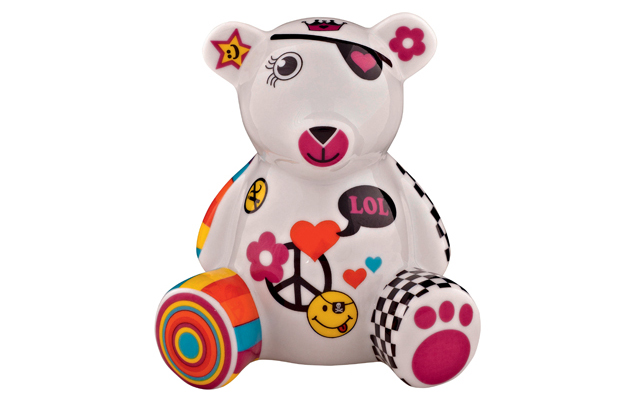
Mini Teddy Bear moneybox - design by Helena Ladeiro
The Ladeiro family began collaborating with Ritzenhoff in 1999more precisely through Helena Ladeiro. At the turn of the Millennium, Helen has created a unique design for the best-selling glass “champus”, making it a huge success, with over 50 000 units sold worldwide. From then, she became part of the elite designers who collaborate regularly with the brand. His mother, Angela Ladeiro also began collaborating with the brand after that. More recently, Nuno Ladeiro, created a proposal for the “champus” 2011/2012 which, similarly to what had already happened to Helena, became a huge success, reaching 60 000 units sold worldwide.
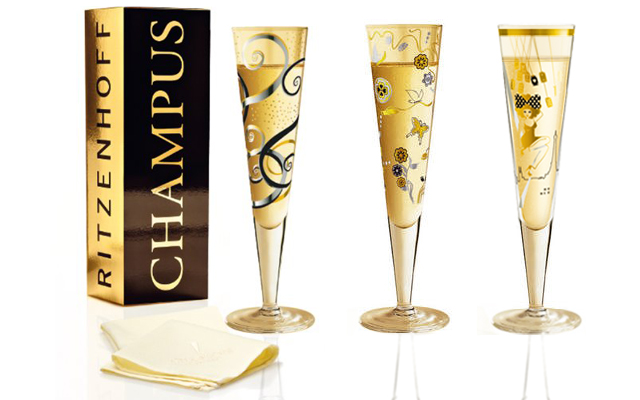
Champus flute glasses - design by Nuno Ladeiro, Helena Ladeiro e Ângela Ladeiro
It is important to notice that the selected designers have to respond with their creativity to a briefing sent by Ritzenhoff, very well prepared, which partly ensures good work by the designer. After that, the work is evaluated by a Ritzenhoff jury that, after a careful analysis, decides whether or not it is added to the collection.