


The Museum of Oriental History
An in depth view of Lisbon's Oriental Museum

|
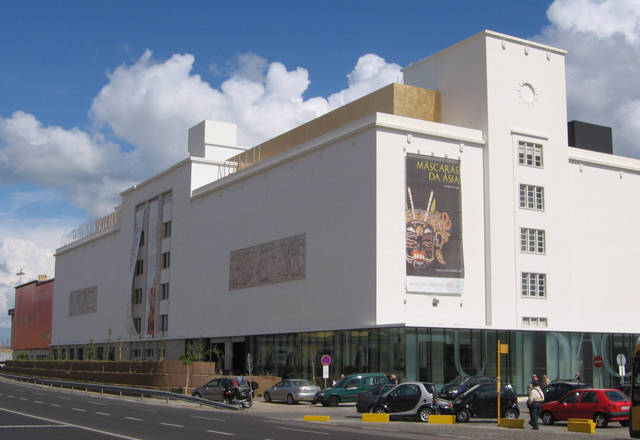
We welcome you to have this thorough view of Lisbon's Oriental Museum with us.
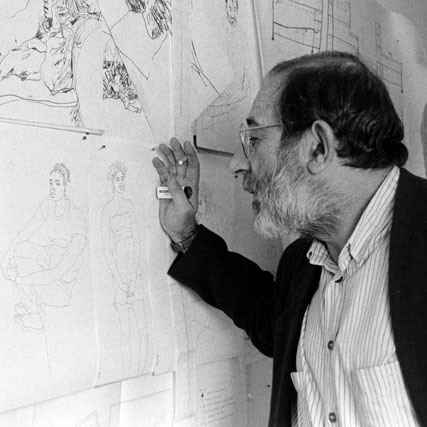
Possibly made in 1942, maybe facing the sea or land, not even the one who drew the building knew of it's fate!
It had the name of Edifício Pedro Álvared Cabral, based on Portugal's maritime voyages.
It was a warehouse for codfish, property of the Codfish Trading Regulatory Comitee, part of a larger complex network of codfish distribution for the entire country.
The state at the time had planned to use these warehouses to feed the populace in case of involvment in the wars of the time.
The complex ended up being a major economical asset, lasting it's standing as a big job provider up until the country joined the European Union.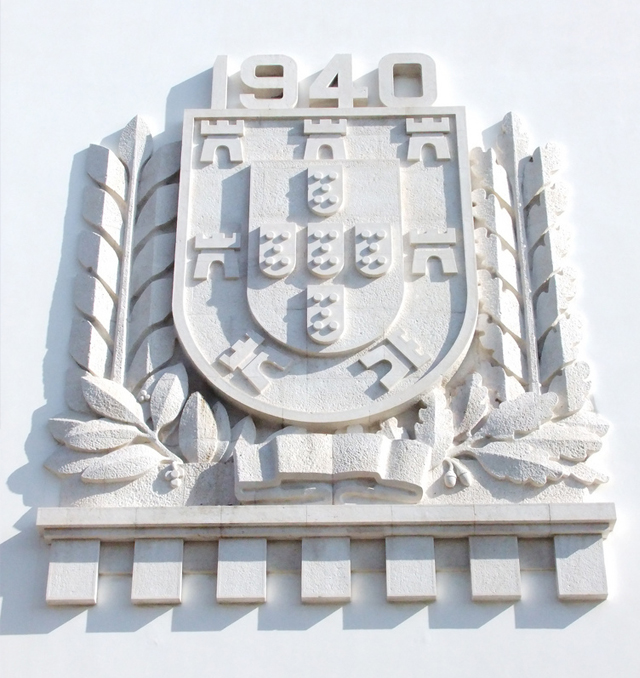
The sculpures in the facades of both sides were made by Barata Feio. The original architect of the building is thought to be João Simões, having won a public contract for it. Made during the celebrations of the hundred years of portuguese independance and made nearby the portuguese world exibition, this was a celebrated achievement of the government and the people for the time.
The building had a big connection to the country's government during the dictatorship and, at the same time, with cutting edge technology connected to industrial freezing.
It was such an avantgarde building that it became self-suficient and multifunctional to the point of having markets, cafeterias, workshops, a gym and a skating ring!
Now it works as a Museum for the Oriental arts and history, and the adjacent building shall be converted into the Oriental Foundation, the same institution that built and maintains the museum.
The conversion was assigned to the renown portuguese architect Carrilho da Graça in 2008 who reworked the fridge-like chambers of the building into museological areas like the two temporary exibitions in the ground floor.
The building has almost no natural light since it would have spoilt the food being preserved at the time -the architect took advantage of this fact whilst giving it a good use for the exibitions and some shows.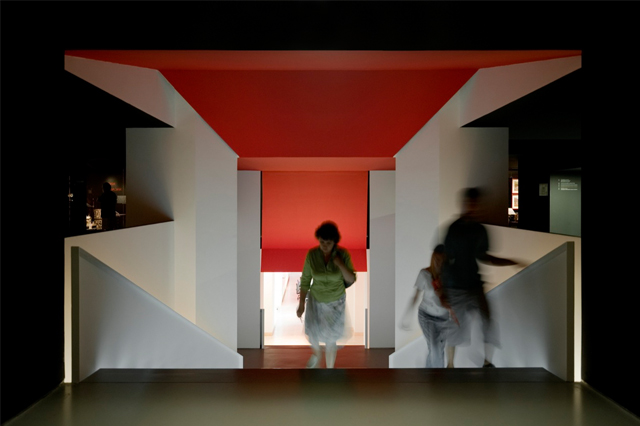
The lounge and shop spaces used to be woodworking and metalworking workshops, since these had the most natural lighting, in contrast to the rest of the building.
The rooftop was previeously used as a skating ring for the workers, giving us the tone for the project. Besides being a codfish warehouse, it was also a multifunctioning unit made to attend all the worker's needs.
Accompanied by a scenic elevator, the view from up top reminds us how the area used to be regarded as industrial, but quickly changed into it's turist hub function since the transatlantic ships started docking there. To support this, a gym and a secondary cantine were made, where Carrilho da Graça applied reconversion concepts to transform the spaces into offices, showrooms and a restaurant.
The architect also took advantage of the concrete pillars and beams to form a grid of louvers, small versions of the skylights in Casa das Histórias in Cascais.
This lighting sets the mood for the serene entrance for the general public in this section of the building.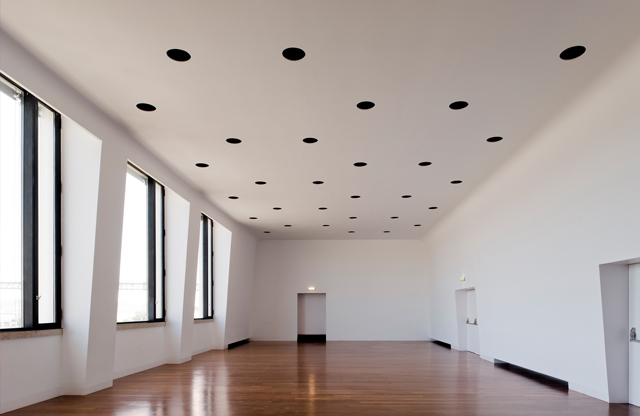
On the fourth floor, the contrast between the past and the present was highlighted by the widening of the long hallway in the middle of the ex-cold rooms now made into offices with glass walls to combat claustrophobia and give out a sense lightness to the building.
Being cold rooms, they had advanced systems of refrigeration in the ceiling, a network of vents to cool down the rooms.
These vents were closed up with plasterboard, so they could be preserved for later study, whilst the small electrical hallways to the side of the rooms are now the new ventilation.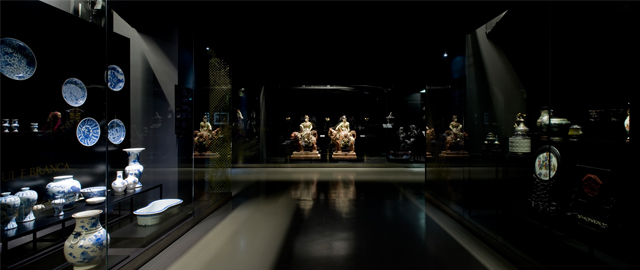
There is a stark contrast, a slight shock, when arriving into the primary exibition.
It is a dark room, fully painted black, with a low-hanging ceiling.
When it was a codfish treatment room, it was required to be able to reach by human hand the fish hanging from the ceiling, hence the low-hang. Having that function for years gave it a strong, imposing smell, that got impregnated into the walls.
The black coloring was chosen to better hide the damages brought when tearing down the old cork covering that was deemed unfit given that smell.
To give out a better sense of confort for the visitors, the ceiling was covered with a light PVC-like material with reflective properties to look like a mirror. Some of the pillars were also cut so both these measures could better open up the space.
Originally there were more than the usual amount of pillars, with added thickness, since the building had to support more than 30 thousand tons of fish and other food types.
In this first floor glass stages were made to better showcase the artifacts. The glass is color-coded with the depicted region's colors and these create pathways for the museum's users to get lost in.
Even though the lack of rest and the dreary colors make long visits tiring, we highly recommend several visits!
Its always a pleasure to take notes of all the small details put into such a historical building.
Images via A2P, Wikipedia, Flickr, Archdaily e Wordpress respectively.