



A Vegetable Garden in Your Balcony
Grow your own vegetables and crop the benefits

|
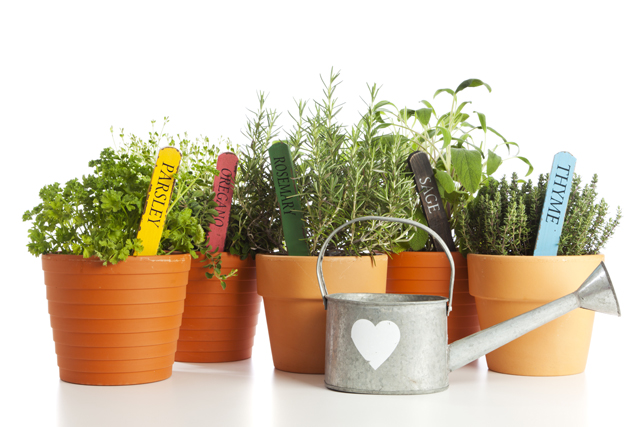
The search for healthier and cheaper food has been motivating the creation of urban vegetable gardens, either in balconies or in small portions of municipal land.
If you would like to harvest your own vegetables and, at the same time, find a new hobby, come and find how to do it in your balcony or terrace. You’ll see it’s not that difficult and the benefits are enormous!
# 1How should I start?
First we suggest you should start by analyzing the available space. It’s necessary to have good sun exposure (5 hours per day minimum) and not too much wind, issue that can be solved with a protective barrier.
After that, you should define where you are placing the pots: in the floor, in the parapet or in the wall? That resolution is crucial when choosing the pots, vases or any other type of container. You might also try to reuse some old recipients, after transforming them to welcome the plants (please do not forget the mandatory drainage).
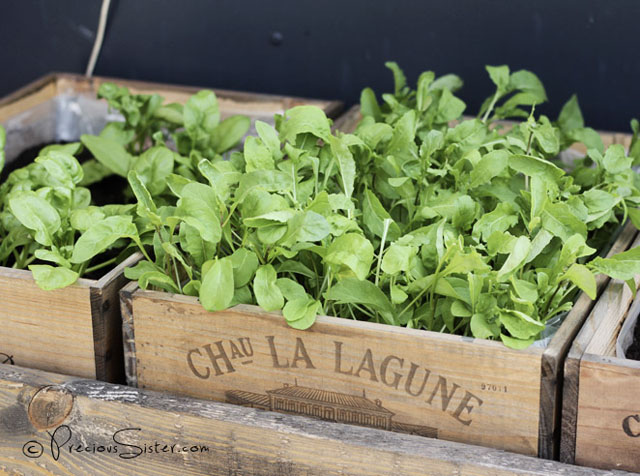
(image via precioussister.com)
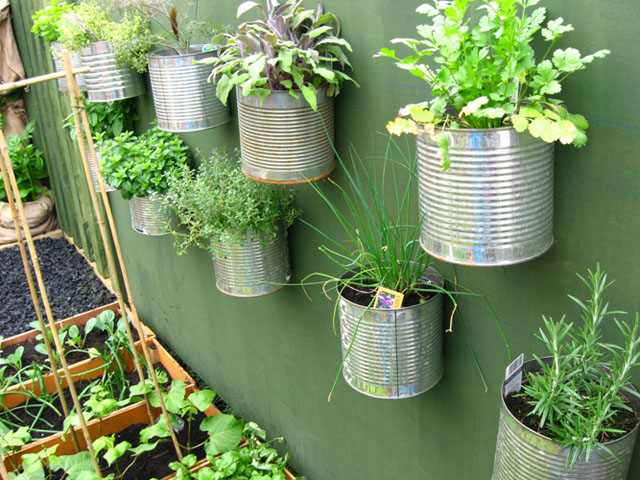
(image via ewainthegarden.blogspot.pt)
Then will be good to gather the tools and materials needed. For the first group, we recommend a small shovel, hoe and rake appropriate for gardening. For the second group, organic compost (a mixture of organic substance and earth), gravel or expanded clay balls, the seeds or the seedlings and, depending on the species you want to grow, the pots. For medium size plants, like tomatoes, beans, peppers or pees, are recommended pots for 25l of compost. For small size plants, like lettuce, spinach, radishes or herbs, you can choose smaller containers.
Now that you have everything gathered: "Get to work!"
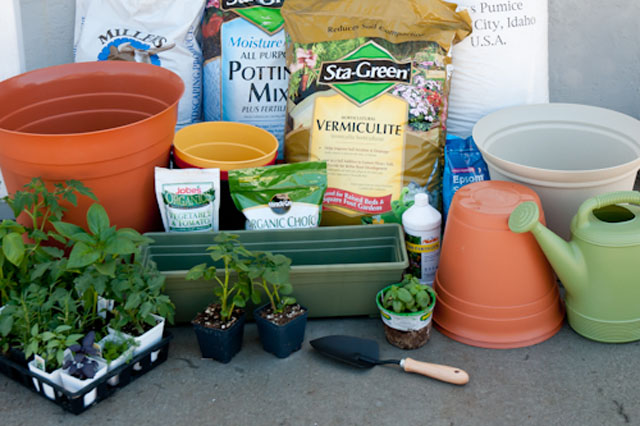
(image via designmom.com)
# 2 How to sow or plant?
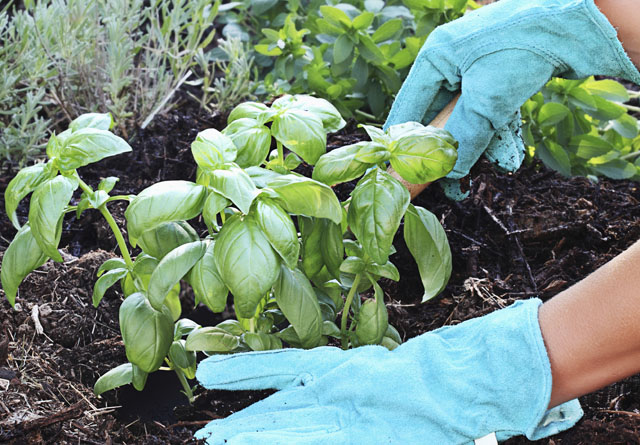
The first step is to cover the pot’s bottom with gravel or expanded clay balls, which will help the drainage, next you should put the compost. If you’re sowing, put the compost up to 2 fingers from the edge and make a 1 cm hole or follow the instructions given in the seeds package, then put the seed there and cover without pressing. If you’re planting, it’s necessary to cover the pot 2/3 or 3/4 of the height of the container and put the plant, finally fill up with the rest of the compost without pressing too much.
You can also add an adequate organic fertilizer and a mulch cover (like straw), which prevents accelerated evaporation and weed growth.
Now we just need to water!
# 3 How to maintain?
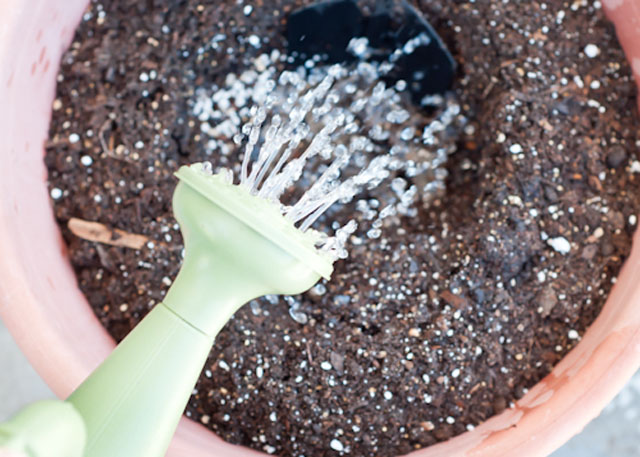
Watering is obviously the everyday care. It should be done in the early morning or in the afternoon on the compost and not on the plant. It’s very important not to dry the earth.
One idea: to capture the rain water or reuse the water used to wash vegetables while cooking.
Other relevant precautions are the plant observation with the aim of detecting a pest or a disease, the leaves and twigs elimination and the weeds removal. It might be also necessary to turn over the soil with a small hoe, if it’s too compressed near the plant’s foot, and the reinforcement or change of the compost since vegetables require plenty of nutrients.
(image via designmom.com)
# 4 What to plant?
For beginners it’s easier to start by planting herbs, such as: parsley, coriander, basil, oregano, mint, rosemary or chives.
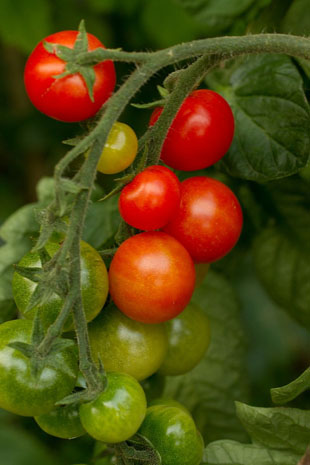
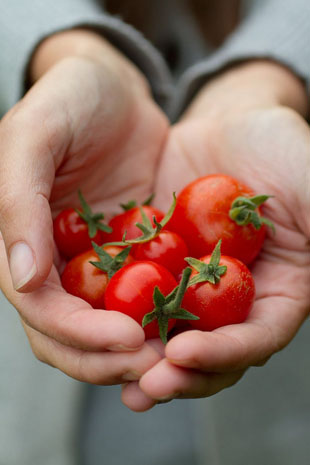
Afterwards, according to your family’s preferences, you can choose between tomatoes, potatoes, rocket, lettuce, chicory, courgettes, carrots or strawberries.
(image via saidosdaconcha)
# 5 When to plant?
Spring and summer are the best times to plant but you can also do it in autumn or winter, planting onions, chards and pak choi.
# 6 Why grow organic?
One of the major benefits of having your own vegetable garden is the possibility of having fresh organic food. These are vegetables that during their growth are not subjected to any kind of pesticides, fungicides or other synthetic chemicals that can harm the environment, following the sustainable agriculture principles.
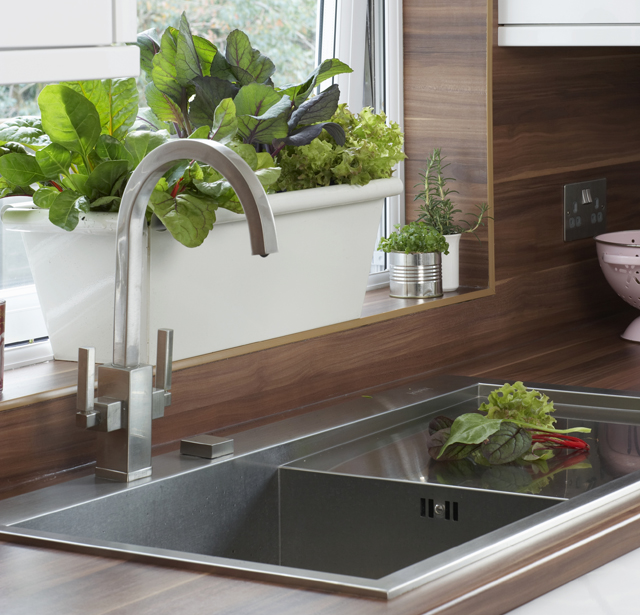
If you became motivated by this idea, go! This activity is excellent for sharing with kids and relaxing and, the food harvested, will be certainly healthier, tastier and cheaper.
If you want to learn more, check for a local workshop where you can improve your skills!