


An underwater skyscraper
An outstanding project by two chilean studentsImages via Pablo Schaelchli and Fabián Cordero

|
Yesterday we talked about the loss of buildable soil we suffer each instant.
Although, floating cities are not our only option to occupy the seas!
Beyond the lands and the shores we still have all the depths of the underwater world to explore and maybe even... live on.
The more we expand our civilization, the more land we consume, the more polution we release but the more doors we open.
A century ago, many cities across the world had the bright idea of creating skyscrapers to serve more people per square meter of land.
But the technology wasnt perfect, it still isn't. We continue to pollute and the sea still invades our lands.
Simultaneously, consumption hasn't slowed down, it accelerated. We consume more fossil fuels than ever and the oil reserves are dwindling.
More than 800 open-sea oil platforms have been abandoned. These pioneer artificial islands have served us well, but now they are nothing but a solid structure waiting to be taken apart.
Two young chilean students designed a way of fighting against these trends. They propose a solution against the rising sea level, the implied landmass loss and the unusable oil platforms with one single stroke. The ambicious duo has a stiking title for it... Submarine Lighthouses.
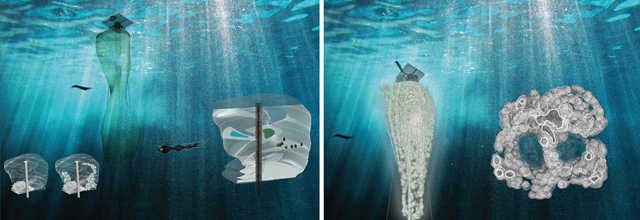
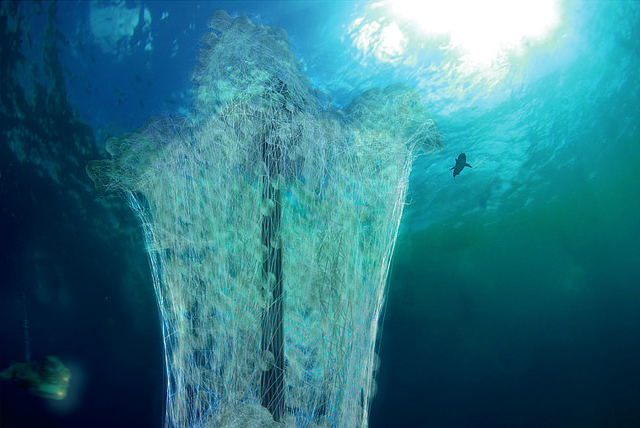
One of the many outstanding projects that came out of the eVolo Skyscraper Competition, was these bubble-like structures by Schaelchli and Cordero from the architecture competition office of the University of Chile. Accompanied by the architects Alberto Fernandez, Francisco Moure and Jorge Insulza, they developed a construction process for an innovative underwater tower model that may revolutionize water-based buildings.
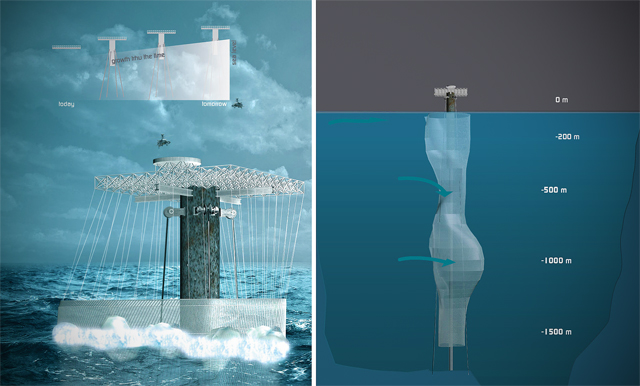
The Submarine Lighthouse takes advantage of the verticality and stability of oil platforms to repopulate them with the ocean's resources for it's construction and usage.
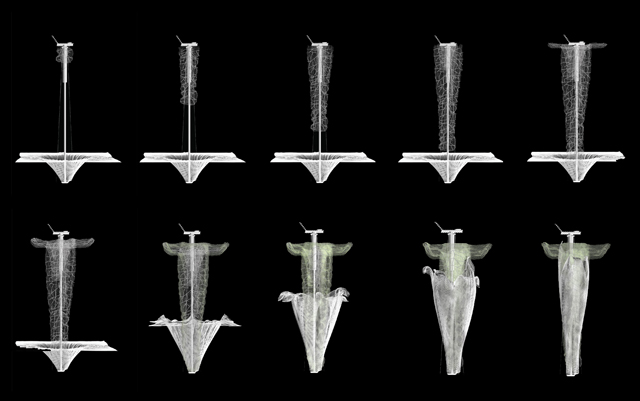
This constructive process involves a network of metallic structures that lowers along the pillar of the original platform, covered by an isolating resin that envelops it when rising by the force of the water's pressure.
Using this complex structure model as an outer layer, the interior of the tower may take any shape necessary for the proposed uses, atending the needs of it's inhabitants in any way.
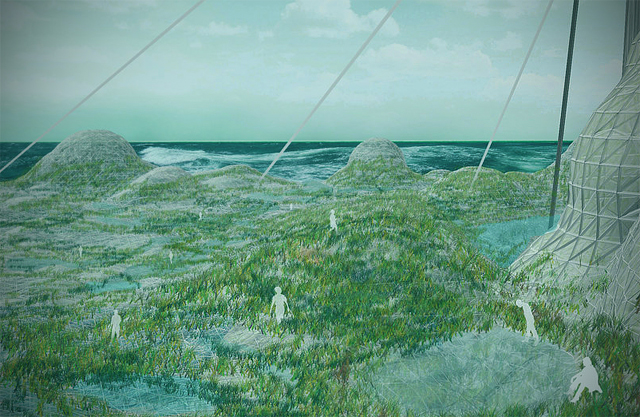
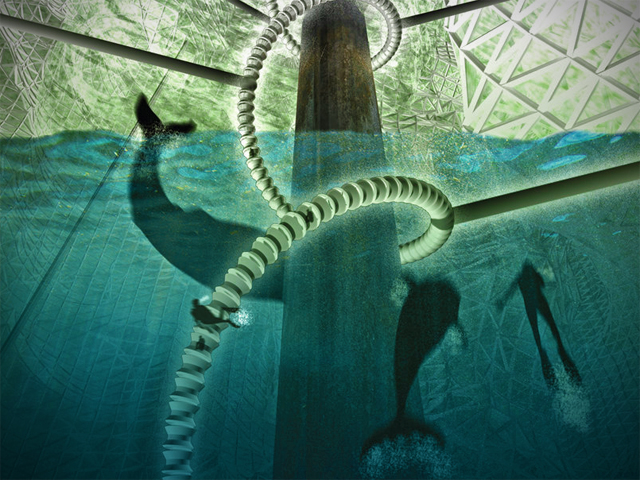
The proposal involves an inverted osmosis process to filter the salty waters into drinkable water, the use of the center pillar as circulation between the different levels of the intervention and the usage of the top-most part as cultivatable soil for sunlit food production.
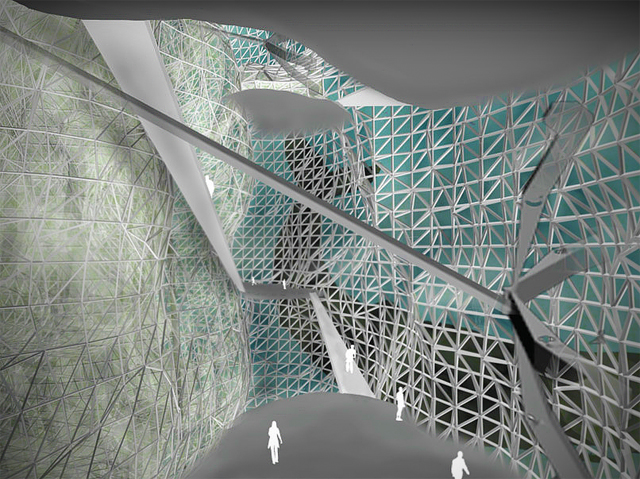
This innovative structure might have many uses for sealife investigation as it allows for the easy interaction between humans and their underwater surroundings up to an impressive 1500 meter depth!
Amongst other breathtaking entries in the eVolo contest we could not let this one pass by without praise.
We're still hipnotized by the different imagery and the technology involved. We recommend that you'd join us in learning more about it by watching this video with us: