


Floating Cities
The cities of the future, sailing across the sea!

|
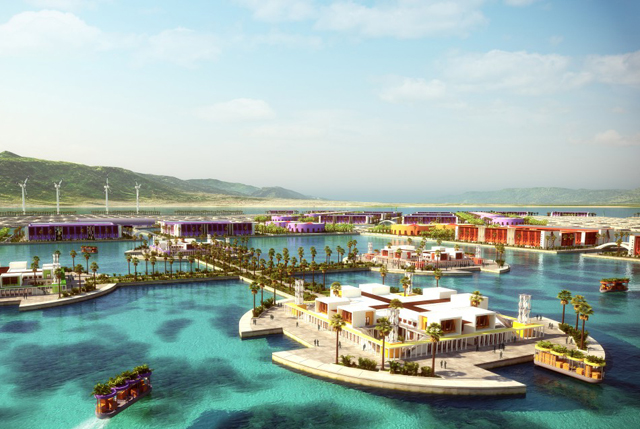
Haiti Market | Image via eVolo
We live in a water planet. Maybe not like the movie Waterworld, but more than two thirds of the planet's surface are covered by oceans.
Even on the 29% of landmass we have, we still see some lakes, rivers and whatnot.
Not all land is fit to build and we have less of it by the day. The seas are invading the land as we speak, and it's not going to get any better any time soon.
Albeit we didn't need to learn how to build along the seas, some of us do dream about having our own private island, dont we?
There is a vastness of discoveries to be made in the depths of our oceans and countless adventures ready to be had around the world. All we need now is the base on which to set upon the seas!
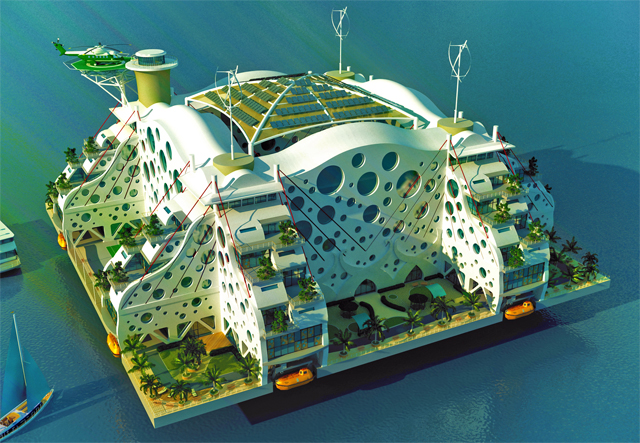
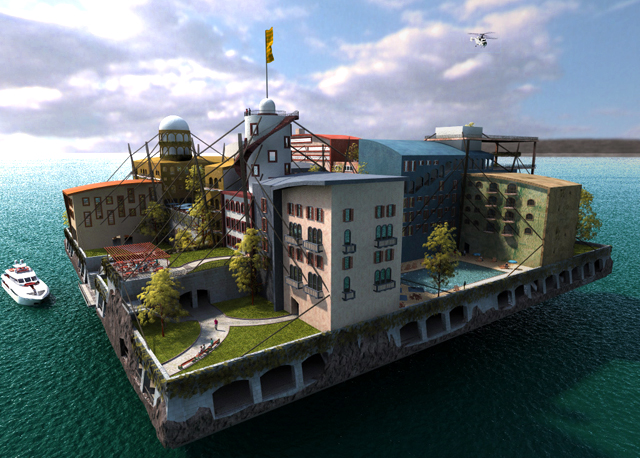
Seasteading Concept Design | Image via TheFabWeb
Global warming is our first incentive for this exodus.
Many of our cities are being flooded, which begs the question: How will we live over the sea level when all we have left is sea? Can we build floating cities?
Examples are appearing around the world, not utopias but simply real solutions that are starting to be built.
The prime advantage of most of them is their mobility.
For whom does not like their surroundings, just weigh anchor for friendlier shores!
Legislation is still on the works for all this since international waters have many grey areas in their rulings.
Some have taken advantage of these facts to build their own self-sustainable regimes!
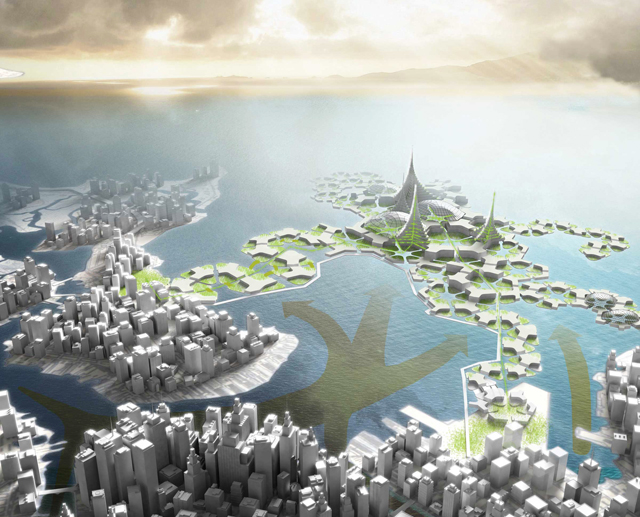
Independant, Modular City | Image via Modern Farmer
The Seasteading Movement is one such example.
It is a political movement with the objective of creating city-states that may very well grow over time.
The project consists in floating villages for 225 inhabitants and 50 hotel guests made out of a series of rectangular or pentagonal modules that interchange around the floating urban fabric.
The goal here is total independance. Any resident who may not agree with any policy may remove his or herself from the rest, effectively deciding his or her own fate.
The dutch technicians behind this design propose 70 square meter apartments with their own front and back yards right above the waters. These dwellings would gather their energy from the sun and their water from the rain. Food would come from vegetable, fruit and fish farms, all produced locally. In case of any emergencies, helipads are also part of the plan.
This initiative is getting funded by the Seasteading Institute, headed by the founder of PayPal, Peter Thiel.
For more informations, watch this video:
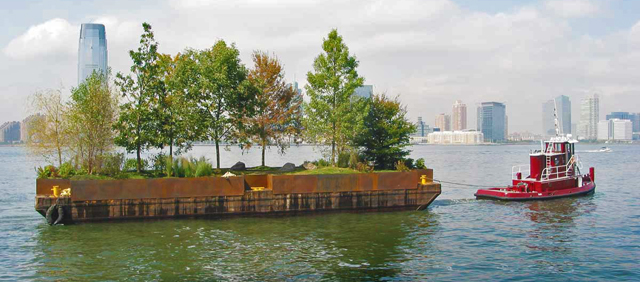
Floating Farms | Image via Modern Farmer
Another initiative compatible with this previous one is the Floating Farms, originated by the Blue Revolution movement in Hawaii.
These futurists are trying to come up with new ways for us humans to live out the next 50 years and they figured out that floating settlements and farms were the solution.
We already have oil platforms on the ocean that are pretty much self-sustainable. Why wouldnt there be more sustainable solutions for the rest of us ready for tomorrow's challenges?
The answer is: there are.
In New York there are farms in artificial islands near Manhattan and Philadelphia.
Greenhouses in Vancouver, Hospitals and Prisons floating across Tailand and Holand and so many other designs that show us that the awakening for this cause is global!
All we had to do is look towards the seas.
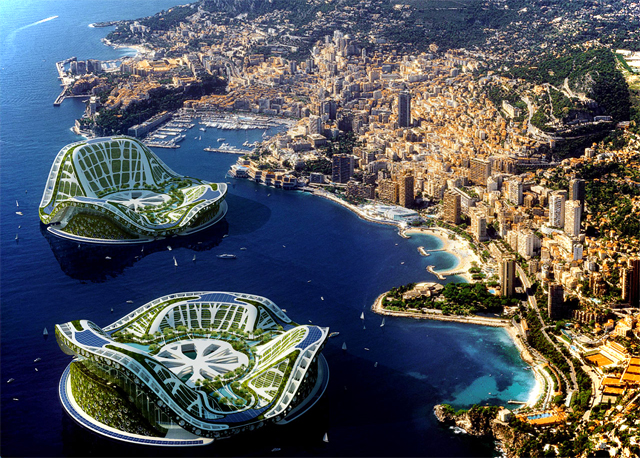
Lilypad City | Image via Garcia Barba
Meanwhile, we can't talk about floating cities without talking about it's flagship design that stormed the internet - the Lilypad Floating City.
This concept by Vincent Callebaut invaded our minds by the sheer beauty in it's sections, plans and renders.
Although it's not all for show, the material choices were smart and the sustainability of the design is impecable.
Several of these cities are drawn to look like lilypads with mountains in their extremities with a lake in the middle for balast. The objective here is to create different interventions that produce zero carbon emissions... in fact, they absorb CO2!
The materials and technology in the different layers of these buildings make use of solar, tidal, wind and biomass energies to feed it's own design and heal the atmosphere, effectively fixing out the problem it set sail to fix! (With less CO2 we'd have less global warming, less polar cap meltings and, thus, less flooding and need for incredible designs like this.)
For those who want to know more, check out the short video about it:
Floating Module | Image via Wikipedia
We find ourselves in a time in which we have the capability to predict the dire consequences of the lifestyle we live today.
It shows us how we must change our standards and way of being to become positive rolemodels for future to come.
There's no time like the present. Set sail!