


BIG designs Museum of the Human Body
International design competition winnerImages: courtesy of BIG

|
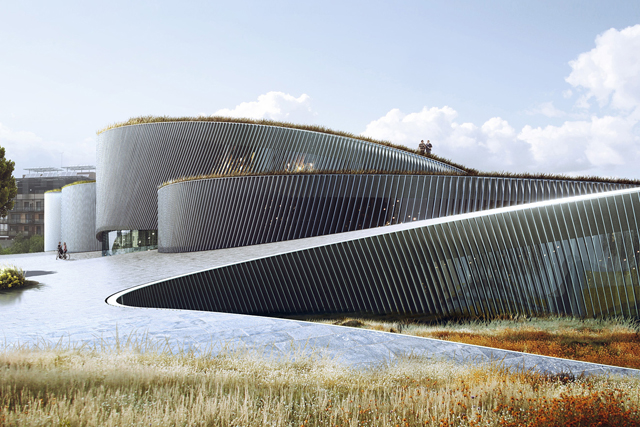
The Copenhagen and New York based group of architects BIG – Bjarke Ingels Group has recently been announced winner of the international design competition for the new Museum of the Human Body (Cité du Corps Humain) in Montpellier, France. The new museum, a mixture of architecture and nature, will explore the human body from an artistic, scientific and societal approach through cultural activities, interactive exhibitions, performances and workshops.
Led by Montpellier City Mayor Ms Hélène Mandroux, the jury selected BIG out of five international shortlisted teams. BIG collaborated on the design with A+Architecture + Egis + Base + L'Echo + Celsius Environnement + CCVH.
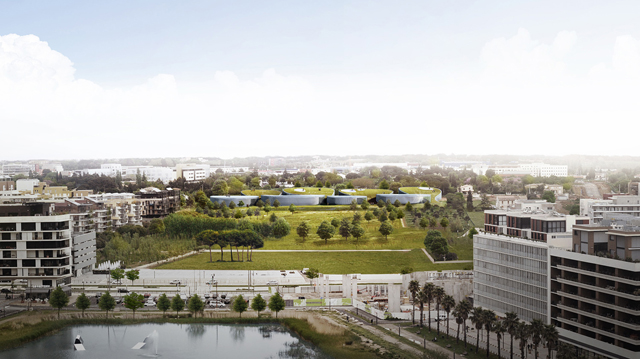
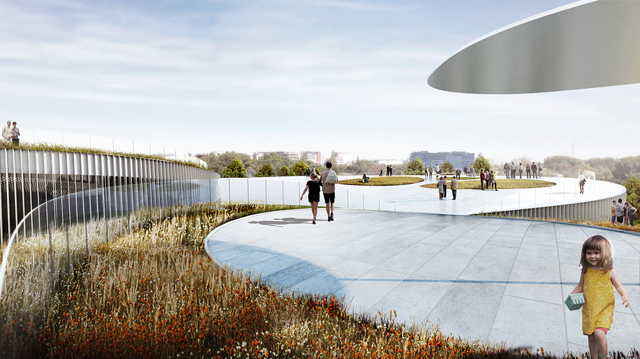
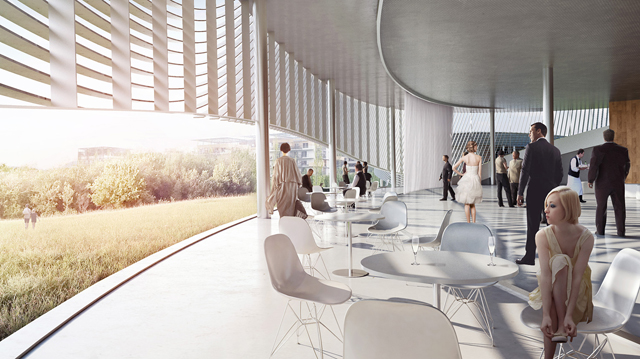
According to architect Bjarke Ingels, this 7,800 m² museum is conceived as a confluence of the park and the city – nature and architecture. The building’s program consists of eight major spaces on one level, organically shaped and lifted to form an underlying continuous space. Multiple interfaces between all functions create views to the park, access to daylight, and optimizing internal connections.
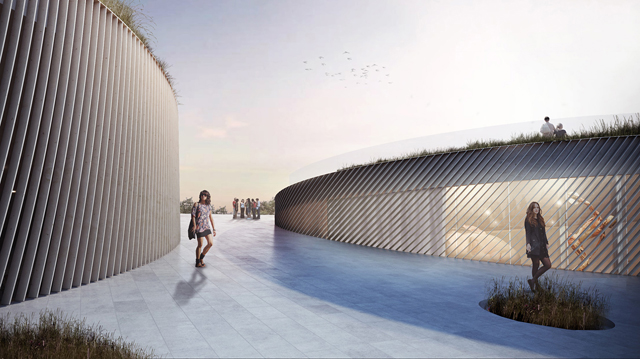
"Like the mixture of two incompatible substances – oil and vinegar – the urban pavement and the parks turf flow together in a mutual embrace forming terraced pockets overlooking the park and elevating islands of nature above the city. A series of seemingly singular pavilions that weave together to form a unified institution – like individual fingers united together in a mutual grip”, explains Bjarke Ingels.
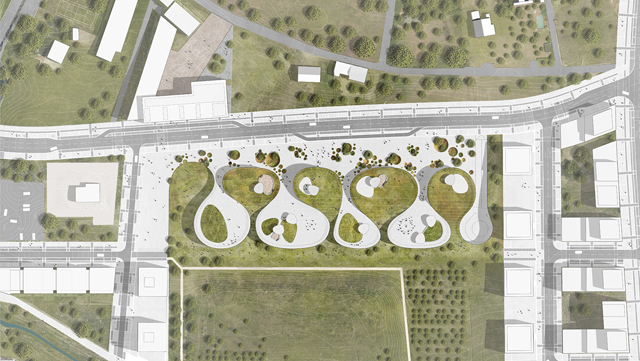
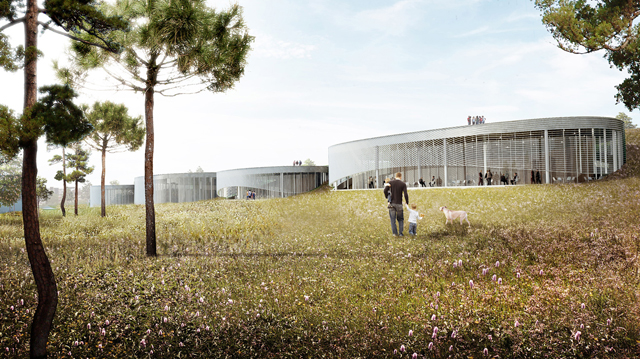
“The museum’s roof functions as an ergonomic garden – a dynamic landscape of vegetal and mineral surfaces that allow the park’s visitors to explore and express their bodies in various ways: from contemplation to the performance, from relaxing to exercising, from the soothing to the challenging."
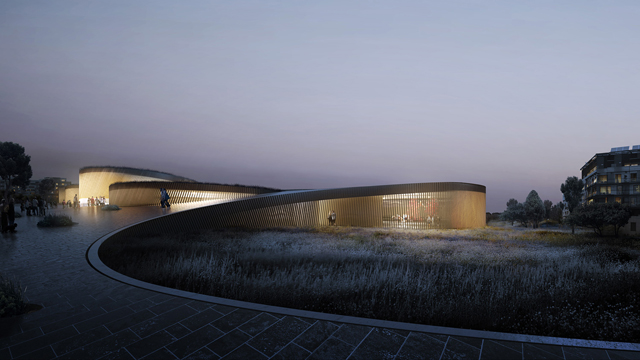
"The façades of the Museum of the Human Body are transparent, maximizing the visual and physical connection to the surroundings. On the sinuous façade that oscillates between facing North and South, East and West, the optimum louver orientation varies constantly, protecting sunlight, while also resembling the patterns of a human fingerprint – both unique and universal in nature."
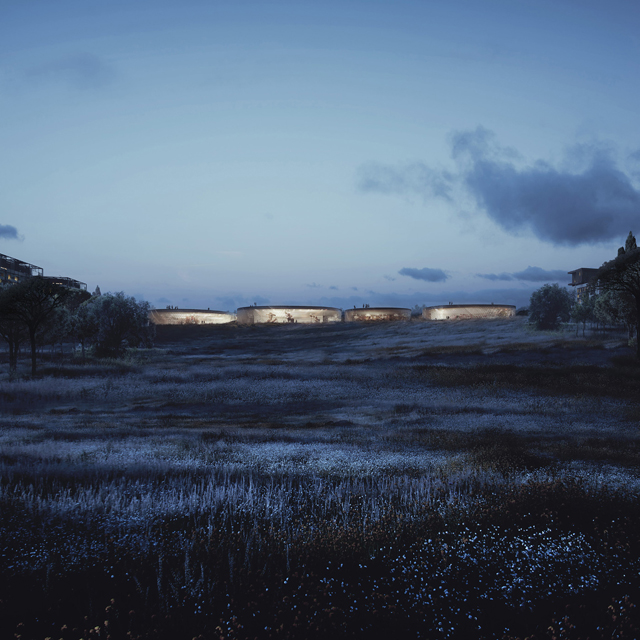
Construction is set to start in 2016, and the museum will open to the public in 2018.
More at: http://www.big.dk/#projects-hum