


Blame it on architecture!
The impact of architecture on the economy of cities

|
What makes a city attractive?
When we talk about cities, there are a number of more or less attractive factors to consider, such as: people, architecture, climate, history, art, music, gastronomy or even some kind of seasonal events that attract visitors.
Sometimes, you cannot highlight just one of these factors since the valuation of the city comes from the way the different elements coexist in the same space.
Barcelona is a good example of an attractive city as a whole, as it is impossible to mention just one aspect as the basis of its development and its impact globally. There seems that everything coexists perfectly and there is an interdependence of various factors on the path of success.
Even with all these factors, there is one that we can never overlook: Architecture. It is unquestionably present in all cities forming an integral part of its identity. It is impossible to look at a city and not assess its architecture, its urban space and its buildings.
In many cases we can easily distinguish a building as a city ex-libris: the Opera House in Sydney, the Empire State Building in New York, the Big Ben in London ... among many other.
Beyond these examples, there are some specific cases, occasionally surprising, capable of transforming a city.
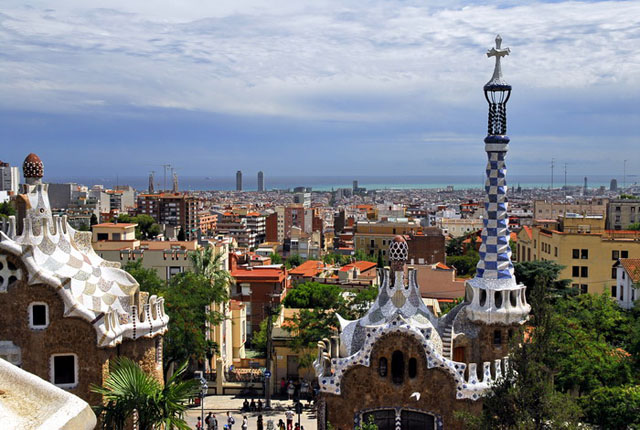
Barcelona | Image via Wikimedia Commons
Can a single building change a city?
Bilbao is a fascinating example of a city whose revitalization process leaned over a building, an architectural landmark.
A heavily industrialized region from the nineteenth century, with an accentuated demographic and urban explosion, begins to lose its industrial character to become a city of services, based on an aesthetic, social and economic development.
The Guggenheim Museum, designed by architect Frank Gehry, was a major boost to the city at various levels, particularly for growth in tourism, with major impact in the city's aesthetics and economy.
We can say that the Guggenheim Museum was the trigger for a contemporary architecture style which spread throughout the city, not only in buildings but also in public spaces, according to a very particular and very consistent aesthetic all over the territory.
It's amazing the change that a city may experience because of a building; in this case ... blame it on architecture!
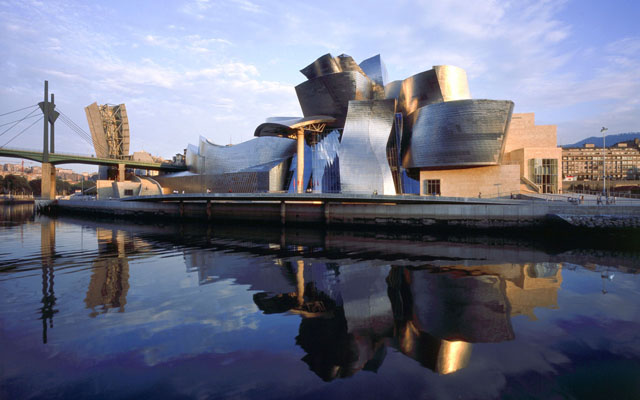
Bilbao Guggenheim Museum | Frank Gehry | Image via Wikimedia Commons
Can an architectural shock become an iconic piece and an ex-libris for a city?
A good example to mention is the famous Louvre Museum in Paris. This great monument generated enormous controversy upon the construction of a glass pyramid in the palace’s central courtyard. To the eyes of many, raising such a futuristic piece in an historic building with such a high symbolic value would be a clash of styles, an aesthetic affront to this piece of classical architecture, overlapping and devaluing it.
Against many criticisms, the project of architect IM Pei has advanced, making reorganized the museum to reopen in 1989.
The truth is that even the most skeptical eventually surrendered and the controversial glass pyramid turned out to be a success, attracting an endless number of visitors and becoming an icon for the city.
Once again, blame it on architecture!
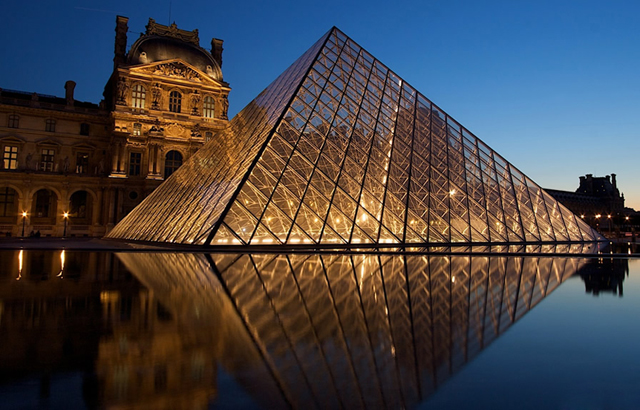
Pyramid of the Louvre Museum in Paris | I. M. Pei | Image via Wikimedia Commons
Can a construction error value a building to the point of making it an icon?
The most immediate answer to this question is negative, connoting to a certain comic sense in question. However, if we rethink this case, we find that it may not be such a bizarre question, taking the example of Pisa.
Pisa is a commune in the Tuscany region that, like other Italian cities, included the construction of a tower or steeple in its central square. Although intended to stand vertically, the tower began leaning soon after the start of its construction in 1173 due to insufficient foundations on weak and unstable soil. Between the years 1990 and 2001 featured a structural reinforcement to ensure its stability, but always protecting its inclination.
Some controversies have been generated as to the architect of this work, initially assigning the project to Guglielmo and Bonanno Pisano and speculating later the project’s authorship to Diotisalvi.
It was undoubtedly the inclination of the tower over the years that brought many visitors to the city, with an endless number of photos circulating the world, making this monument an architectural landmark not to be missed in Italy.
In recent works to strengthen its structure, the concern was to preserve the tower´s inclination, because otherwise lose it would its attractive sense, with repercussions on the city’s economy and visibility.
Pisa has gained much of its economic power through tourism revenue, with a major boost from its leaning tower, now a UNESCO World Heritage Site along with its nearby cathedral, baptistery and cemetery.
This phenomenon is unique and shows the impact that architecture can have on the development of a city, where one can definitely… blame it on architecture!
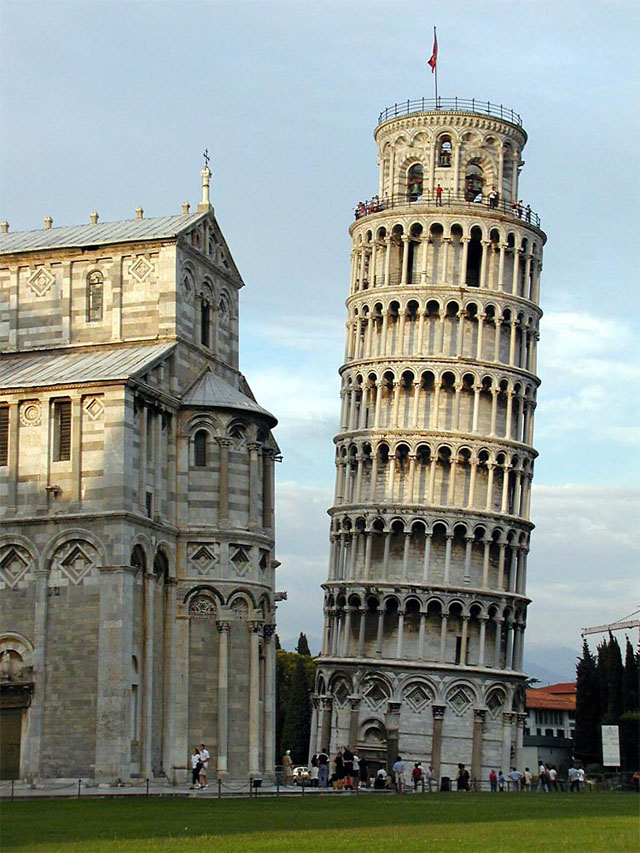
Tower of Pisa | Image via Wikimedia Commons
Construction errors, architectural shocks, unique buildings, among others, these are phenomena that can alter the economy of a city, all based on architecture.
Today, there is already a recognition by the people and also from some city leaders for the role that architecture plays in the growth and development of urban centers, with strong influence in migratory and tourism flows and consequently in the economy of cities.
Architecture cannot live without cities and cities depend directly on architecture for its development. It is important to be conscious of this relationship in order to understand the economic growth of many urban centers.
We can blame it on architecture for the success of our cities…and cities are grateful!