


Cork is Trendy!
Sustainable designText and images: Nuno Ladeiro

|
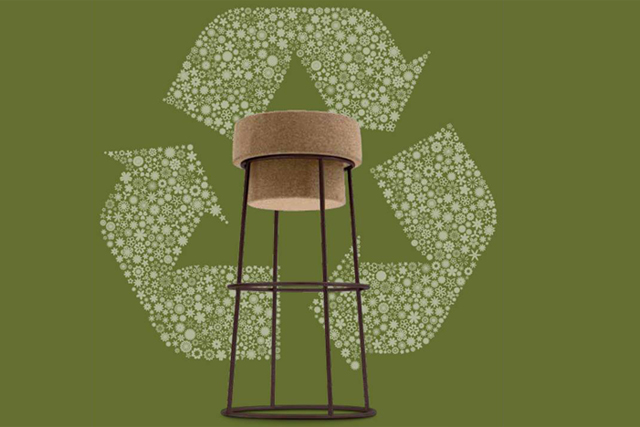
Cork is a vegetable material originating from the bark of cork trees and the first cork extraction usually occurs when the tree reaches 25 to 30 years, removed in the months of June to August. The cork known as amadia is the one that has better quality and is therefore the most valued, and the one which can be used for the manufacture of cork stoppers. From this stage, the cork is extracted every nine years. Cork is a noble raw material that extends to various uses. Bark waste from which the cork stoppers are made creates a granulate that allows other applications.
Portugal, with an area of 730 thousand hectares of cork oak forest, is responsible for 50% of the world's cork. Other producers are Spain, southern France, southern Italy, most recently Morocco, Algeria and Tunisia.
Technological development and application of new techniques, led to the integration of some processing operations of cork and today, according to some of the largest cork transformers, as the Amorim Group, "Portugal is the undisputed leader in the cork sector: in production, processing, research and development and innovation. The cork sector now represents about 3% of Portuguese exports. The cork stopper is the most representative product of this industry, which accounts for 70% of these exports. However, it has applications is several sectors such as space industry, automobile, building construction and clothing” (1). Prestigious international companies such as NASA, Boeing, Ford, Moët & Chandon and Rolls Royce are some examples of organizations using products made from cork. According to the same source, cork has been compared by The Economist to diamonds from Africa and the oil fields from Middle East, with the added value in relation to these, its resources are truly renewable and non-polluting.
In Design, cork is trendy and all over the world, designers demonstrate increasing interest in this natural material to create objects of temptation, with widely differing applications.
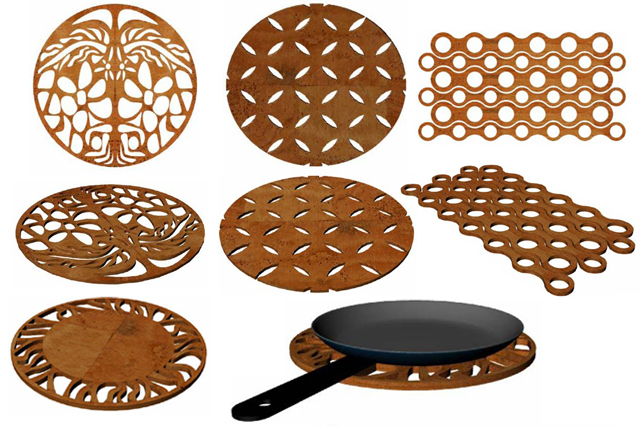
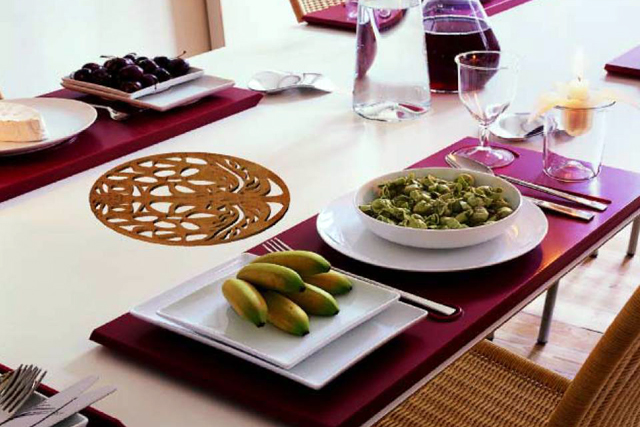
Last year, I developed a set of table mats for the Italian firm Mesa (manufacturer of art objects for the table), with the function to protect the table from hot dishes or pans. I added value to the mats inspired by the plasticity of cork in the Portuguese culture, tile patterns and traditional fabrics such as Portuguese embroidery.
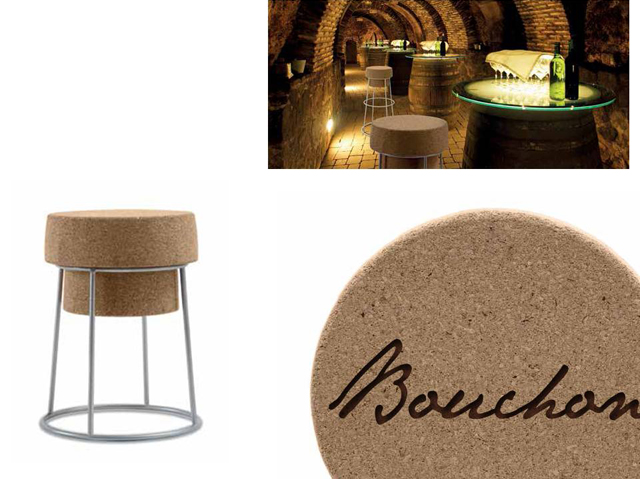
Also recently, in Italy, the Italian furniture brand Domitalia, launched a successful product worldwide, by the simple and practical way of how cork has used. The Bouchon seat, presented at the last Milan Furniture Fair, was inspired by the classic shape from champagne bottles cork stoppers and is suitable for both interior and exterior environments, providing optimal use from both points of view: aesthetic as comfort. It can be used in a home environment or even in a bar or wine cellar. The entire seat is made of cork and allows stamping a brand or an establishment’s name. (2)
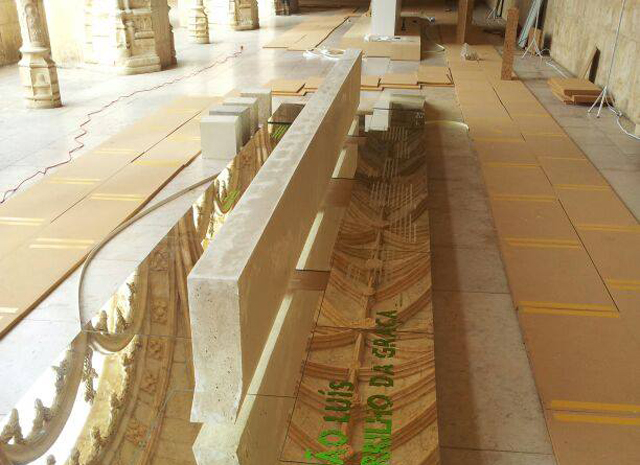
The next cruise terminal in Lisbon, designed by the Portuguese architect Carrilho da Graça, will also include in its design a structure made of concrete and cork. The combination of almost white concrete and cork is used on the facades of the new terminal, whose detail project has just finished, and that would not allow the weight of conventional concrete. This version is eight times lighter than normal concrete. It is an intelligent use of this material beyond its natural properties is an exceptional material.
(1)- Corticeira Amorim - the largest world producer of cork products
(2) –Domitalia is represented in Portugal by Dimensão Nova.
More information at www.dimensaonova.com