


Design and Architecture
Is it just a matter of scale?

|
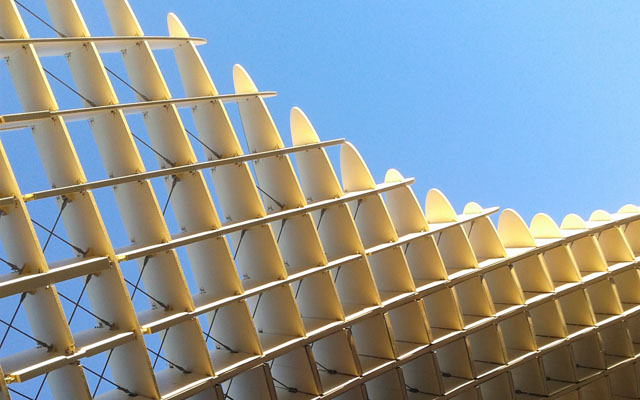
Metropol Parasol, Seville by Jürgen Mayer | Photo © Nuno Ladeiro
The most recent work of the prestigious architect and designer Mario Bellini, Opera table for Italian brand Meritalia, is it an architectural structure conceived and designed on a human scale or a design object to be used by Men?
This question often arises when we observe some objects that resemble buildings or vice versa.
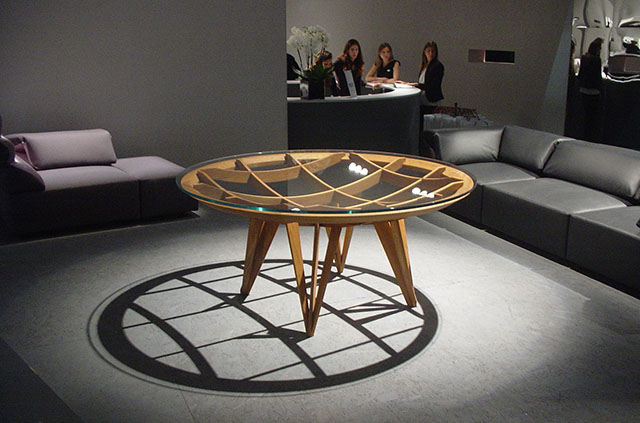
Opera table by Mário Bellini | Meritalia
That is the case of the Montjuïc Tower in Barcelona, a telecommunications tower designed by the architect and engineer Santiago Calatrava, built between 1989 and 1992 in the Olympic village of Montjuïc, Barcelona, in the light of 1992 Olympics. Initially conceived as a table lamp, later became one of Barcelona’s most iconic towers. In Portugal, the Burgo Tower, a project by the architect Souto Moura, located on Avenida da Boavista in Porto, before becoming a tower it was designed to be a closet.
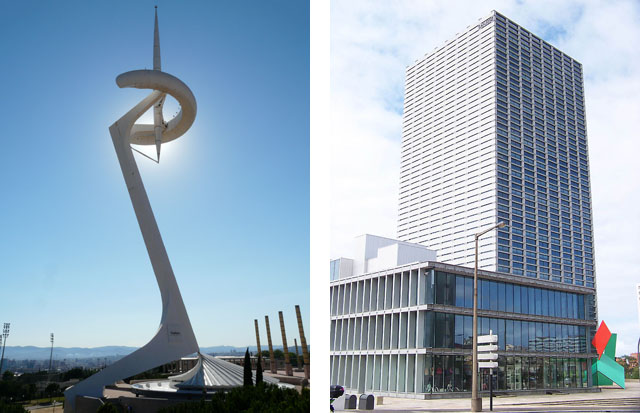
Montjuïc Tower, Barcelona by Santiago Calatrava | Burgo Tower, Porto by Souto Moura | Wikimedia Commons
The controversial Casa da Música, also in Porto, according to its author, the internationally awarded Dutch architect Rem Koolhaas, due to the constraints of the time available for participation in the contest, it had to be adapted, and therefore it was made a "scale to fit" of an existing project, a former designed house that was never built and, by force of circumstances, became a Casa da Música by increasing the building’s scale.
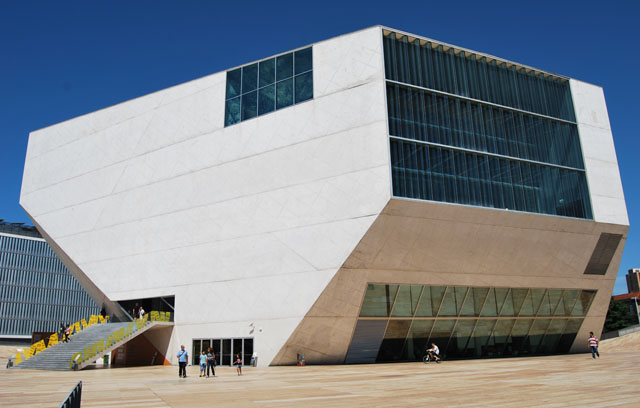
Casa da Música, Porto by Rem Koolhaas | Photo via Wikimedia Commons
But let us return to the Opera table by Mário Bellini. Does the wooden structure leads us to something we already know? In my opinion it is certainly not a coincidence the similarity between the Opera table and the Metropol Parasol in Seville. A gigantic wooden structure in Plaza de la Encarnación popularly known as the "setas de la Encarnacion", designed by Jürgen Mayer, winner of the international competition held in 2004, has a similar structure with orthogonal wooden trusses but in a different scale, rather larger, of 1.5 x 1.5 m, with 150m long, 75m wide, and 28m in height.
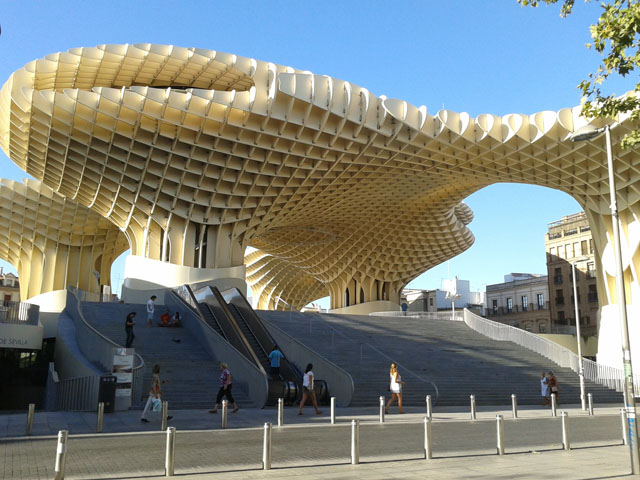
Metropol Parasol, Seville by Jürgen Mayer | Photo © Nuno Ladeiro
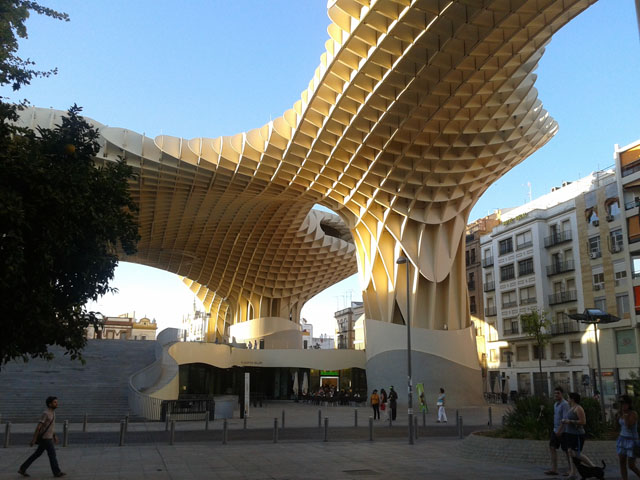
Metropol Parasol, Seville by Jürgen Mayer | Photo © Nuno Ladeiro
The six amorphous "mushrooms", higher than the adjacent buildings, seem to float over the square providing checkered shades over the plaza as the Opera table, this one in a smaller scale. Inspired by the cathedral domes and trees in Plaza del Cristo de Burgos, the Seville’s Metropol is based on six "trunks" with concrete foundations where elevators and stairs provide access to other levels. The Opera table is also based on solid wood balls that help stabilizing its structure.
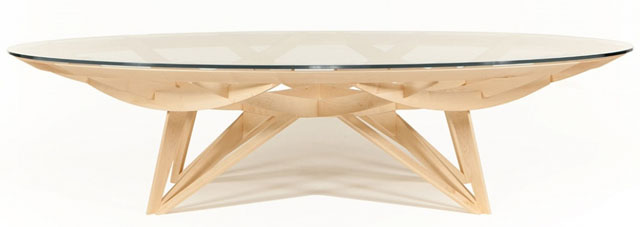
Opera table by Mário Bellini | Meritalia
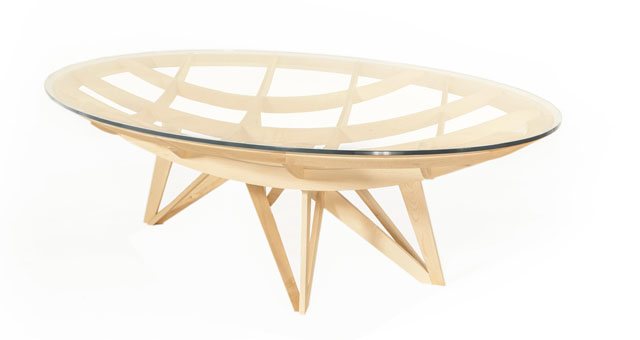
Opera table by Mário Bellini | Meritalia
Architecture and design inevitably have to use images to mentally build (from the architect or designer as creators) and fix an anticipative representation for conveying to the actors in its construction, the instructions of its authors (the project) and thus transmit the quality of spaces and / or objects.
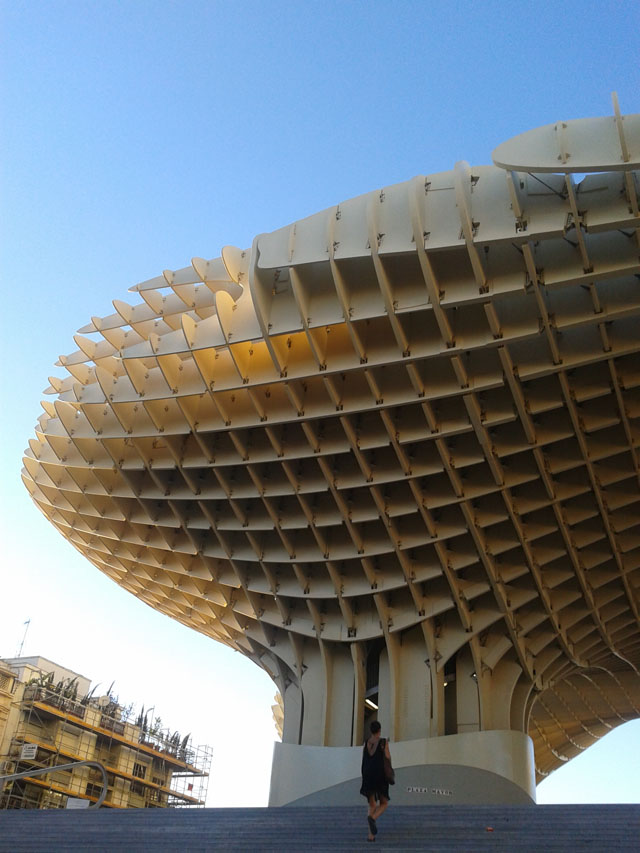
Metropol Parasol, Seville by Jürgen Mayer | Photo © Nuno Ladeiro
Architecture and design are semiotic processes and its image is a kind of symptom of thinking of those who, through imagery, want to represent something through architecture. According to Duarte Gorjão Jorge in "Imaginations of Architecture" image, whereas a vehicle for representation, has always been subjected to the distinctive patterns of production and consumption of each time. The logic of figuration, which depends on external constraints to the image (not the imagination), determine the ways in which the contents of things become visible. This means that the detectable form of the objects always results, at the end, in a translation form: concepts become visible and representation replaces the experience of things. And so, as in every moment there is a language whose vocabulary limits the repertoire of things you can say, there is also a limited set of content that visible forms can report to.
Therefore, every time has its own epistemological framework, so to speak, fixing the limits of representation and representable content. This way, architecture becomes a semiotic process and its image a symptom of thinking of those who, through imagery, wants to represent the architectural.
The Opera table is certainly a product of imagery which, most likely, has its origin out of the same premises of the Seville’s Metropol.
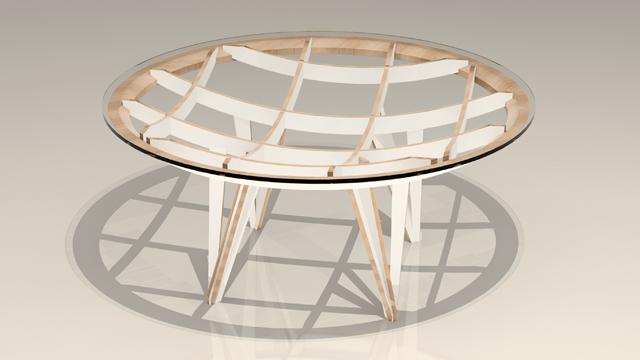
Opera table by Mário Bellini | Meritalia
Text by Nuno Ladeiro
More information about the Opera table by Mário Bellini at www.meritalia.it