


Elements
The essence of architectureImages: Cortesy of la Biennale di Venezia

|
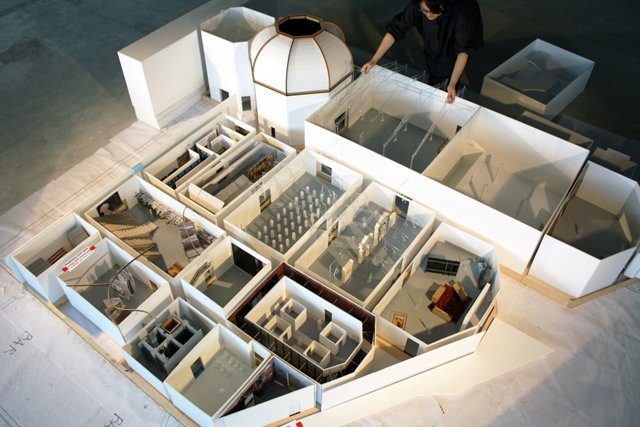
Elements of Architecture Central Pavilion, Model © Rem Koolhaas | Courtesiy of la Biennale di Venezia
The architecture and its basic elements, this is one of the architect Rem Koolhaas assumptions for the development of the exhibition "Elements of architecture." This presentation within the 14th edition of the Venice Architecture Biennale portrays the development that the elements of architecture had over time.
The exhibition functions as an "encyclopedia" with greater emphasis on the most characteristic and, according to the author, the most important elements of architecture: ceilings, windows, hallways, floors, balconies, façades, fireplaces, walls, bathrooms, escalators, elevators, staircases, ramps and roofs.
Consisting of several books, each of which describes an item, this "encyclopedia" is the reflection of a process that lasted two years between Koolhaas and some students of the Harvard Graduate School of Design. The result is depicted briefly between several rooms devoted to the abovementioned elements.
Take a peek at some of the exhibition spaces:
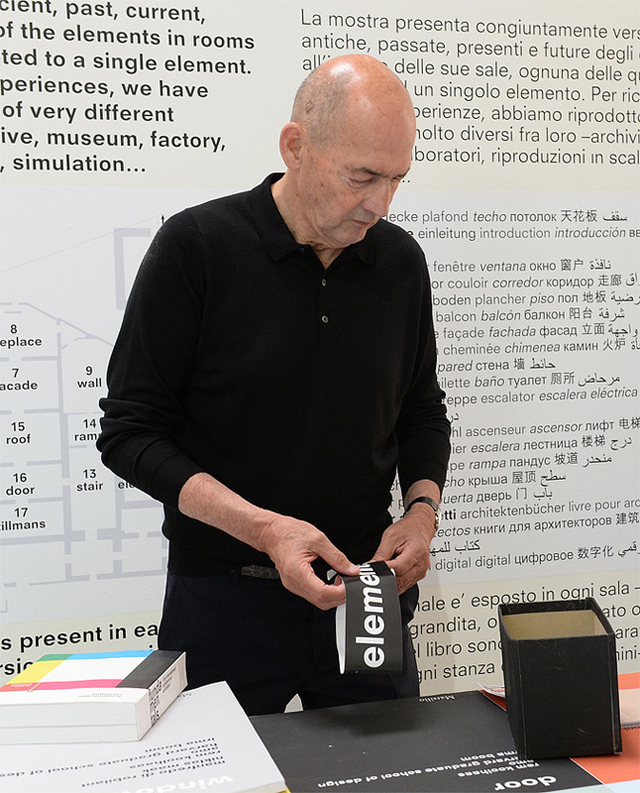
Image Courtesy of la Biennale di Venezia
In the entrance, there is a duality, a contrast between the great dome, “filled” with structural and formal "information", and the nowadays suspended ceiling that appears to be somewhat disconnected and clearly with excess elements, to which the architect has little to define. Somehow it conveys the idea that this element has been increasingly depurated or simplified. The idea is that architecture may have lost its "special domain" to other techniques.
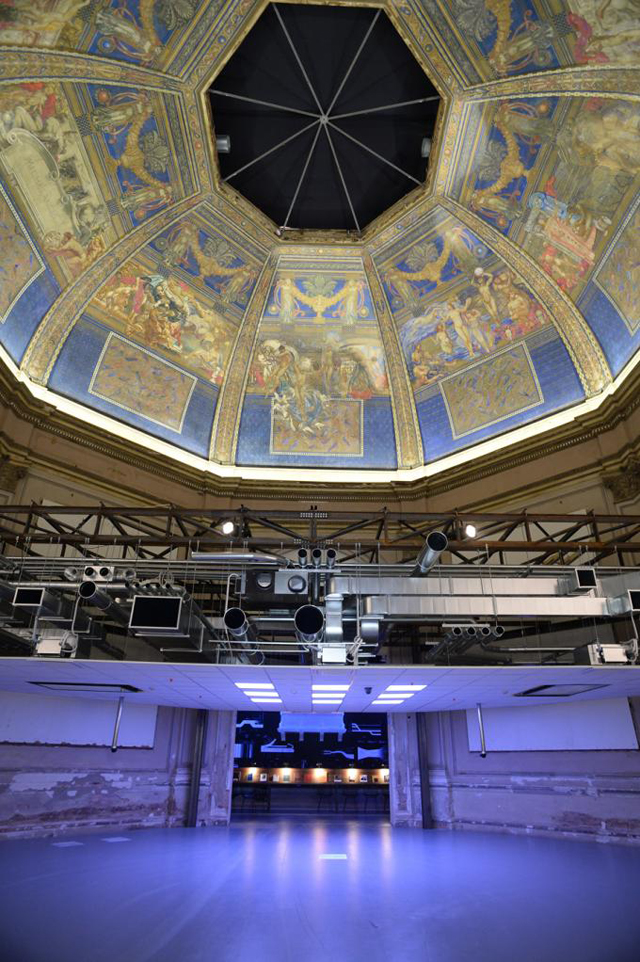
Image Courtesy of la Biennale di Venezia
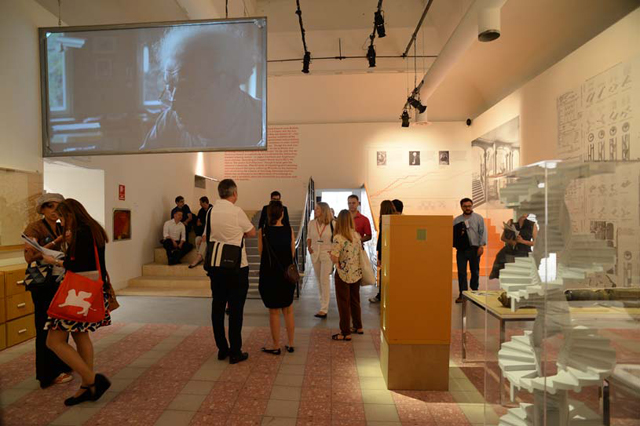
Image Courtesy of la Biennale di Venezia
In the stairs room, we can be find Professor Friedrich Mielke‘s collection, a scholar in vertical elements.
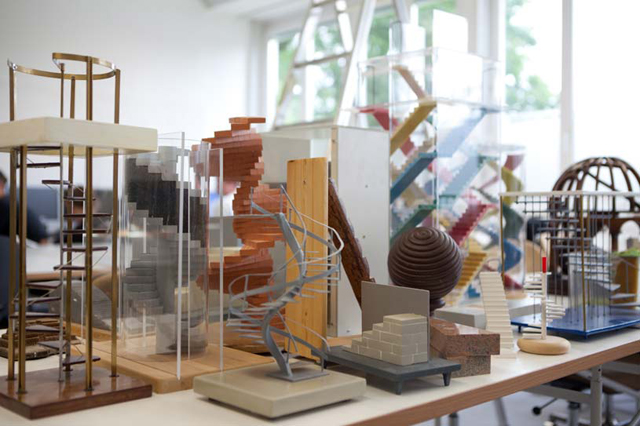
Image Courtesy of la Biennale di Venezia | Photo By Francesco Galli
Image Courtesy of la Biennale di Venezia | Photo By Francesco Galli
A room dedicated to ramps, relates two different points of view, between the French architect Claude Parent, which undermines the horizontal plane, believing that is possible to live in hilly areas, and Tim Nugent, who dedicated his work developing access standards for people with disabilities.
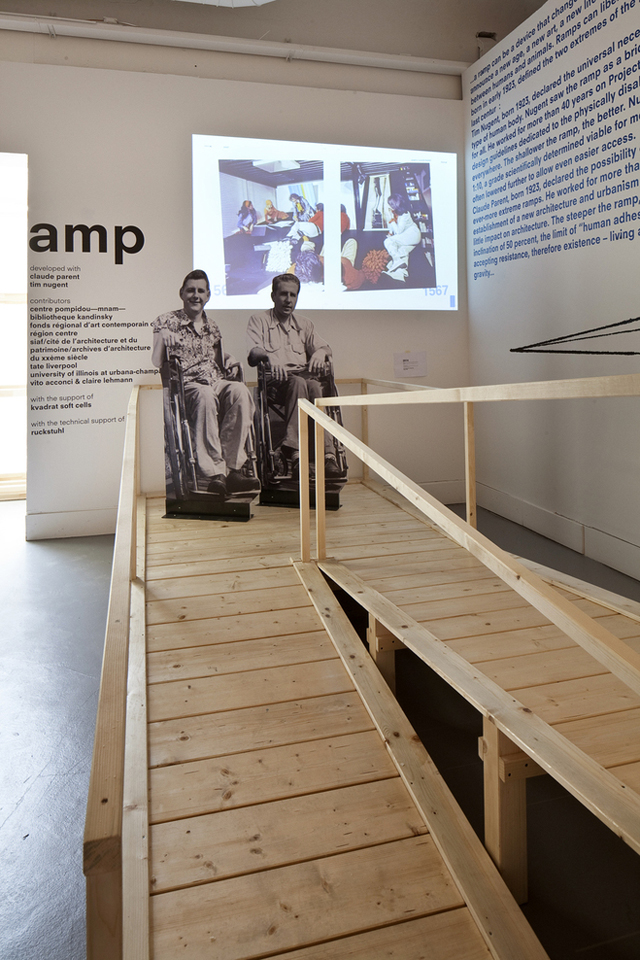
Image Courtesy of la Biennale di Venezia
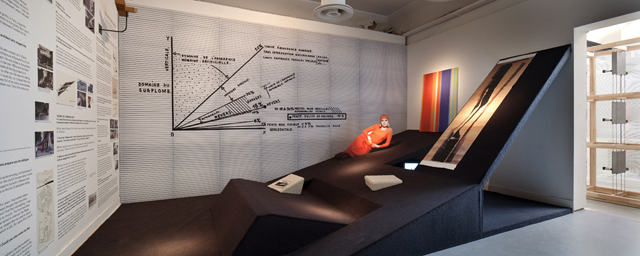
Image Courtesy of la Biennale di Venezia
In the walls room, in addition to numerous examples of this element, there is a prototype of a wall that seems to breathe, created by Frank Barkow e Regine Leibinger, which expands and compresses, culminating an analogy to this element’s evolution through times.
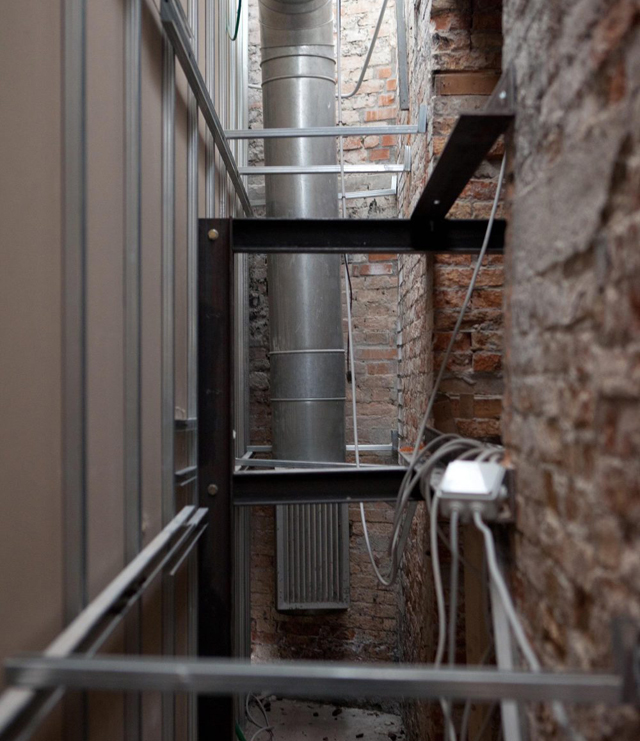
Image Courtesy of la Biennale di Venezia | Photo By Francesco Galli
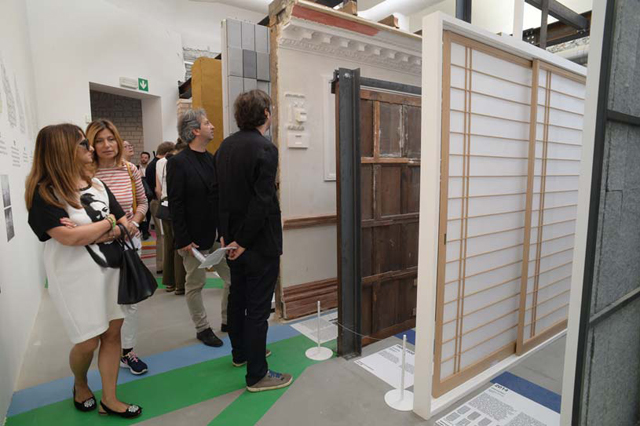
Image Courtesy of la Biennale di Venezia
All the windows of the room dedicated to this element have been provided by the architectural historian Charles Brooking, a collector of windows which has about 200.000 examples.
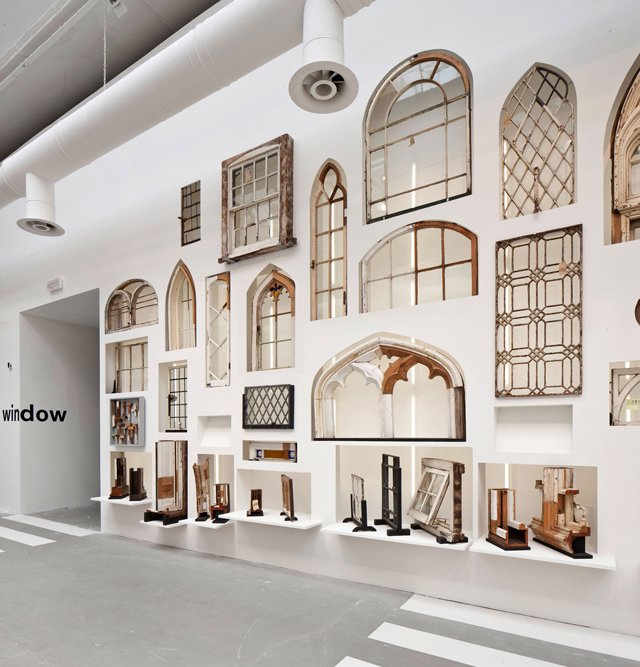
Image Courtesy of la Biennale di Venezia | Photo By Francesco Galli
Another room has numerous doors from various countries, in several different shapes and configurations, as well as various door knobs and handles.
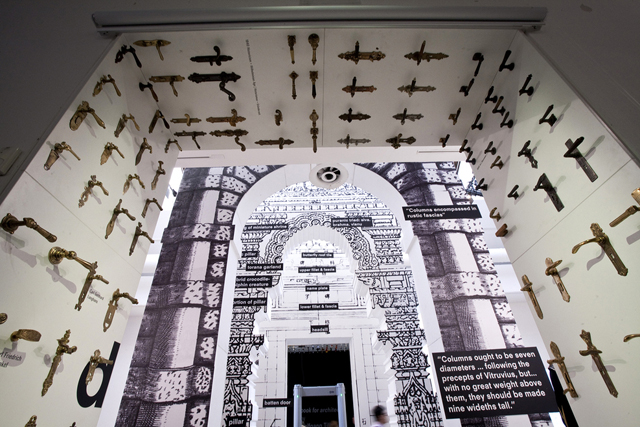
Image Courtesy of la Biennale di Venezia
The façade room explores several materials and formal possibilities that this element may assume through different geometric or organic shapes, color and texture variations.
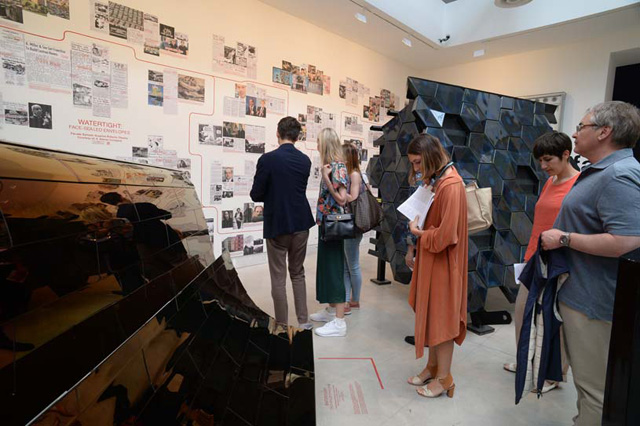
Image Courtesy of la Biennale di Venezia | Photo By Francesco Galli
The bathroom room explores the evolution of its elements, such as the toilet and sink.
Finally, it is extremely interesting to figure out the importance of all the elements that make architecture. In this exhibition, the way these fundamental elements are related assumes a secondary role, giving "space" to the true essence of each one of these.