


IKEA creates refugee shelter
In collaboration with the UN refugee agency

|
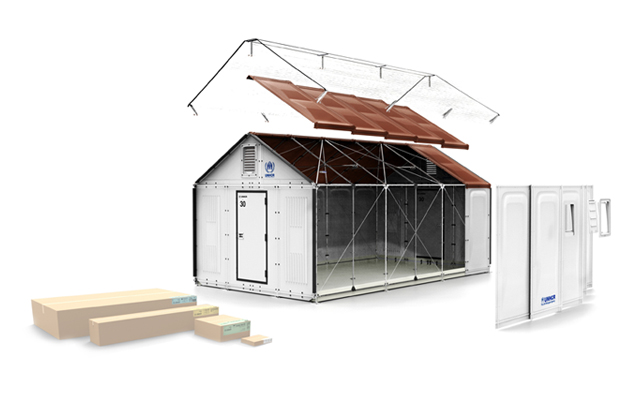
Taking advantage of its expertise in designing modular systems in flat packs, the IKEA Foundation has designed a modular shelter for refugees in collaboration with the UN refugee agency.
The shelters that are currently used in refugee camps consist of ridge canvas tents, vulnerable to those regions extreme weather conditions, without any insulation, no electricity and therefore no light or heat after nightfall, and an average durability of six months. However, according to statistics from the United Nations High Commissioner for Refugees (UNHCR), the average stay of refugees in this type of structures is 12 years.
The goal was to develop a new approach to these shelters, creating a modular system easier to ship, easier to assemble and easier to live in.
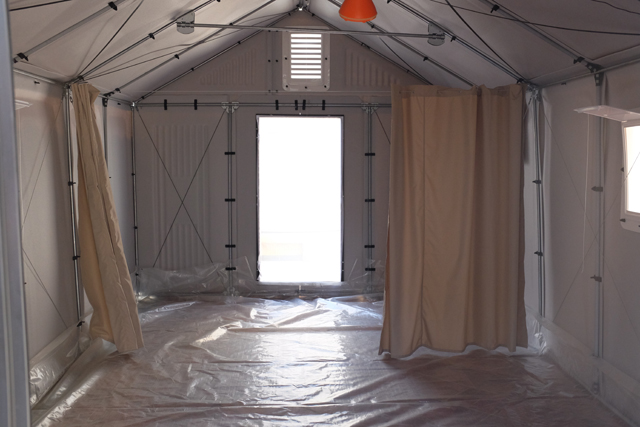
This new shelter prototype developed by the IKEA Foundation is composed of lightweight polymer panels, laminated and insulated, which clip into a steel structure. The rooftop is covered with a textile aluminium material, capable of reflecting the sun during the day and maintaining the heat overnight, and includes a flexible solar panel which provides energy to power a built-in lighting system and a USB port.
These shelters are shipped in flat cardboard packs, like an IKEA shelf, and can be assembled in about four hours.
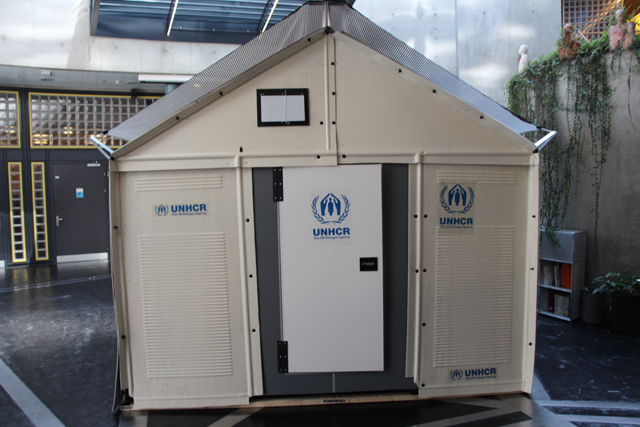
According to UNHCR, the first prototypes of these new shelters are being tested in Ethiopia and the Syrian border and is expected that they can soon be applied in refugee camps in Lebanon and Somalia.
Beyond its increased durability, over 3 years, each shelter has approximately 17.5 m2, twice the area of a traditional tent currently used in refugee camps, and can accommodate five people.
According to UNHCR statistics, in 2012 more than 15 million people were living as refugees across the world and nearly 29 million were displaced in their own countries. These combined figures are the highest of the last two decades.
For now, each prototype has a production cost of about $ 8,000 USD. However, UNHCR is waiting these first experiences feedback in order to give the green light to a large-scale production which would allow achieving a production cost under $ 1,000 USD per unit.
Find out more at: http://www.ikeafoundation.org