


Italian Radical Design
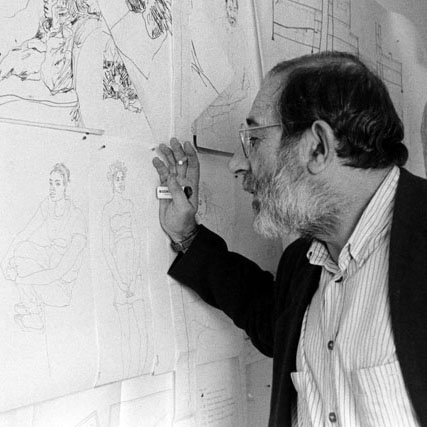
Interview with Gaetano PesceImages: Nuno Ladeiro / gaetanopesce.com

|
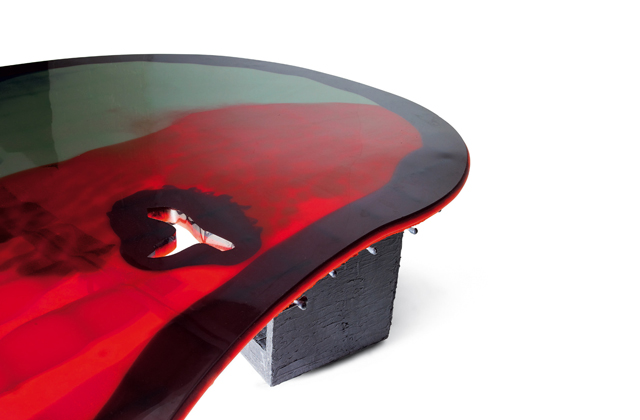
Gaetano Pesce, leader of Italian Radical Design, is well known worldwide for his multidisciplinary work, experimental and non-conformist. Currently, his work can be found in the permanent exhibits at major museums all over the world.
In an unpublished interview, we analyse some of the stages of his career, which already has more than 50 years and reflect upon different theoretical issues and matters in an effort to anticipate the future of design.
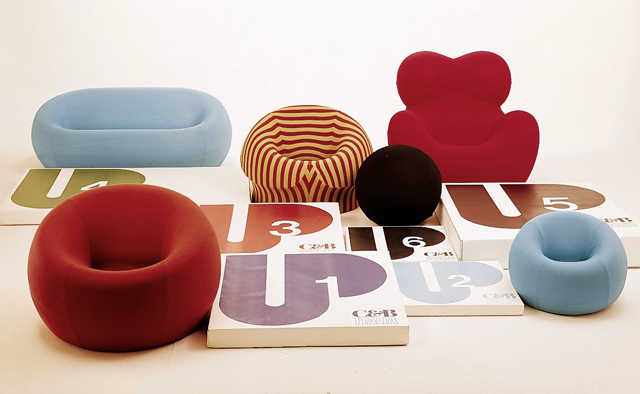
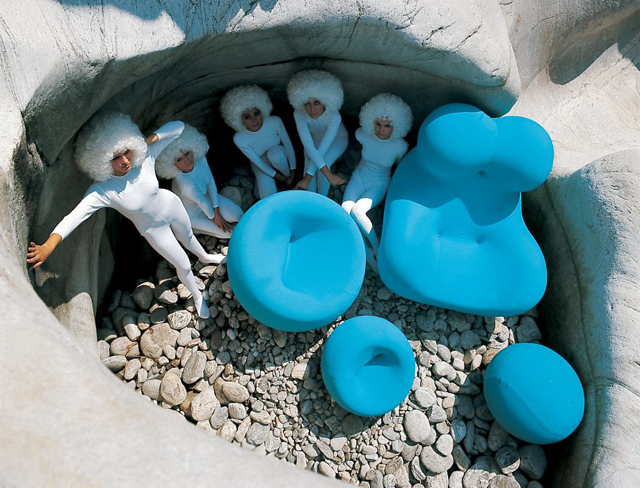
1969 "Up" by Gaetano Pesce - C&B Italy
Nuno Ladeiro: What do you understand by customization of mass production?
Gaetano Pesce: "This is a political subject, covering the meaning of freedom, the right to difference. In general, as individuals are free to accept their diversity, so are objects.
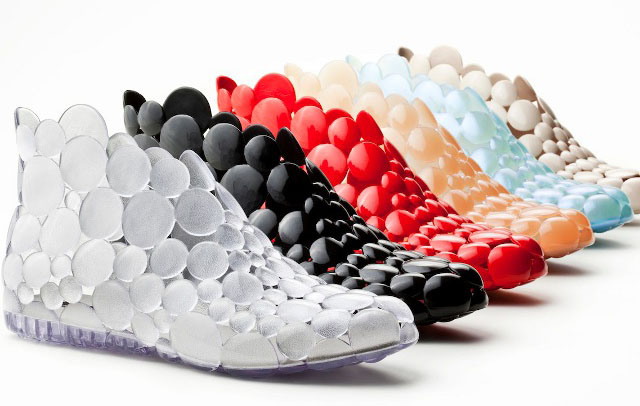
2009 "Fontessa" by Gaetano Pesce - Melissa Shoes
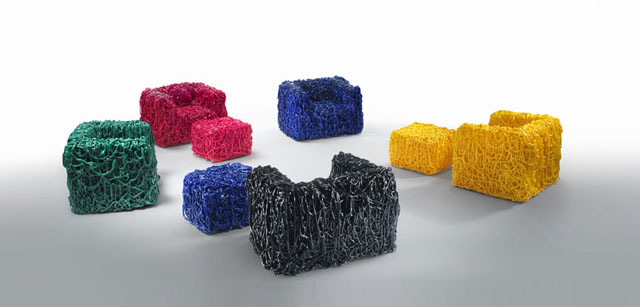
2010 "Senza Fine" by Gaetano Pesce - Meritalia
N.L. Your work demonstrates a creativity that comes from Figurativism to Abstractionism?
G.P. "At the beginning of this century we are emerging from a long period in which knowledge was built through an abstract language. In my opinion, this is a rigid form of learning and, to use a 'heavy' term, totalitarian. In written language, without mention a few exceptions, interpretation is impossible and all participation is prevented.
Over the past decades, we have witnessed a growing presence of images in educational methods directed to school age children and also communication tools, such as computers.
Only a few years ago, objects and architecture lacked this image involvement on behalf of an aesthetic beauty. "
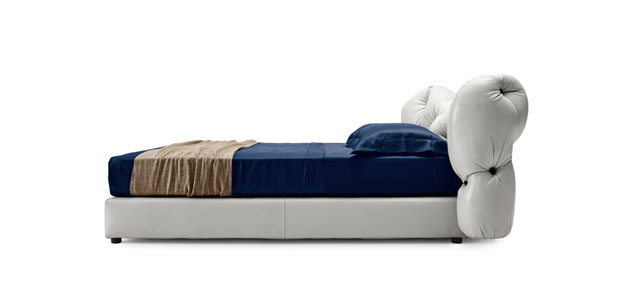
2007 "Nubola" by Gaetano Pesce - Meritalia
N.L. Your work is characterized by a constant demand for new materials and new languages.
G.P. "I am convinced that innovation is driven by three methods: language innovation, technical innovation and use of new materials. When these three factors are met, innovation happens. Even more, a new language represented by traditional materials carries a certain falsity. Therefore, designers must express themselves with materials from their time in order to be sincere. It is a practice that facilitates innovation, which can be quite limited if that expression is made through materials that have already been used as expressionist methods by a series of designers in the past. "
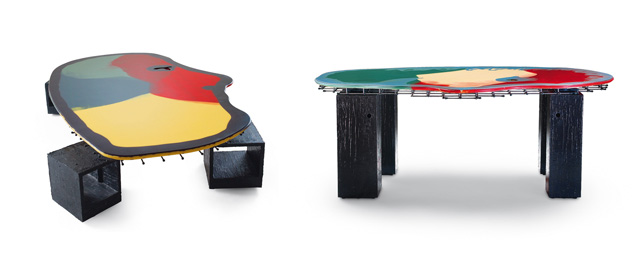
2007 "Tavolone" by Gaetano Pesce - Meritalia
N.L. Do you consider Femininity and Masculinity as driving forces of design?
G.P. "History has always adopted education methods that underlined the qualities of masculinity and repressed expressions of femininity. This history took place over about 5,000 years. In my perspective, masculinity represents the 'public' aspect of thought, while femininity is its 'private' side. As we know, over the past decades the history of the world has entered in what we refer to as a 'private sphere' and its highest expression comes from the brain hemisphere which we refer to as 'female'.
The rigidity, the serious side of things and the lack of colour, strength, ideology, monolithism and ultimately the totalitarian spirit, are characteristics which have lost their power. On the other hand, irony, colour, joy, fragmentation, multidisciplinary approach, flexibility and sensuality are worlds where everything can be found and through which we can enrich our lives and future plans. In our world of architecture and objects, it's time to see designs based on this femininity. In my opinion, this would allow to renew, in a radical manner, the boundaries of creation and thus open a further period as rich as the one that brought us forth. "
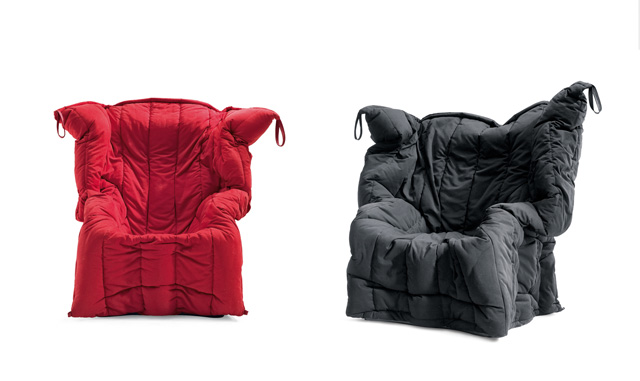
2007 "Shadow" by Gaetano Pesce - Meritalia
N.L. What do you think about Design as a political expression?
G.P. "With modern movement, design became apolitical and this means that this movement deprived creators from the ability to express their own personal points of view, existential and political. Their expression space became a series of pragmatic information relating to the rational use of materials and the functional characteristics of products. Architecture, which once was able to express intense concepts as violence or treat, is now experiencing a long period of silence. The same happens with objects. I am convinced that, at the beginning of this century, architecture and objects will be able to recapture this ability and right to express political views from their authors, their forms of thought, their origins, their identities."
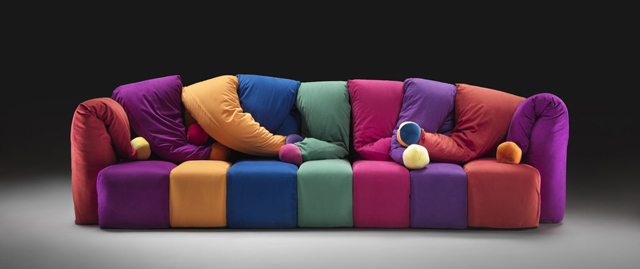
2012 "Il Giullare" by Gaetano Pesce - Meritalia
About Gaetano Pesce
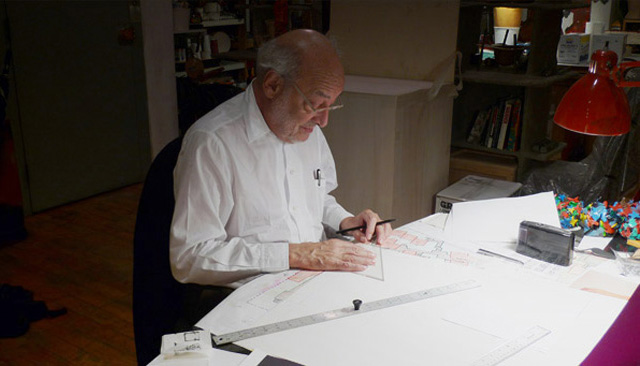
Born in La Spezia, Italy, in 1939, he studied Architecture and Industrial Design at the University of Venice. He lived in Padua, Venice, London, Helsinki, Paris and, since 1980, New York. He was a professor at several renowned institutions in the U.S. and abroad, including the Cooper Union in New York. He also worked intensively in Architecture (some of his projects include the Fiat Lingotto factory in Turin, the Maison des Enfants at the Parc de la Villette, in Paris, the Gallery Mourmans in Belgium, the Torre de Sao Paulo, the Bahia House, and the WTC reconstruction design) and design (Tramonto a New York, UP5 & UP6, Broadway, Feltri, No Body's Perfect, Moloch), as well as in Art.
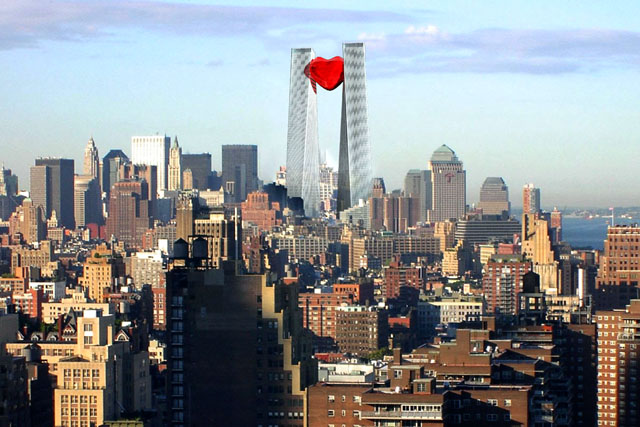
2002 "WTC Rebuilding project" by Gaetano Pesce
In 1972, he participated in a stimulating MoMA exhibition, "Italy: The New Domestic Landscape". Pesce's works are part of permanent collections at some major contemporary art museums all over the world: the Museum of Modern Art and the Metropolitan Museum of New York, the Victoria & Albert Museum in London, the Museum of Modern Art in San Francisco, the Centre Georges Pompidou and the Museum of Decorative Arts, both in Paris, the Museum of Decorative Arts in Montreal, the Museum of Modern Art in Turin and the permanent collection of Design at Milan Triennale.