


Low-cost Architecture
Innovative and affordable examples

|
At a time when the economic crisis seems to be installed all over the world, architecture reveals to play an increasingly key role in the sustainability of our cities, contributing significantly to improving the quality of spaces and day-to-day of its inhabitants.
Today, many architects present new and different approaches, concepts, materials and designs to transform economic constraints into opportunities for innovation and quality, from prefabricated solutions to open-source projects shared on the internet.
Architect Renzo Piano created for Vitra the Diogene House, a micro-house with about 7,5m2 which includes a kitchenette, a bathroom, a bed and storage modules.
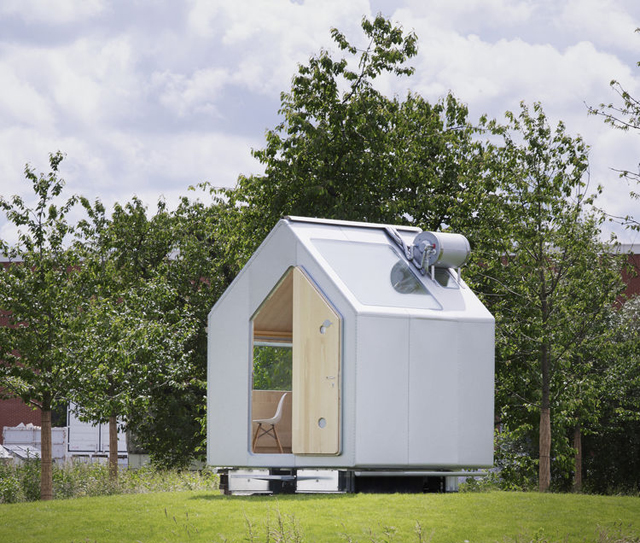
Vitra's Diogene House by Renzo Piano
It is an independent and sustainable housing unit which consists of a wooden structure with 2.5 m wide and 3 m deep, with a living area separate from the bathroom area, and includes a system of harvesting rain water and energy production through solar panels.
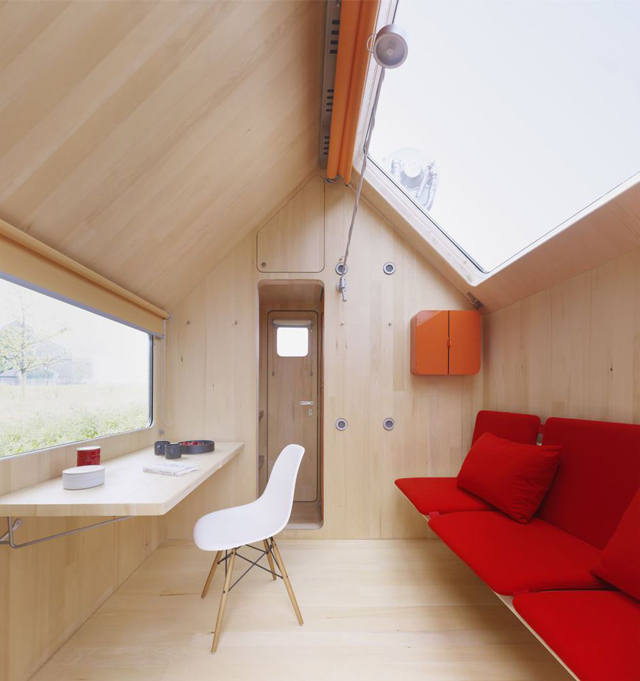
Vitra's Diogene House by Renzo Piano
The prototype can be visited at Vitra Campus in Germany and it is expected that in 2014 this housing unit will be available in three different versions, depending on the clients purposes and the needs, starting from € 20,300.
Inspired by traditional Japanese architecture and the lifestyle of modern societies, architects Mario Sousa Brandão and Marta created the MIMA House which received the ArchDaily - Building of the Year 2011 award.
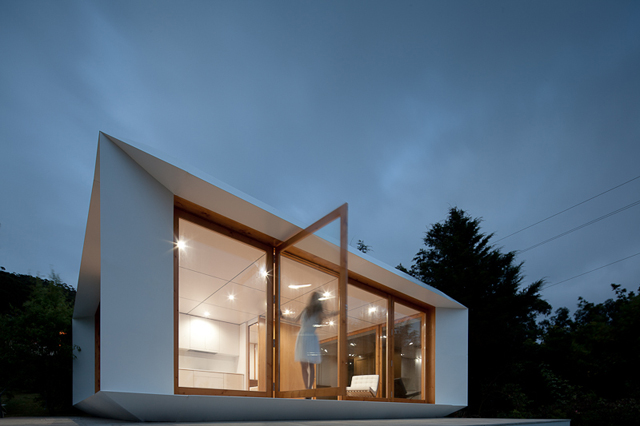
MIMA House - Photo © José Campos
With units from 34 m2 it is possible to create a home to suit each client, where the whole design can be changed, because the interior is composed of panels and modular pieces that can be customized by the client. Coloured panels can be placed (and changed) over the windows or over the walls in the same custom logic.
The base module is available starting from € 21,580 but the final cost may vary according to the area and the client’s options.
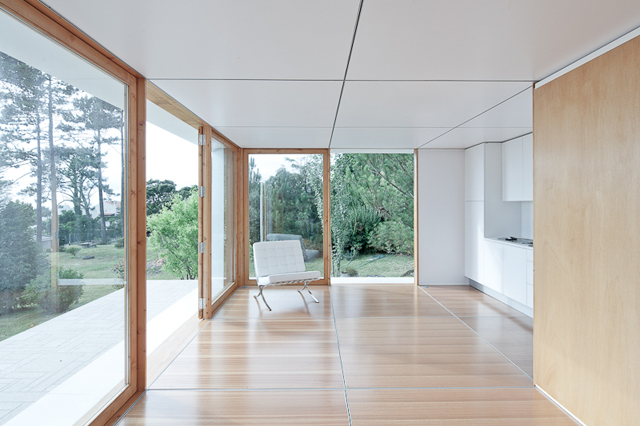
MIMA House - Photo © José Campos
Architect Eurico Silva created UCHI, which in Japanese means "comfortable home", consisting of a modular, versatile, economic, ecological and portable house.
The starting point is a 21 m2 module which can be fully customized by the client, from the interior and exterior coatings, to the colour of the walls, the floor, or even kitchen and bathroom equipment. UCHI can assume various functions, from housing, sales stand, office, library or a student residence module.
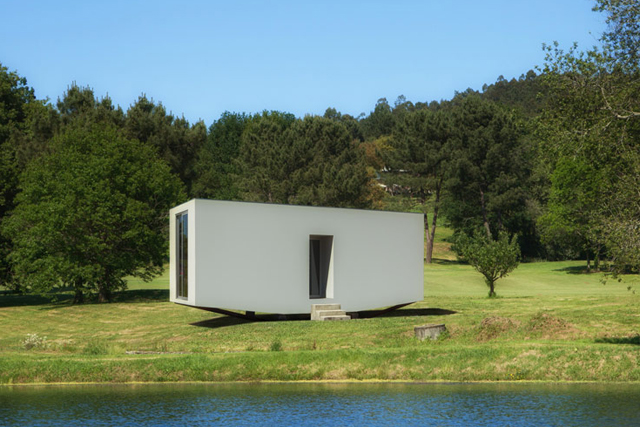
UCHI by Eurico Silva
UCHI housing features three models: basic, eco and high-tech. The basic model is presented as an open space that includes a living and sleeping area with storage, kitchen area and bathroom. The eco model includes photovoltaic solar panels and a portable water system that allows reusing water. The high-tech provides a set of solutions that allows controlling, through a server, lighting, intruder alarm, automatic shutters and / or irrigation system, among others.
The base price rounds € 10,000 and can vary according to the area and customizing options.
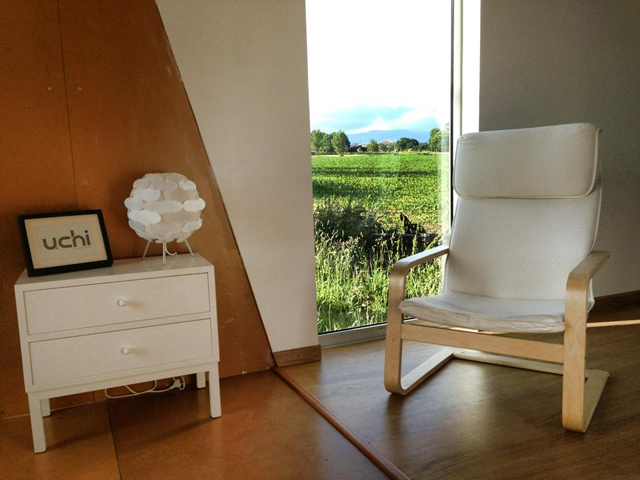
UCHI by Eurico Silva
The studio ÁBATON developed the Portable House series ÁPH80 a housing unit designed for two, easy to transport by road and prepared to be placed just about anywhere.
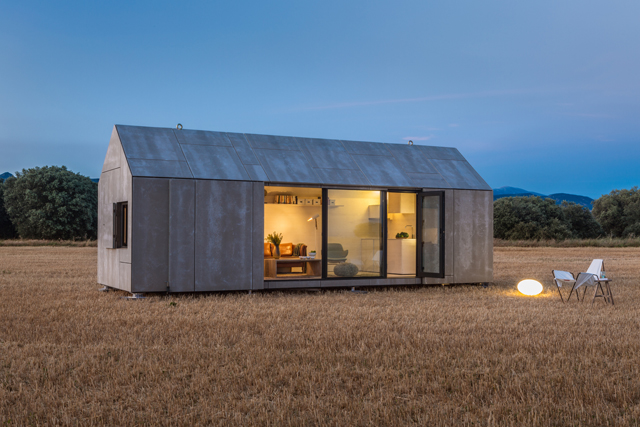
ÁPH80 by ÁBATON | Photo © JuanBaraja
The ÁPH80 presents itself as a two sloped compact volume, mostly made of recyclable materials, which may include up to three different spaces: living room-kitchen, bathroom and double bedroom, in an area from 13,5 m2 to 27 m2. The base price is € 21,900 and can be delivered in about 8 weeks.
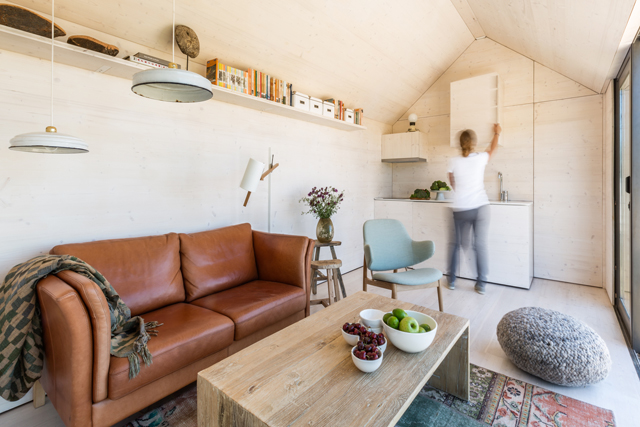
ÁPH80 by ÁBATON | Photo © JuanBaraja
Alastair Parvin and Nick Ierodiaconou from London studio 00:/ have developed the WikiHouse, the first building in the world available in open source. Designed as a low cost solution that could answer global housing needs, it can be built with simple materials according with construction plans freely available on the internet.
The construction of this house requires no special parts and can be made from wood pieces that fit together. According to its creators, a WikiHouse structure can be assembled in less than a day by people without any construction skills.
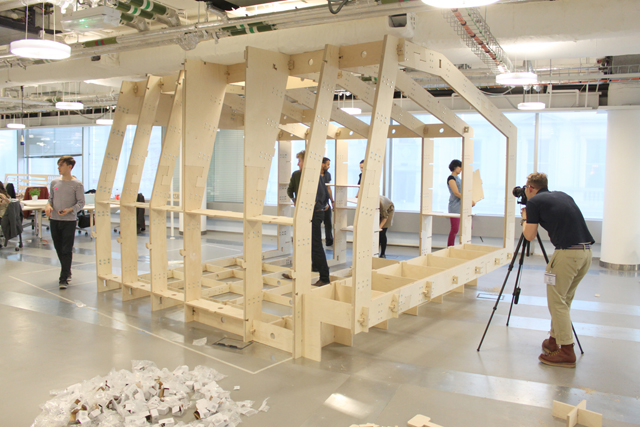
Wikihouse prototype
Using a CNC machine, it is possible to access the cutting plans from the company's website and then "print" in a plywood sheet the parts that make up the WikiHouse.
The aim of this project is to allow anyone in the world to access, adapt and "print" a very cheap house that can be adapted to your own needs.
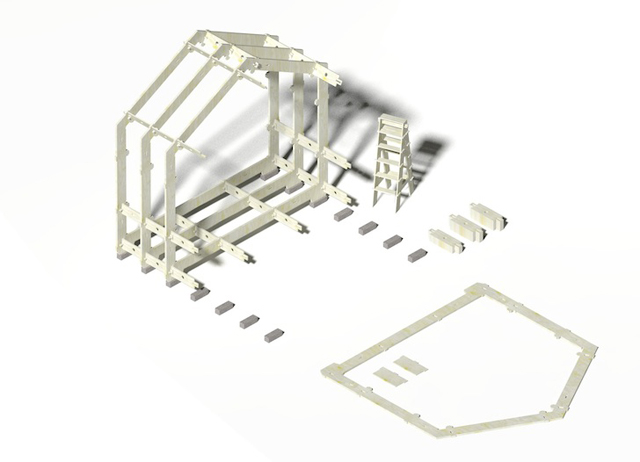
Wikihouse structure
What distinguishes the WikiHouse project is its collaborative nature, allowing contributions from any person, from any part of the world. The WikiHouse base project has been adapted by architects from New Zealand, Rio de Janeiro, Mexico or Beijing intending to contribute to solve the housing problem worldwide.
Recently invited to speak at TED Talks, Alastair Parvin defends his idea of "radically democratizing the production of architecture," where "increasingly the project team may be the entire world."