



Painting a wall
A rennovated space

|
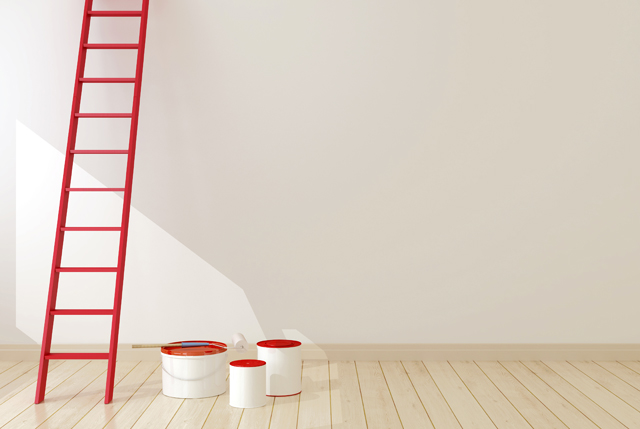
Paintbuckets ready for action
When the sun enters our home it makes us think if it's a good time to give it a new shine.
Then we consider the cost of buying new furniture and what we'd do with what we already have...
A cheaper solution is painting walls in a different color or pattern.
It can revolutionize the entire house for a bucket or two of paint!
Then come the doubts.
Which wall to choose?
What color will work better?
First of all we must analyze the space in question and it's function, trying to realize the sensations we need to deliver there.
The best to do here is achieve a balanced and confortable ambience.
The position of the wall you'll choose will also influence the perception of the space, so consider it's shape and size.
Any place can become wider or more compact, warmer or colder, more or less brighter. All you need is the right color.
Warm tones make everything seem closer and cold ones give the room more space.
If you follow this simple rule, just apply accordingly - a narrow, long space should be painted on both walls with a neutral tone, with a warm one on top. That will balance out the place.
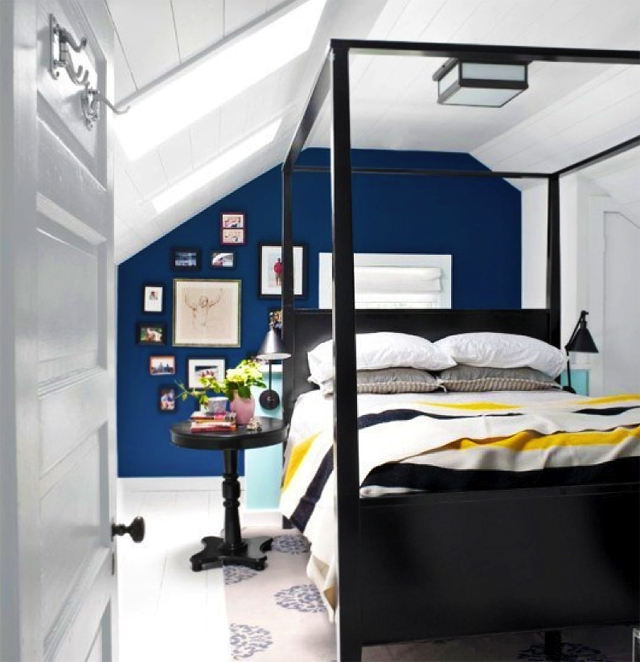
Blue Wall | Image via Ötletes Otthon
The orientation of the room cannot be ignored, north-facing divisions require warm and vibrant tones to balance out the inherent darkness in them.
In contrast, south-facing rooms should be compensated with colder tones, since they're bright and they can handle their pros and cons.
Inside any room, the relationship between the wall and it's windows is another important aspect.
Walls in which direct sun light shines will look brighter and more vibrant, whilst shaded walls will have darker tones.
We recommend painting a piece of cardboard and using it as a an experiment to be sure of the final result beforehand.
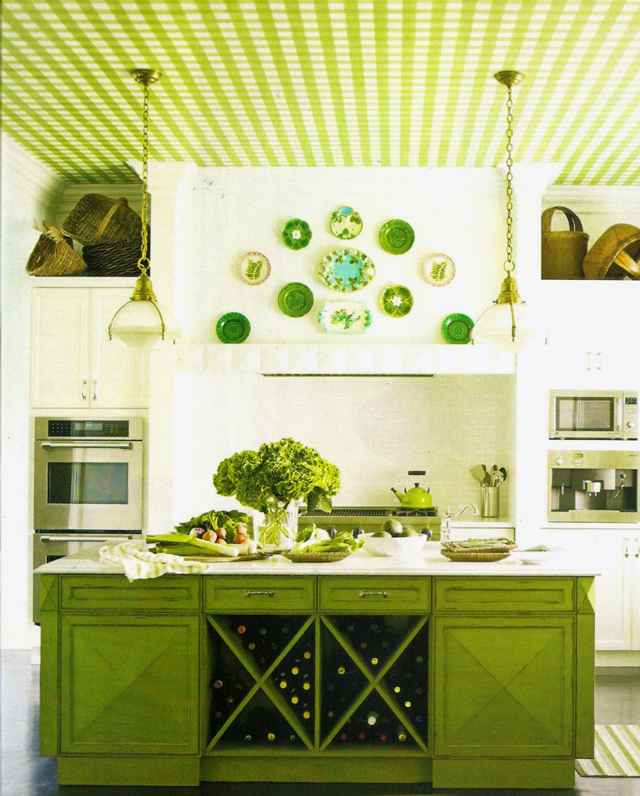
Painted Ceiling | Image via Roseville & Rockin Homes
Painting the ceiling may also be an original and intriguing solution.
If the room has a big height it will seem to lower it, bringing more confort to the space.
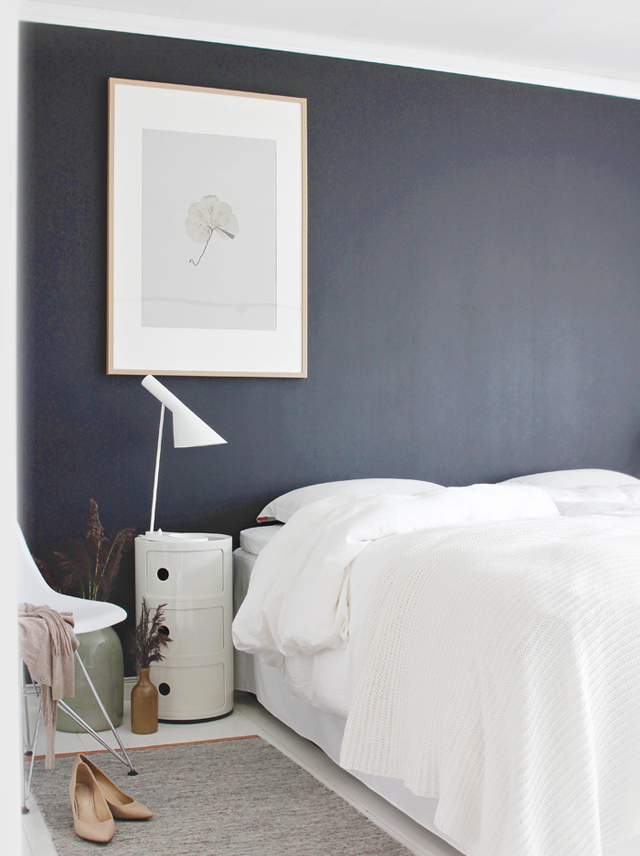
Grey Wall | Image via Stylizimo
Bedrooms have the bed as it's centerpiece.
Being the centerpiece makes it a prime target for further emphasis. Painting the wall behind it with a different color achieves this effect.
Also, it makes sense to color a wall behind the view of the bedroom's dweller.
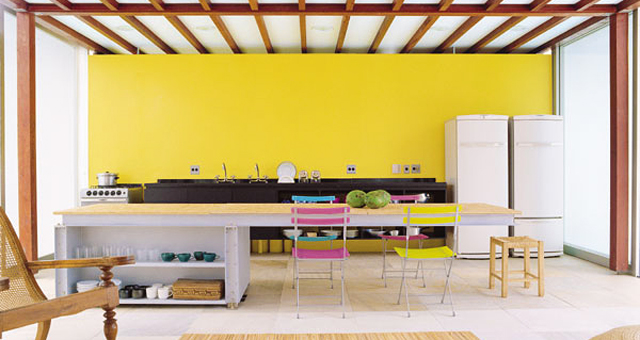
Yellow Wall | Image via casa.com.br
This last rule is identical for bathrooms, where you'd apply color behind the washbasin.
In kitchens you may also choose the kitchen sink or the stove's wall to give them the spotlight.
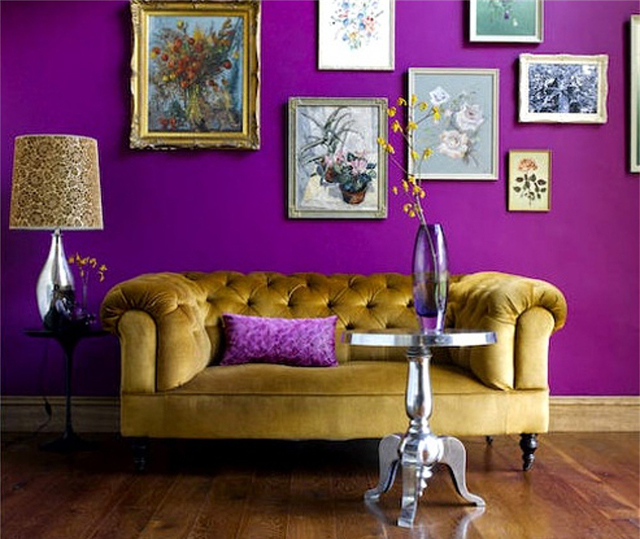
Purple Wall | Image via nousDECOR
Look around, observe the existing color pallet in the room's decor and identify the tones which you think might work well as a backdrop.
The selection of those tones is not obvious, sometimes it's best to pick the color of a small detail like a pillow to make it work.
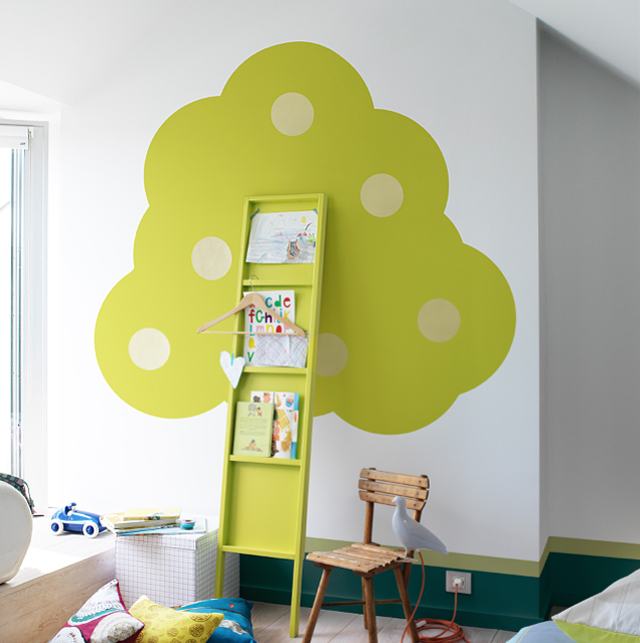
Tree on the Wall | Image via Wooniversum
Colors influence our spacial perception. Colors guide our emotions and, hence, our actions.
Bright or pastel colors usually work well for resting areas like rooms. The only exceptions to this are playrooms for children where vibrant, stimulating colors are in demand.
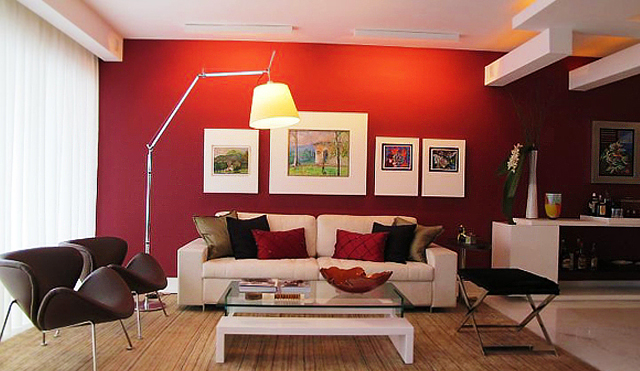
Red Wall | Image via Michele Generoso
In living rooms and social spaces you'll want to transmit energy and stimulate communication.
Warm and lively colors work best for them.
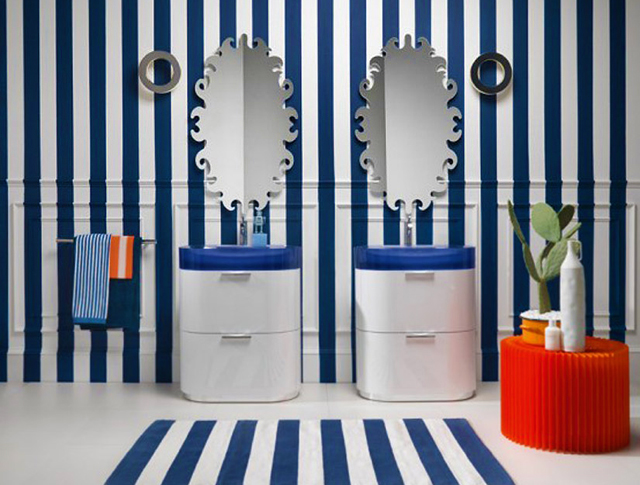
Striped Wall | Image via Amazing Decoration
Bathrooms ask for cleaner tones, associated with hygine.
Although it may vary according to the space in question and it's usage.

Painting with your family
After having picked the right wall and color for it, here's what you may have to do:
- Calculate the required paint for the area in question: measure the width of the wall and multiply it by it's height. Then multiply it by 2 or 3, the amount of times you'll have to layer paint. Check the paintbucket's capacity for this effect.
- Gather up all your materials: sandpaper, tape, Junte todo o material: lixa, fita adesiva, brushes or rolls, cleaning products, solvent, plastic wrapping, newspapers, old rags and a ladder.
- Remove the outer pieces of your sockets, put tape all around your windows and doors as well as any other element that's in contact with the wall.
- Protect the floor with plastic wrapping or newspapers. Secure them with the tape as well.
- Use the sandpaper to remove any imperfections on the wall.
- Stir the paint with the brush and start by painting a horizontal line next to the ceiling. Afterwards just use the roll to paint the rest, using vertical movements.
- Wait for the paint to dry before repeating this in the second layer. If it's necessary, apply a third layer.
- If you want to apply a pattern, check if the paint is dry enough and apply the tape on the contours of what you want to paint. Then paint it with the brush or apropriate tools.
If you dont want to go on this adventure on your own, ask your family for some help and see how easy and fun it can be!
The result itself is worth it. A brand new space, for everyone.