


Street Art
Divergence of opinions

|
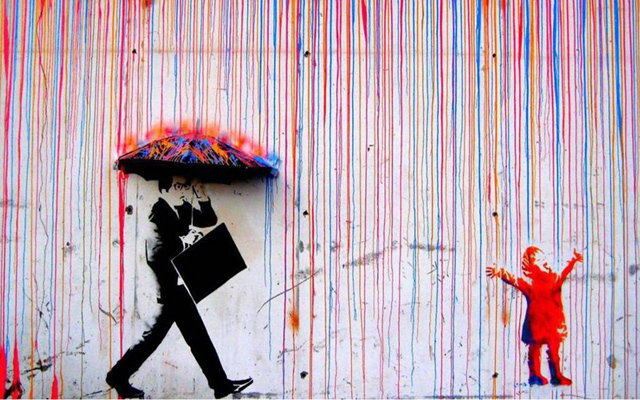
CMYK by Skurktur via skurktur.com
Urban art, street art or urbanography refer to artistic expressions developed in public spaces, which differ from institutional or corporate messages as well as mere vandalism.
This kind of art has different forms: graffiti, stencils, stickers, poster-bombs, flash mobs, interventions, installations, video projections, etc...
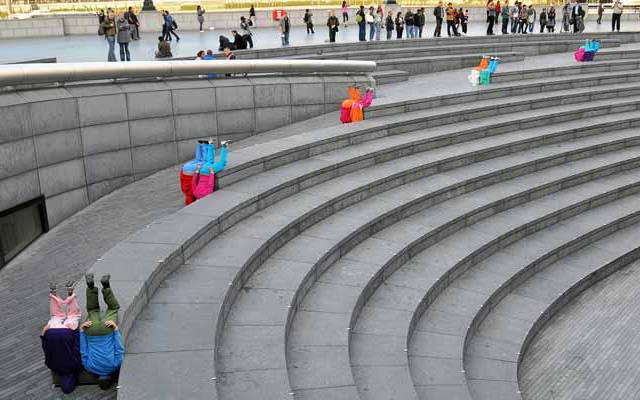
Performance in London by Bodies in urban spaces via seyvet.com
We can say that is a way to communicate with society, conveying ideas, thoughts and critiques, making art through free public support that reach everyone.
This free art directed to the masses, is not seen through the same eyes by everyone... There are those who admire, there are those who will condemn it! Often these Opinions diverge depending on the location, the support medium or the message it conveys.
Any intervention made, for example, in a historic district, it is always under discussion and may be evaluated as a positive provocation or an offensive expression.
We can say that art is a form of provocation, to the extent that provokes sensations in observers, messes with their feelings, and this emotion wag may result in appreciation for the work or a mere dislike.
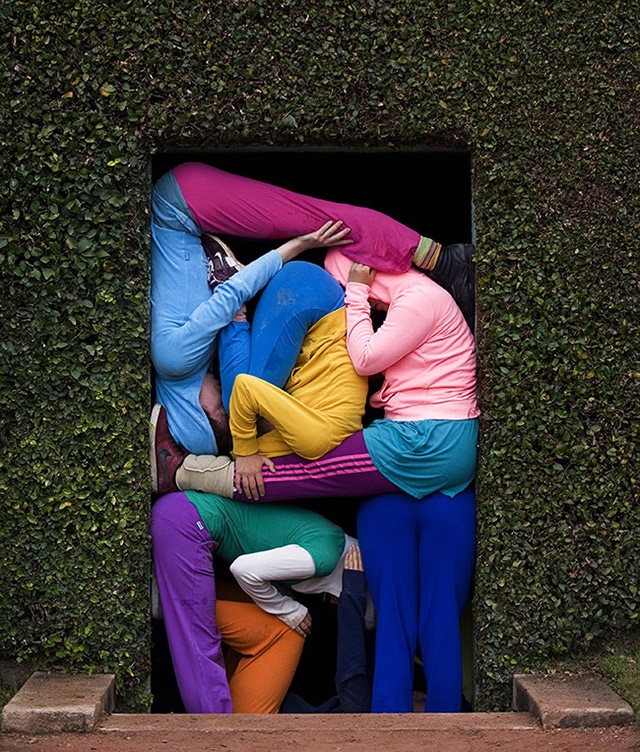
Performance in Porto by Bodies ir urban spaces via metro.co.uk
There are numerous possible support to convey a message; a city itself is a canvas, a scenario with walls and pavements that can communicate with people through drawings, letters and other interventions.
But often these support are private, or psychologically appropriate for people as part of their day-to-day, considered as their own... which can result in anger and disgust by the invasion of "their" space. In many situations, the problem is not the content but rather the attitude to intervene without permission and consent.
Other times, content is the key issue, and public acceptance has to do with identifying with the message it conveys.
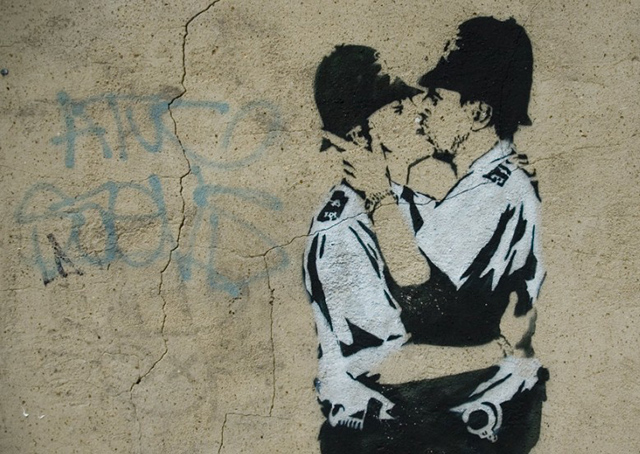
Graffiti in Londres by Bansky via edition.cnn.com
It is much easier to appreciate art if we identify with it, if we feel what it conveys. This happens often in street art with messages about the country, the system, social problems, or about social groups and cultural movements that are often associated with music styles.
The truth is that this type of art is rather speculated and opinions are quite different.
And you, what you think about Urban Art?
Are the venue and the support that relevant?
In this issue a contradiction exists which is difficult to solve. In many cities, street art is allowed provided it is done in authorized locations. Sometimes walls are assigned to graffiti, scenarios for video projections or other artistic installations. However, many street artists claim that the nature of their art is to be made without permission, in locations chosen by the artists, usually overnight and away from people staring, while remaining anonymous and disclosing their works as mysterious interventions that come with the dawn.
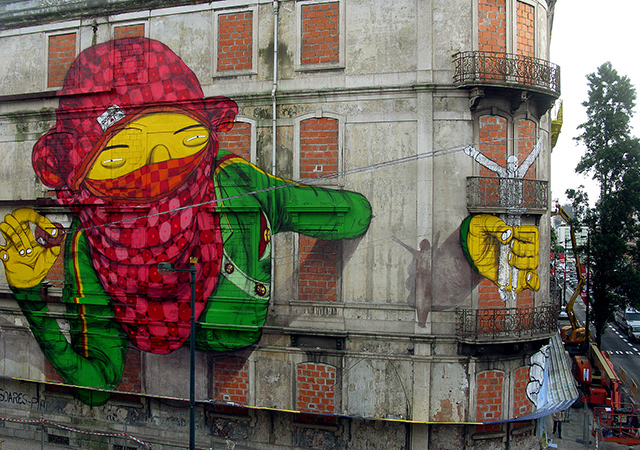
Graffiti in Lisboa by Gémeos via hyphytek.net
Talking specifically about graffiti, this form of expression is considered art when it has characteristics that valorize as such; in other cases, critics say, is nothing more than tagging, defined as the act of writing or scribbling over walls or facades as a protest, an insult, a statement or as marking of territory between groups. This distinction helps to define the acceptance of street art to the public.
Many artists also contend that this is not art from the galleries, is a free art, made in a public space, with free access for everyone.
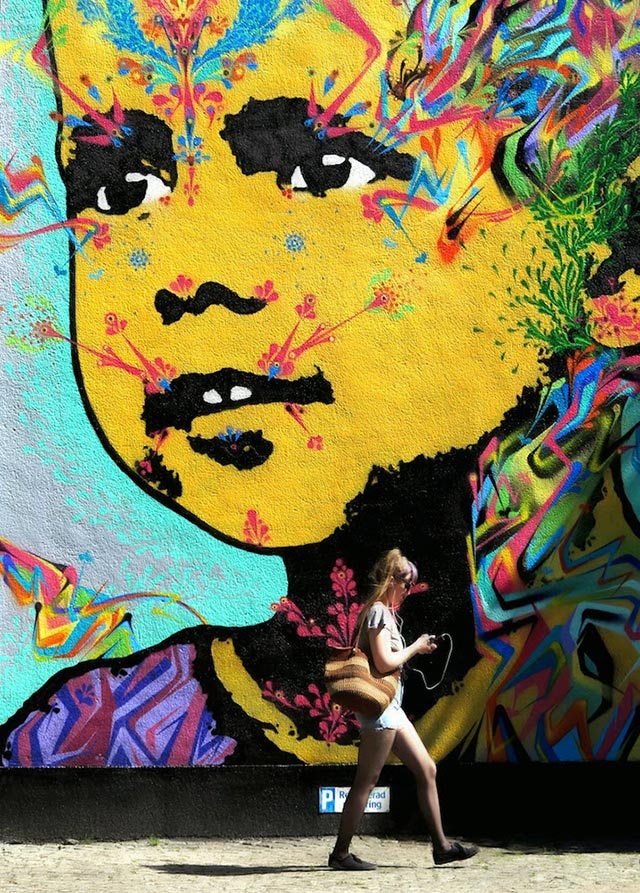
Graffiti in Malmo by Stinkfish via googleplussuomi.com
Then there is the question about the support. What do you think about art made in derelict buildings?
Some consider as an added value the art made in unoccupied and degraded places, acting as an embellishment of the city itself, creating spaces for contemplation instead of ruins.
And in historic areas, is there place for this type of art? If the gear does not interfere with the historical and morphological characteristics of a building, can they coexist in the same space? Or is it a clash of cultures and eras?
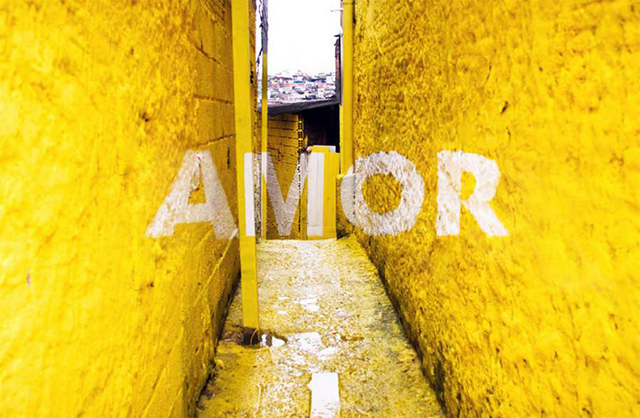
Graffiti in S. Paulo by Boa Mistura via wordlesstech.com
Sometimes there is a very negative opinion about street art, but it is important to talk about something that occupies the same visuals and often no one disputes: advertising. While walking around the city, we are faced with huge billboards that cover the facades of major buildings, which are paid interventions generated by large companies that compete with free art.
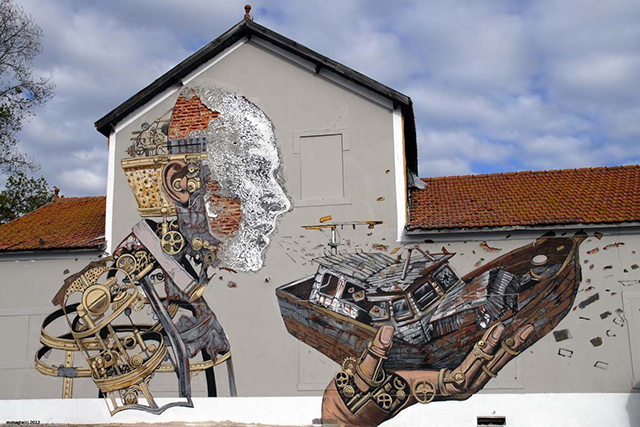
Graffiti in Lisbon by Vihls via http://ourhouseisourworld.wordpress.com/2014/01/20/alexandre-farto-aka-vhils/
Another controversial issue and interesting is the polarity between street artists and architects.
In the background, the works of these two types of artists end up blending, for the work of architects are buildings and, sometimes, these same buildings are used repeatedly as supports for the work of street artists.
To what extent this coexistence of arts pleases architects? Will it cut off value to their work? Or, on the contrary, duplicates the looks over both creations?
Opinions diverge and the boundaries of art are also hard to define, art it is always controversial, and the more exposure it gets, the more controversy it can cause.
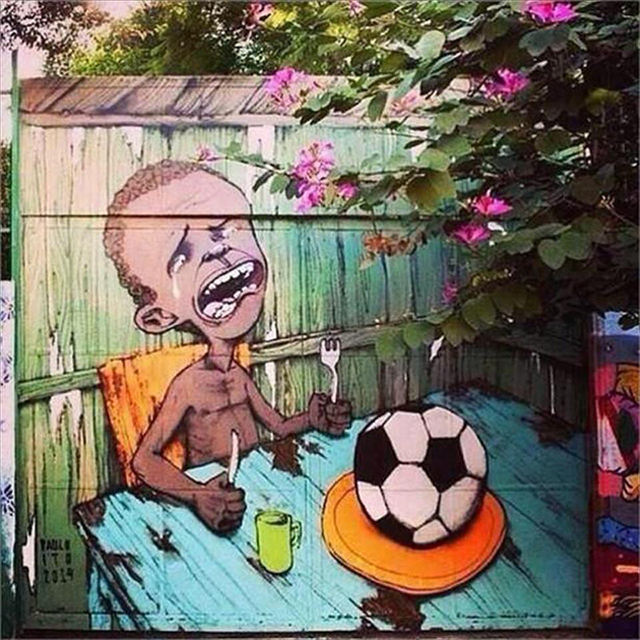
Graffiti in S. Paulo by Paulo Ito via bkreader.com
The city can be seen as a living organism, constantly changing, with more or less interesting things, making it difficult to define what is better or worse: if the boredom of excessively clean walls or the shock some interventions may cause.