


The globalization of Design
Technology and tradition

|
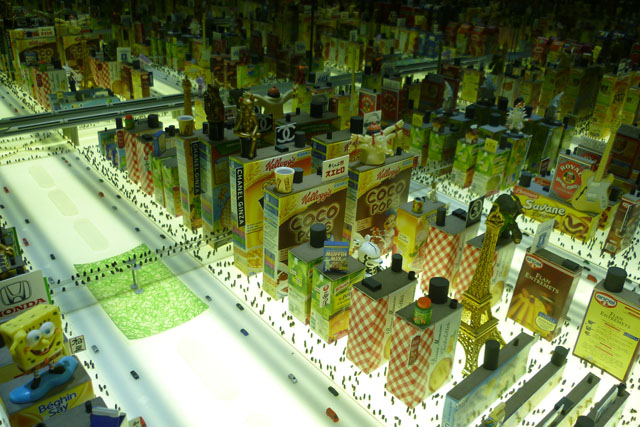
Andrea Branzi, Per una Nuova carta di Atene, Biennale dell’Architettura di Venezia, Padiglione Italia, 2010
When we think of the globalization of design, we focus on Design without boundaries. Internet, television, social networks and general media publishing online all that is going on around us or in the World.
No-Stop-City by Archizoom was undoubtedly the first sign of the globalization of design. In the seventies and eighties of the last century a group of radical Italian designers - among others: Andrea Branzi, Gilberto Corretti, Paolo Deganelloand Massimo Morozzi - created a new city concept, the hybrid metropolis, which corresponded to the birth of post-industrial society . It was the result of the complex modernity stating chaos and contradiction present in society in that time.
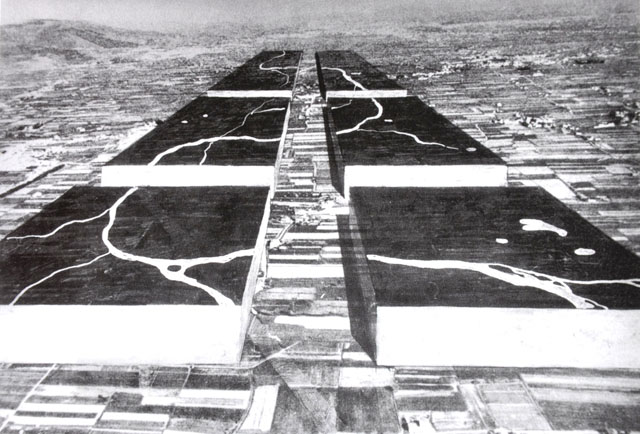
No-Stop City imagined by Archizoom
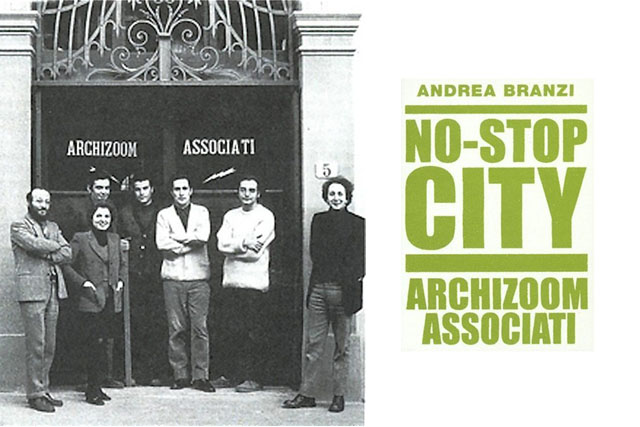
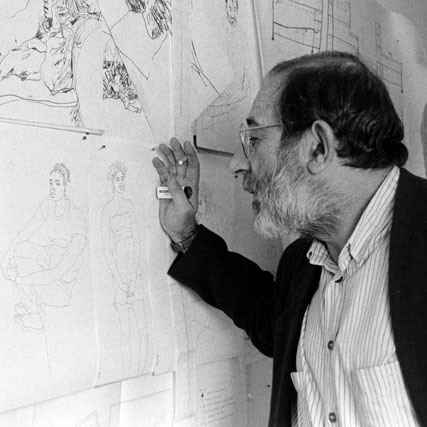
The group Archizoom: Paolo Deganello (left), Massimo Morozzi (center), Andrea Branzi (right)
The increasing consumerism, the proliferation of trends and the diversification of design proposals led to the markets contamination, that became hybrid and illogical. Thus, the industry began to produce in a deeply chaotic and complex environment, resulting from competition, but especially from globalization.
These decades of great development in European industry enabled the confrontation between a more standardized design and a more anarchic one, advanced technologies and primitive methods, mass products and unique customized products, and further between everlasting objects and temporary disposables.
This way, the reference model was no longer, for example, "Oslo", symbol of modern social democracy, but New York, Hong Kong, or even Toronto. Any of these cities live the day-to-day memories and identities of many places and sometimes distant cultures.
These concerns led this visionary group defined new concepts and strategies that have proven essential for today’s industrial designers.
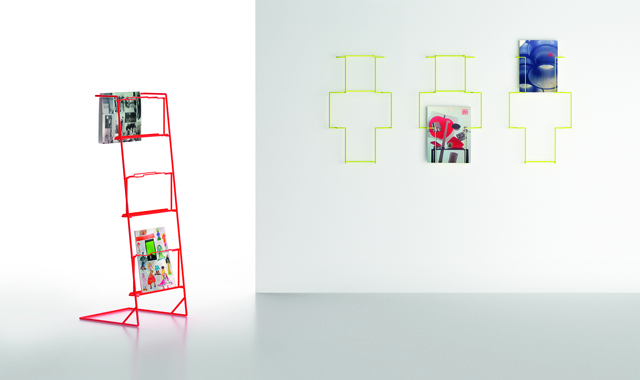
Magazine rack created by Martì Guixe for Danese - multifunctional object to store books or magazines informally. When it is not needed it can be stored or transported easily.
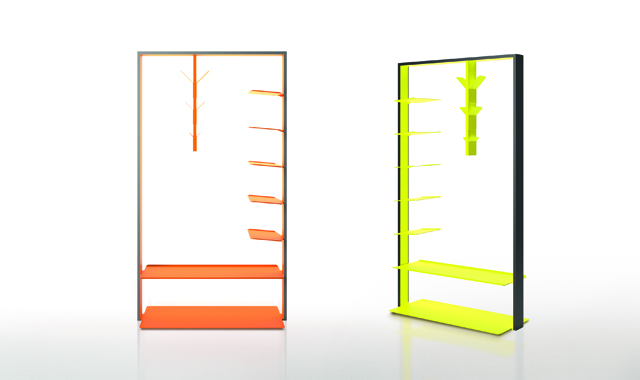
Shelf and hanger Domestic Spin, created by Matali Crasset for Danese - object to assign different functions. Hanger and shelf for books and other items.
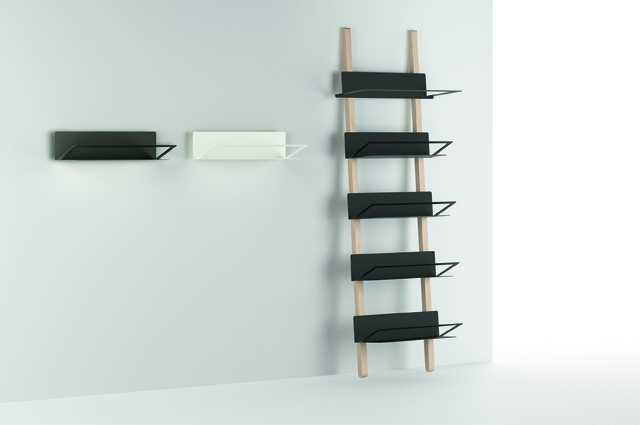
Bookcase and shelf created by Designer Paolo Dell'Elce for Danese - it combines versatility with very simple materials. The object’s basic shape associated to its flexibility allows it to be placed anywhere inside an apartment according to its needs. It can be carried and assembled anywhere.
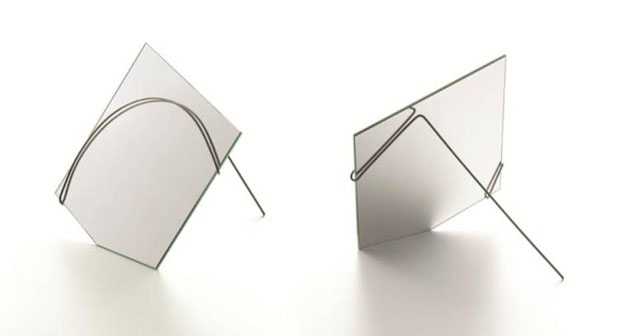
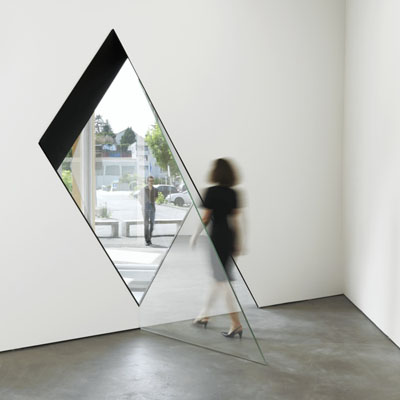
Mirror created by Álvaro Siza Vieira for Danese - an object with primitive and simple character.
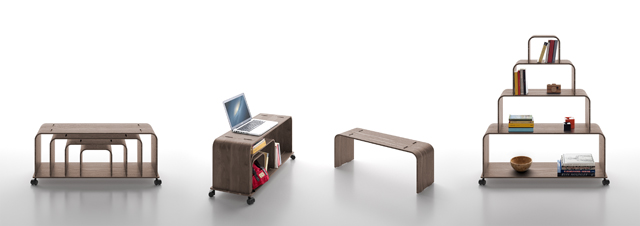
Multifunctional structure created by Giulio Lacchetti for Danese - it can be carried around the house and subdivided even according to the needs. Easy to store and transport.
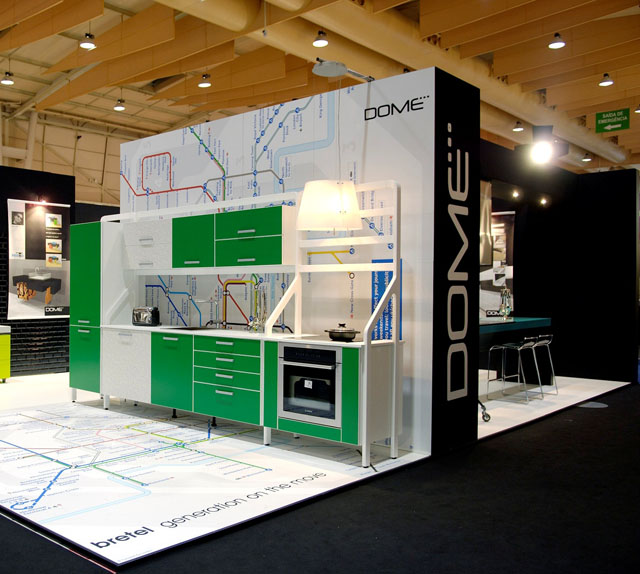
Bretel Kitchen created by Giulio Lacchetti under the guidance of Nuno Ladeiro, manufactured and edited by Dome - is a portable kitchen. It can be easily assembled and disassembled. It has its own structure and does not need be fixed to the wall. It is intended for people who want to maintain the same kitchen even when they move house.
In the nineties of the last century, the development of new technologies has provided a deep reflection on the hybrid metropolis and the No-Stop-City. The house, the office, the street, the hotel and the airport became operational units, where Men started working through the new media. Unlike the hybrid metropolis, the generic metropolis where we find ourselves in, according to Andrea Branzi, consists of very low level of identity places but, however, with high levels of productivity. This new way of life appears today to be the biggest challenge of the XXI century. This is clearly a conceptual and cultural fusion, with apparent contradictions, with conflicting lifestyles in which, for example, a traditional ceremony that involves serving a simple tea can be confronted with any computer technology.
Globalization in this new century has evolved into a new maturity. As Isao Hosoe wrote, a Japanese designer based in Italy, this first decade of this century provided a new generation of objects. A new way of life, less sedentary and increasingly nomadic, that is causing a profound change in our daily tools. On one hand, our homes remain faithful to the trends started during the nineties, on the other hand, new objects can be easily be moved and we carry them inside or outside our homes, anywhere we go.
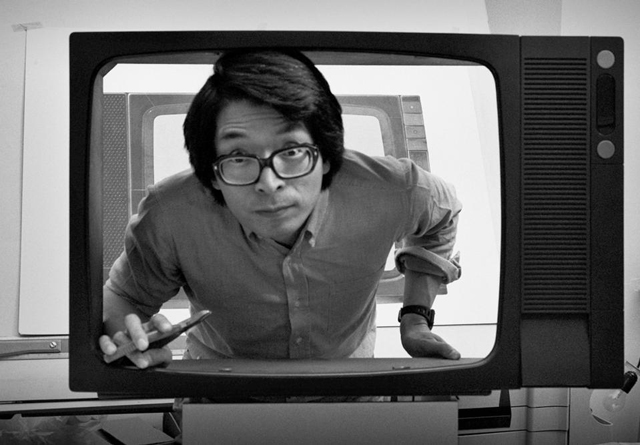
Japanese designer Isao Hosoe
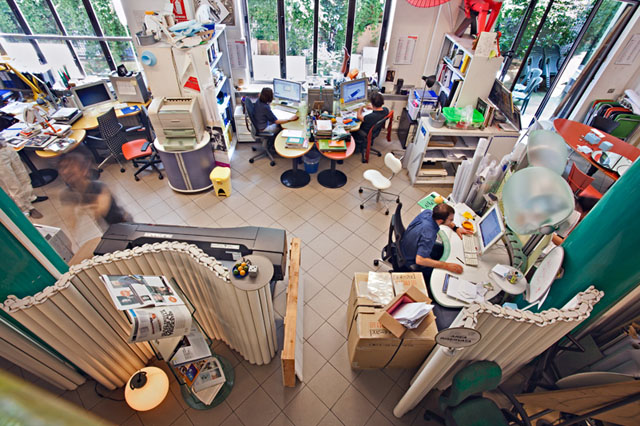
Isao Hosoe’s studio
To Isao Hosoe, we are facing a new challenge that will provide objects capable of turning the static design into dynamic and further address complexity with simple solutions. After all, the important is not the globalization of cultures but the globalization of ideas. It is not about importing inspiration from East to West and vice versa, but to import a new generation of Neo-nomads who, by traveling on a permanent basis all over the world, are spreading their ideas which will be mixed with the different countries industrial culture.
Text by Nuno ladeiro
More information at: