


World Architecture Festival 2013
Find out the winnersImages: Courtesy of WAF

|
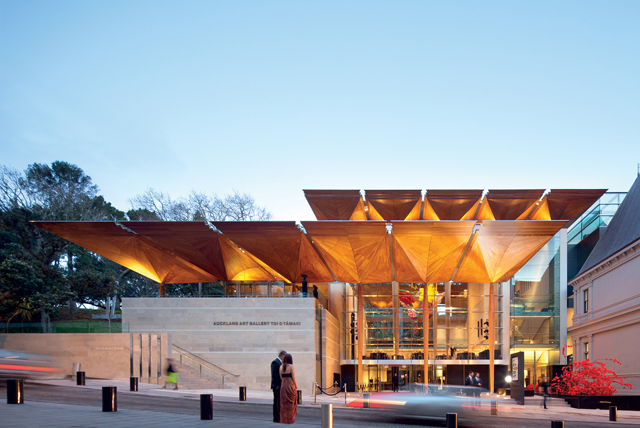
Auckland Art Gallery Toi o Tamaki (New Zealand), FJMT + Archimedia | Photo: John Gollings - Gollings Photography
The World Architecture Festival 2013 held 2-4 October in Singapore, brought together over 2,000 participants from 68 countries for conferences, parties and seminars from some of the world's best-known architects.
The event featured lectures by Charles Jencks and Dietmer Eberle, who filled the auditorium of the festival, while hundreds of architects presented their selected projects for spectators and jury members.
At the end, were announced the winners in each of the 30 categories, culminating in the selection of the Building of the Year (World Building of the Year), followed by a lecture by architect Sou Fujimoto.
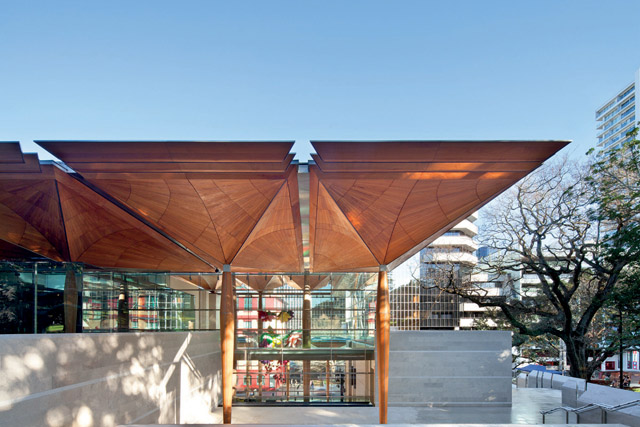
Auckland Art Gallery Toi o Tamaki (New Zealand), FJMT + Archimedia | Photo: John Gollings - Gollings Photography
The 2013 World Building of the Year is Auckland Art Gallery in New Zealand, also winner of the Culture category, designed, by Australian architect FJMT with New Zealand practice Archimedia.
Paul Finch, director of the World Architecture Festival explained that the museum transcended various category types, exploring the relationship between new and old: “It is a civic and community building, it is a display building, it engages with the difference between man-made and natural, it deals with art and science, and it is certainly about culture.”
According to Catherine Slessor, who chaired the Culture jury, it is an extremely sensitive addition to an existing building, technologically sophisticated in its use of materials particularly of the timber which is sacred to the Maori, since it was only used wood that had fallen in the forest.
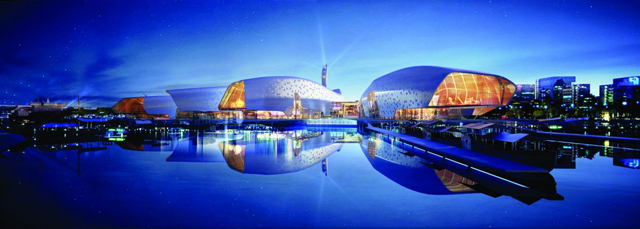
National Maritime Museum of China, Cox Rayner Architects | 3D Perspective
The Future Project of the Year was the National Maritime Museum of China designed by Cox Rayner Architects, after previously winning two Future Project categories, Culture and Competition entries.
The jury looks forward to a realisation that maintains the integrity of the original idea, considering that the project demonstrates a strong conceptual clarity: “In its response to the sea, the design evokes a strong sense of the maritime experience. It brings together vast collections of elements of China’s rich maritime history and offers the visitor references to global maritime cultures”.
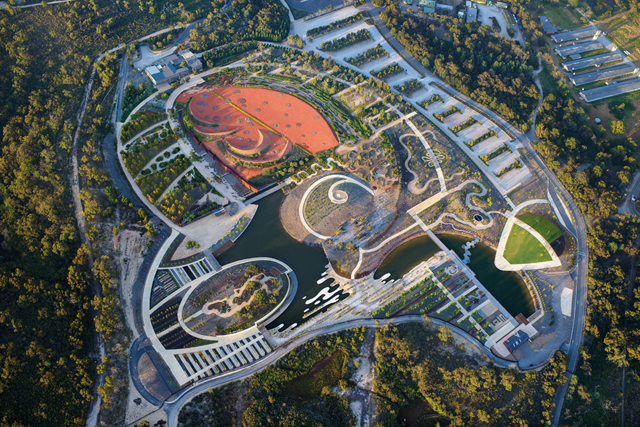
The Australian Garden, Taylor Cullity Lethlean + Paul Thompson | Photo: John Gollings
The Landscape category winner was The Australian Garden, Australia, by Taylor Cullity Lethlean and Paul Thompson.
This new botanic garden in Cranbourne, Australia, is in a former sand quarry and allows visitors to follow a metaphorical journey of water through the Australian landscape, from the desert to the coastal fringe. This integrated landscape brings together horticulture, architecture, ecology, and art to create the largest botanic garden devoted to Australian flora. The garden showcases some 170,000 plants across 1700 species, all adapted to its challenging site condition, using the Australian landscape as its inspiration to create a sequence of powerful sculptural and artistic landscape experiences that recognize its diversity, breadth of scale and wonderful contrasts.
Take a look at all shortlisted projects and winners of all remaining categories at:
www.worldarchitecturefestival.com