


A Montessori House
How space influences a child’s development

|

“We must give the child an environment that he can utilize by himself.” Maria Montessori
Maria Montessori was born in 1870 in Italy. She was the first woman graduating from medical school in that country and, through her practice in the hospital’s free clinic and in an institution for children with disabilities, she had the opportunity to interact with a great number of children.
This intense experience took her to find that all children are born with an immense human potential that can be developed if adults provide adequate stimulation during the first years of life. It was this assumption that led her to create the Casa di Bambini, a day care where young children could stay during their parents working hours. The intense contact with these children allowed Montessori to deepen her understanding of them, therefore, creating a space that would work as an organizer and structure of children who frequently showed aggressive behavior, impatience and disorganization.
Thus, some principles were defined and, even today, can be seen in day care and kindergarten rooms. These principles are: the space’s organization and tidiness, the presence of furniture, utensils and objects proportional to the size of the children and the freedom of movement. A space like this provides calm, security and self-esteem, which are essential for cognitive development and autonomy. These principles can be transferred into the child’s home, especially into his bedroom. We invite you to discover, for each room, the adequate adaptations for a baby or a toddler.
Bedroom
First of all, and because the space’s exploration is greatly encouraged, it’s necessary to take precautions so that the space doesn’t constitute danger (electrical outlets protection and placement of safety gates, for example). After that is very important to ensure that the child’s books, toys and other objects are accessible, organized and tidy.
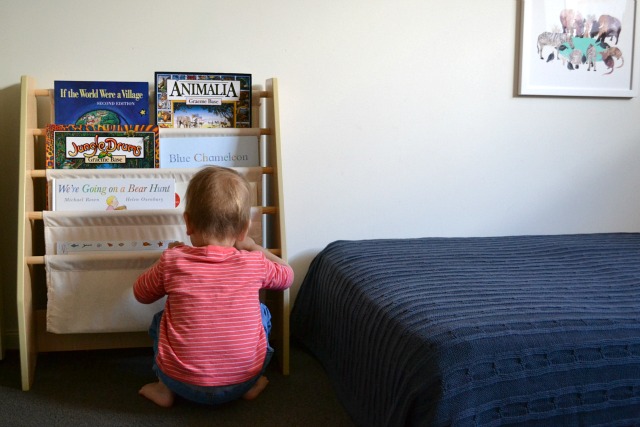
(image via howwemontessori)
Thereby, you can create a space where the child has a stimulating environment and freedom of movement to explore without having to be confined to a cot or a chair.
The first suggestion, probably the most significant difference of a traditional bedroom, is the placement of a small mattress in the floor instead of a bed. The benefits pointed are the possibility to get in and out of the bed autonomously without the risk of falling. This way it’s stimulated the self-sufficiency of the child and the respect for routines.
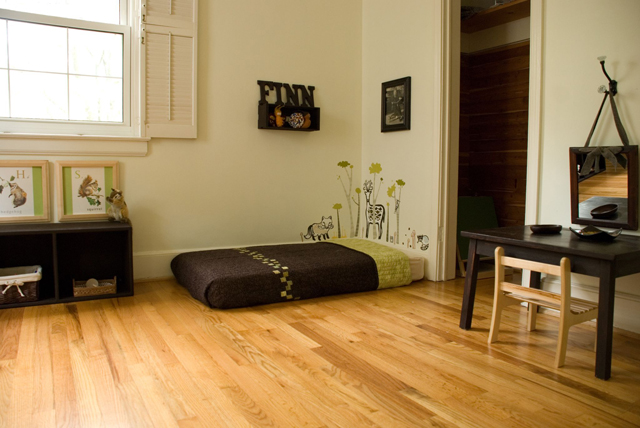
Toys, books and games should also be accessible on low shelves or bookcases, organized by categories. The storage boxes may even be labeled with pictures of their content. Clothes can also be placed in lower drawers.
It’s suggested the walls decoration with pictures of children or animals hung at the child’s eye level, as well as a board where the child’s own drawings can be exhibited.
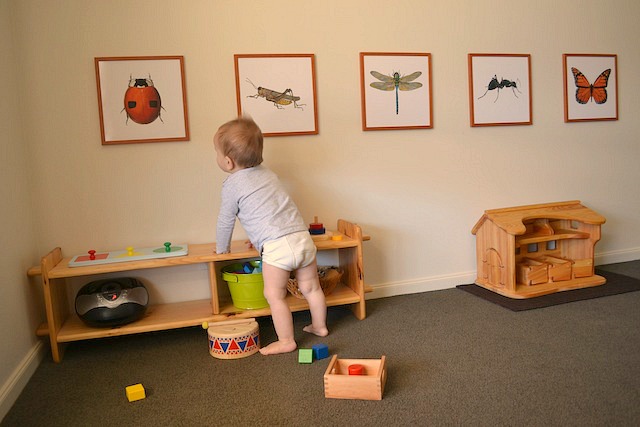
(image via howwemontessori)
Bathroom
It’s important that the child can reach the sink, soap, towel, toothbrush and toothpaste without help, as well as the potty and toilet. Access to the mirror is also very important.
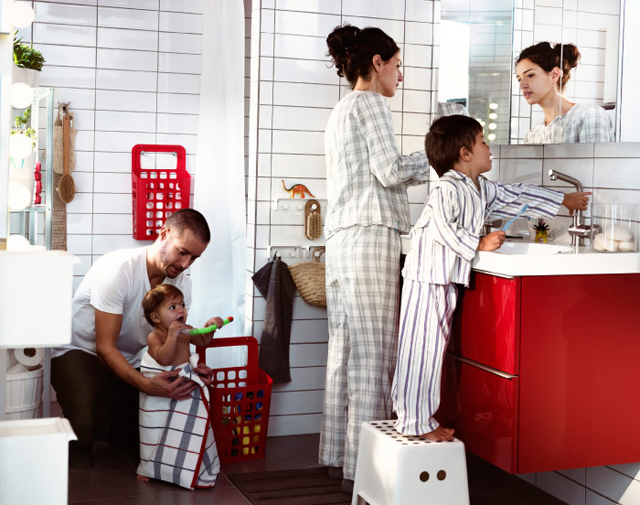
(image via ikea)
Living room
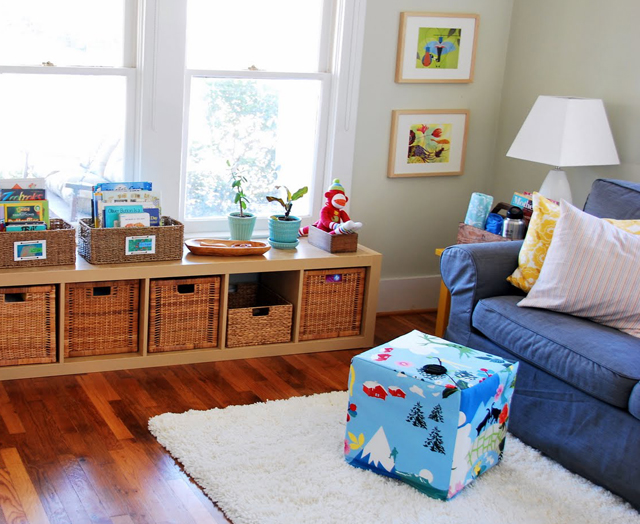
In the living room it’s also possible to have furniture suitable for the size of the child and storage boxes for toy at the child’s reach.
(image via feedingthesoil)
Kitchen
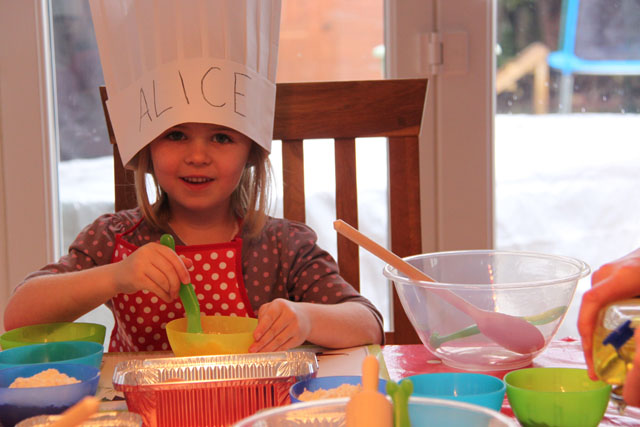
In the kitchen can be provided a small work bench for the first culinary experiences, as well as a lower drawer or shelf to keep the child’s utensils like napkins, tableware or bowls.
(image via holidayclubinrome)
Hall
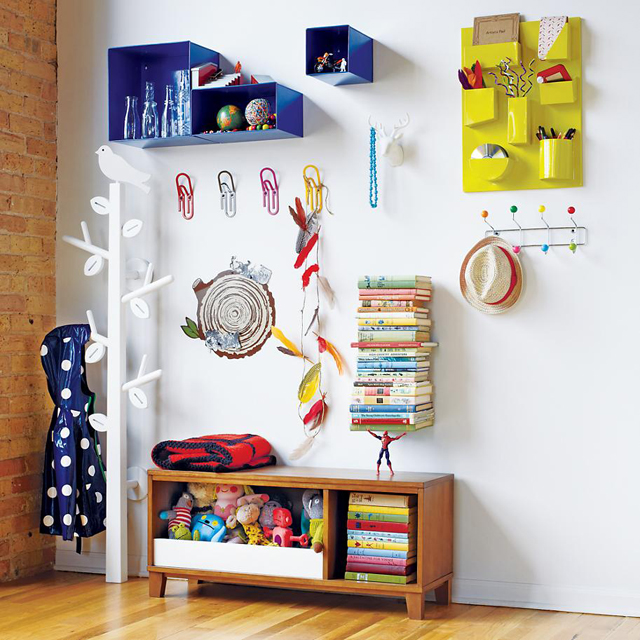
At the entrance hall it’s suggested the placement of a small stool or chair so that the child can autonomously put on and remove its shoes and hang the coat when entering home.
(image via landofnod)
Art work area
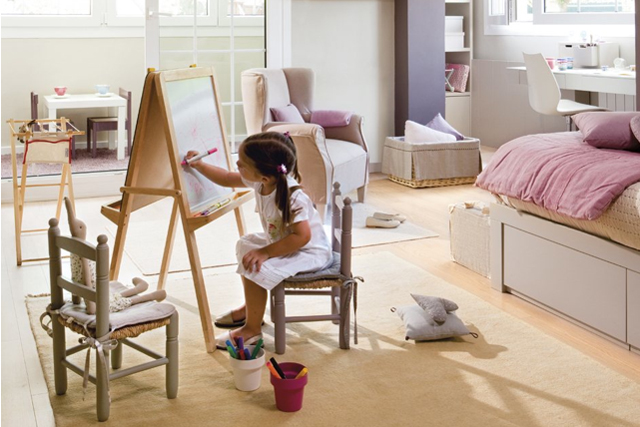
In any available space in the house, is encouraged an art work area with a table or an easel. In this area organization is important, storaging the different materials in boxes by category.
(image via casatreschic)
We have presented here some of the characteristics of a "space Montessori" but, if you want to deepen your knowledge, visit the Montessori Foundation at www.montessori.org.