


Michael Thonet (1796-1871)
and how the chair nº 214 changed the worldImages: Nuno Ladeiro / Thonet

|
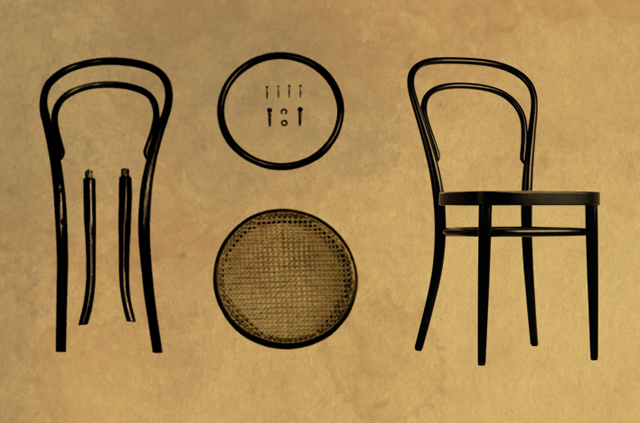
He was born and opened his first atelier in Austria. He founded the company Thonet in 1819 to produce his own designs. He registered his first patent for molding laminated wood in 1842. In the early twentieth century various avant-garde architects from Vienna drew furniture for Thonet, including Josef Hoffmann.
In 1930 the company underwent a major expansion. The company acquired the rights to produce new lines of furniture in curved iron pipe designed in the Bauhaus workshops, and edited designs from Mart Stam, Marcel Breuer, Mies van der Rohe among others.
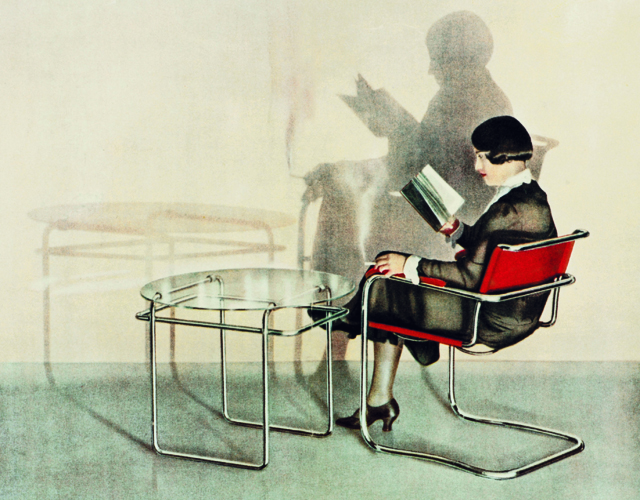
Le Corbusier was a driving force in spreading the Thonet furniture, when inserting in his environments some modernist Thonet chairs. The chair nº 214 from 1859 for example, had a massive sales success. It was the result of years of experience and was developed with the goal of being mass produced, thus becoming the first object of industrial furniture.
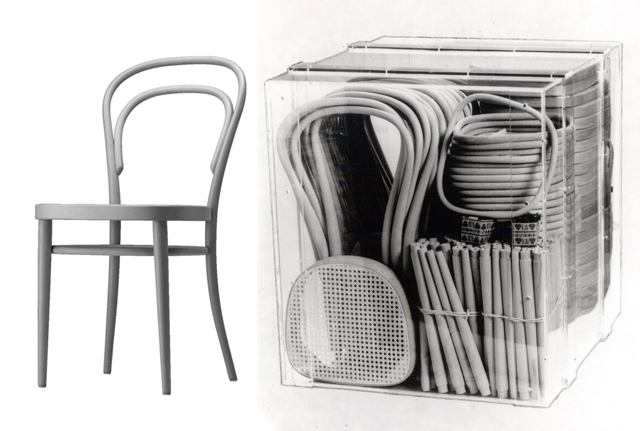
In the 1930s more than 50 million chairs had been sold all over the world. The factory in Frankenberg, Germany becomes one of the most productive units of the Thonet family.
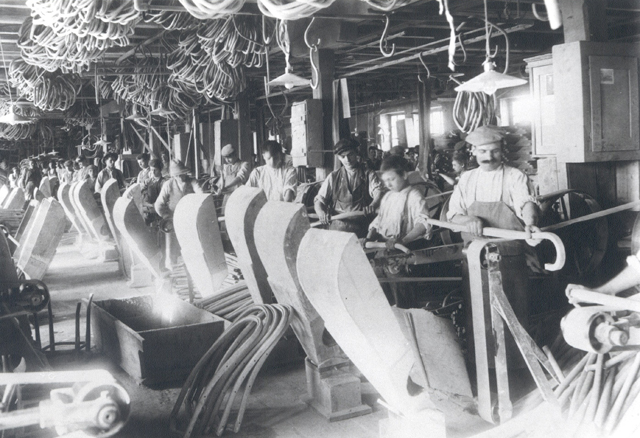
Between 1907 and 1914, industrial productivity in Germany creates the necessity for rationalization and standardization of the objects intended for serial production. The production verified the tendency to isolate the problem of "shape" of the product. This attitude explains why the debate of rationalization and standardization emerged in Germany, first as a debate on the outer aspect of the using of objects and, in particular, on the influence of decorative styles then in vogue in what regards the productivity requirements, and Thonet was turned in an example to follow.
With the evolution of times, industrial design became a mediator between art and technique.