



Wallpaper
How to select and apply?

|
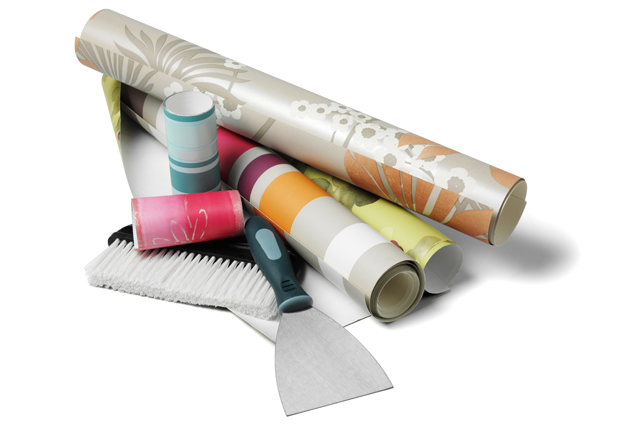
Wallpaper is once again a decoration trend, sought for those who want a relatively inexpensive solution, easily applicable and reversible.
Wallpaper can set the character of a specific space, so its choice is equally important as its application.
Types of Wallpaper
Wallpapers can be separated essentially into two distinct groups: wallpapers based on cellulose and vinyl. The vinyl are ideal for family rooms or children's bedrooms, as they are more resistant and can even be used in bathrooms or kitchens, provided that a waterproof adhesive is used.
Wallpapers based on cellulose can be used in bedrooms, living rooms, offices or corridors, and are perfect for small decoration details.
Choosing wallpaper
When choosing wallpaper for a specific space, you should consider not only your personal taste and available budget, but also the space’s specific characteristics and the kind of maintenance that will be required.
There are numerous shops, physical and online, which present several wallpaper options, with all sorts of patterns, textures and colors. If you still can’t find what you seek, there are also a few shops and brands that allow you to create your own wallpaper, either with children illustrations, custom designs or patterns or even with a photo for a scenic design effect.
Applying Wallpaper
If you intend to apply wallpaper yourself, here are the main steps and techniques you should consider:
The first thing to do is to pass a damp cloth across the wall, and then ventilate the room until the wall is completely dry.
Prepare the wallpaper, beginning by setting the pattern and then cutting it on straps with the required height, considering a margin of approximately 10 centimeters to enable any trim adjustments with the ceiling and the baseboard.

The following step is applying adhesive, which should be high quality and suitable for the space characteristics. The adhesive should be applied on both surfaces, wall and paper. On the wall, the application should be made from the ceiling to the floor, removing any excess of adhesive with a dry cloth in order to prevent formation of air bubbles. On paper, the application must be made from the center to the edges, applying a second layer after one minute.
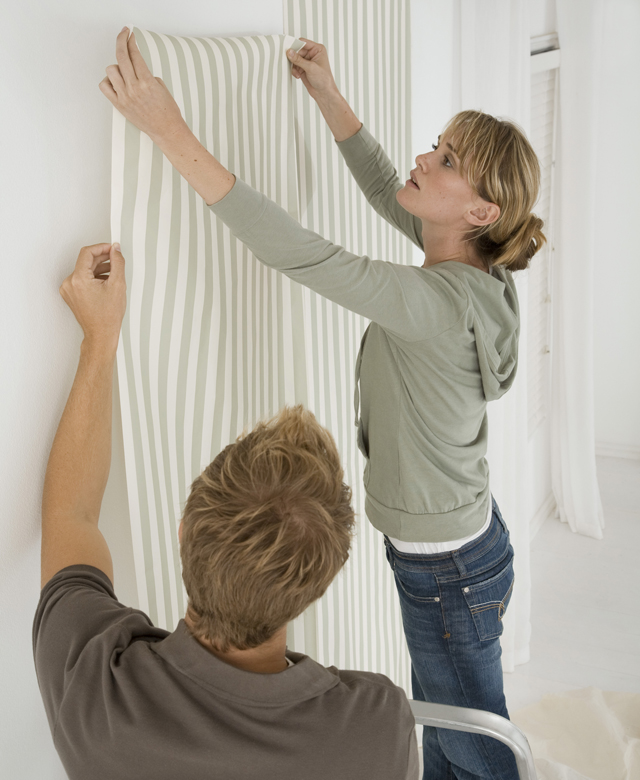
The critical step of this process is the proper positioning and application of the paper on the wall, becoming more complicated according to the pattern‘s complexity, which can be very difficult to accomplish by a single person. The ideal would be having someone to help setting the pattern while properly positioning the paper, which besides facilitating the process can make it more fun. Then, simply press evenly over the entire surface of the paper with a spatula and a dry cloth.
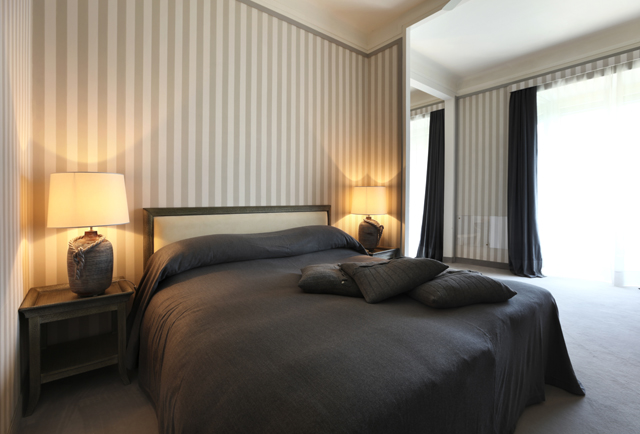
Finally, with an X-acto knife, you should cut the excess of paper along the ceiling and the baseboard, ending with the passage of a spatula on all trims in order to maintain all paper edges completely glued against the wall.