


New Guggenheim Helsinki
Unprecedented: six young architects shortlistedImages © Guggenheim Helsinki Design Competition

|
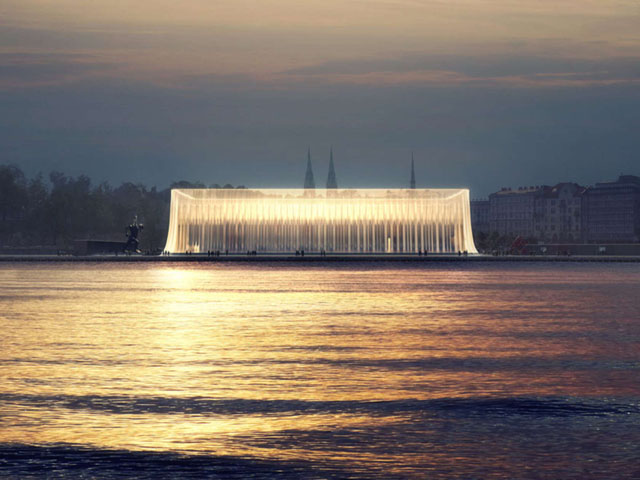
Image © Guggenheim Helsinki Design Competition
Unprecedented: six young architects shortlisted
Six young architects are on the final shortlist to design the new Guggenheim Art Museum in Helsinki, Finland.
A record-breaking 1.715 architects from 77 countries have competed to design the prestigious museum project, estimated to cost over € 130 million. The six shortlisted are young, virtually unknown practices with less than seven years' experience.
Something absolutely unprecedented in the world of architecture!
In this first stage, all submissions were anonymous, identified only by a registration number. The Jury recognized that the Brief was complex and the site was extremely challenging in terms of technical demands and resolution of urban issues, and a preliminary sift had been made according to compliance with the Essential Criteria: cityscape, architecture, and usability described in the Competition Conditions. A difficult task considering the sheer volume of proposals, featuring different shapes, materials, colors and languages.
However, despite this diversity, it is curious to notice that most competitors chose to "play it safe". According to the Jury, many schemes reflected a common ‘formula’ rather than pushing the boundaries of the Brief.
While the names of the six teams are now public, the designs have not been matched to the teams, nor will the jurors or public know which team is responsible for which design until the winner has been selected.
The finalist teams are (in alphabetical order):
- AGPS Architecture Ltd. (Switzerland and United States of America)
- Asif Khan Ltd. (United Kingdom)
- Fake Industries Architectural Agonism (United States of America, Spain and Australia)
- Haas Cook Zemmrich STUDIO2050 (Germany)
- Moreau Kusunoki Architect (France)
- SMAR Architecture Studio (Spain and Australia)
For the second stage of the competition, the finalist teams will receive further instructions to develop their concept projects. The winners will be determined in June 2015.
These are the six Finalist Schemes (in number order) and the Summary of Jury Findings:
GH-04380895
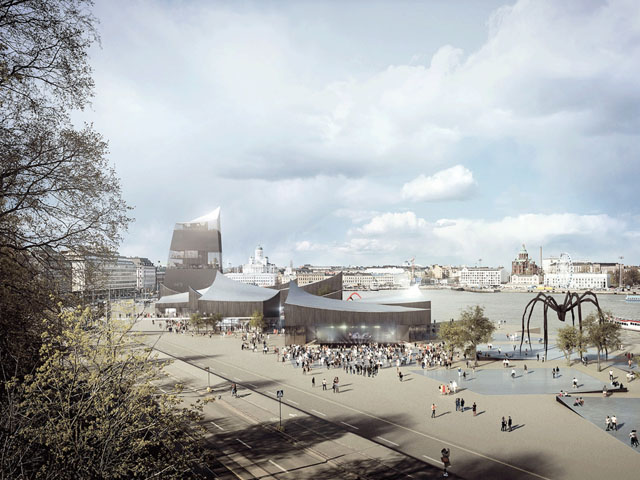
Image © Guggenheim Helsinki Design Competition
The Jury felt this was a unique proposal, with a grouping of pavilions creating a continuation of the city. The scheme blended well into the city fabric, reflecting the market close by. The use of natural daylight deep into the plan was praised. However, the Jury was skeptical about the design of the roof scape. The tower-lighthouse created debate amongst the Jury, with concerns over the placement and size of the galleries, nevertheless the Jury felt the overall concept has great potential to redefine the museum as a more urban experience.
GH-1128435973
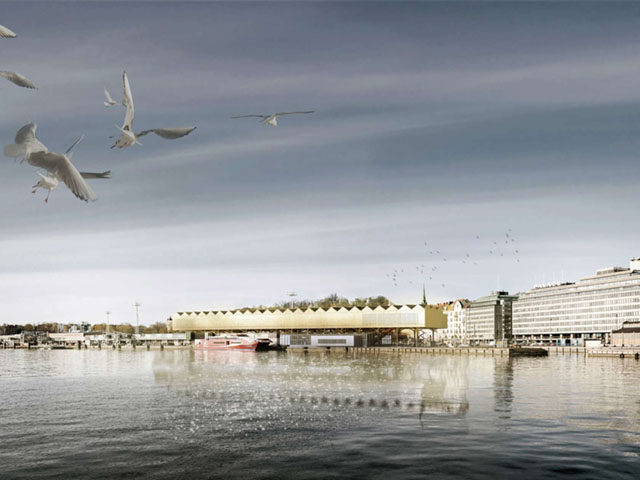
Image © Guggenheim Helsinki Design Competition
The Jury praised the industrial vernacular of the design, with its internal flexibility and external effect. This was felt to be a very compelling response to the Guggenheim principles for the new museum even if it was not fully developed yet. There was a very strong organizing concept with public/incubator on the ground floor and exhibition above. The low form yet pronounced silhouette was considered particularly interesting.
GH-121371443
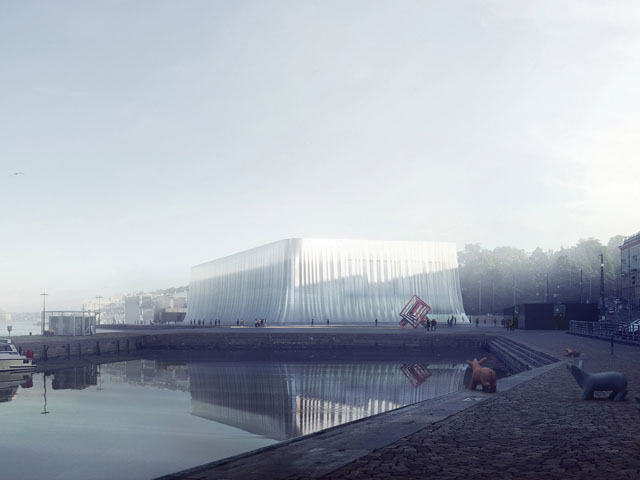
Image © Guggenheim Helsinki Design Competition
The Jury praised the integration of image and technology, and called the design simple but extraordinary. Jurors thought the scheme had such a density of visual impact that it would draw a nickname from the public but also needs to develop an equally compelling internal logic as the internal program is still too diagrammatic. The proposal used the aesthetic of the building as a sustainable energy device. There were some potential concerns raised over construction risks.
GH-5059206475
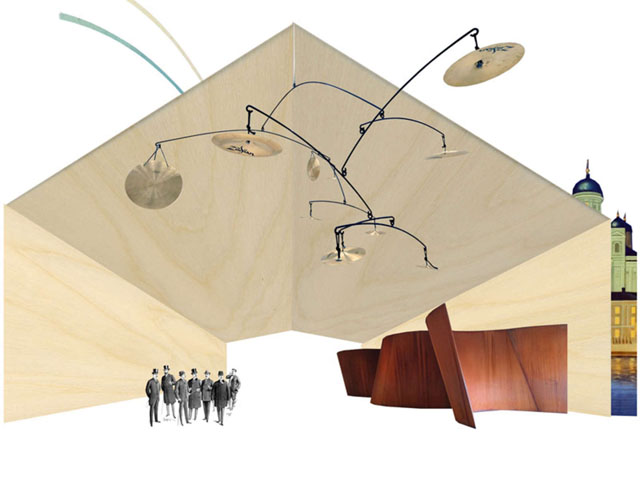
Image © Guggenheim Helsinki Design Competition
This proposal responded well to the cityscape and the site, using the materials from the existing buildings and creating close relationships with its surroundings. The architecture is based on an evolving ecology of materials, forms and atmospheres. The scheme was based on an old store house, which was felt to be a subtle concept with a great deal of potential both for the museum and for the urban and social fabric.
GH-5631681770
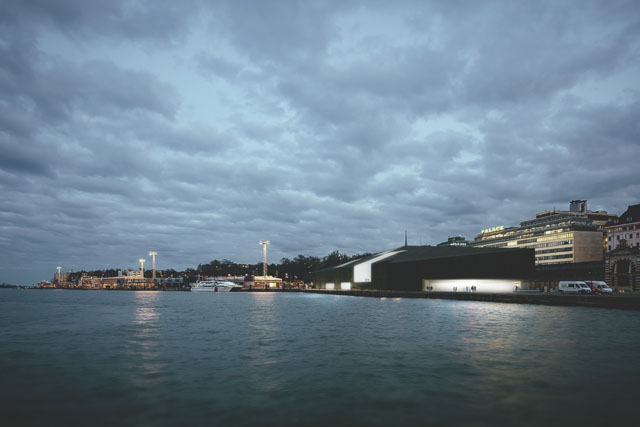
Image © Guggenheim Helsinki Design Competition
This scheme demonstrated a good understanding of how the city works and the proposal presented valuable research demonstrating a new direction for the museum internally and in relation to the urban fabric. There is particular attention to public space and the potential exhibition spaces were considered authentic. The Jury acknowledged the scheme was at an early, conceptual phase, but its non-stereotypical approach was seen to open up a particularly promising future for the project on the site.
GH-76091181
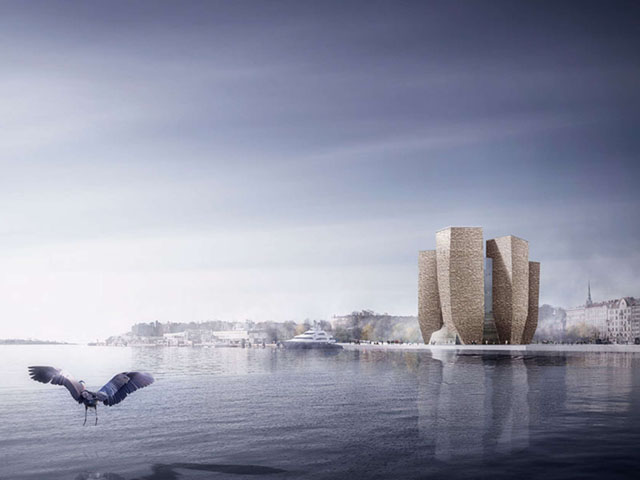
Image © Guggenheim Helsinki Design Competition
The Jury praised the basic concept behind the proposal. The use of timber seemed especially elegant and the internal courtyard could be memorable with circuits of independent galleries. The use of nine lifts was especially questioned by the Jury but it was felt that the gallery ‘rooms’ could work well if the horizontal and vertical circulation scheme could be developed both in terms of efficiency and complexity of visitor experience.
More information at: designguggenheimhelsinki.org