


Shigeru Ban: 2014 Pritzker Prize Laureate
Images: Courtesy of Shigeru Ban Architects

|
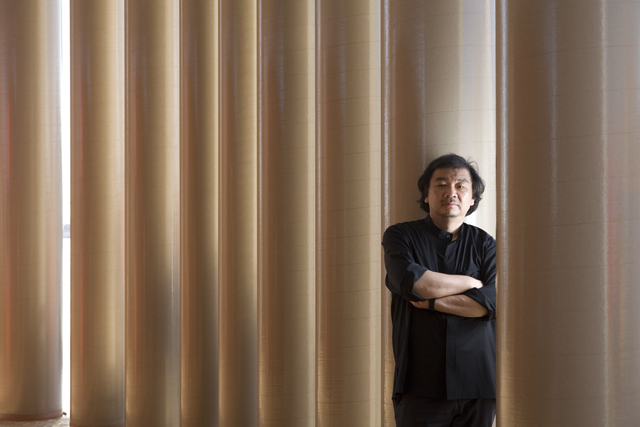
Japanese architect Shigeru Ban has been announced as the 2014 Laureate of the Pritzker Prize, the most prestigious award for the profession, widely regarded as "the Nobel Prize" in architecture.
Shigeru Ban will be the seventh Japanese architect to become a Pritzker Laureate — the first six being the late Kenzo Tange in 1987, Fumihiko Maki in 1993, Tadao Ando in 1995, the team of Kazuyo Sejima and Ryue Nishizawa in 2010, and Toyo Ito in 2013.
Shigeru Ban, a Tokyo-born, 56-year-old architect with offices in Tokyo, Paris and New York, is rare in the field of architecture. He designs elegant, innovative work for private clients, and uses the same inventive and resourceful design approach for his extensive humanitarian efforts. For twenty years Ban has traveled to sites of natural and man-made disasters around the world, to work with local citizens, volunteers and students, to design and construct simple, dignified, low-cost, recyclable shelters and community buildings for the disaster victims.
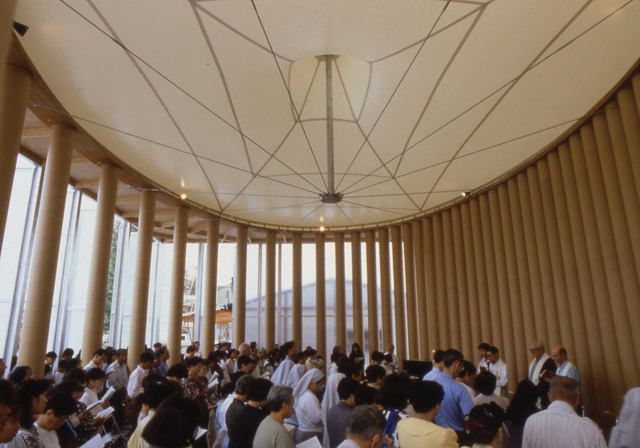
Paper Church, 1995, Kobe, Japan | Photo by Hiroyuki Hirai
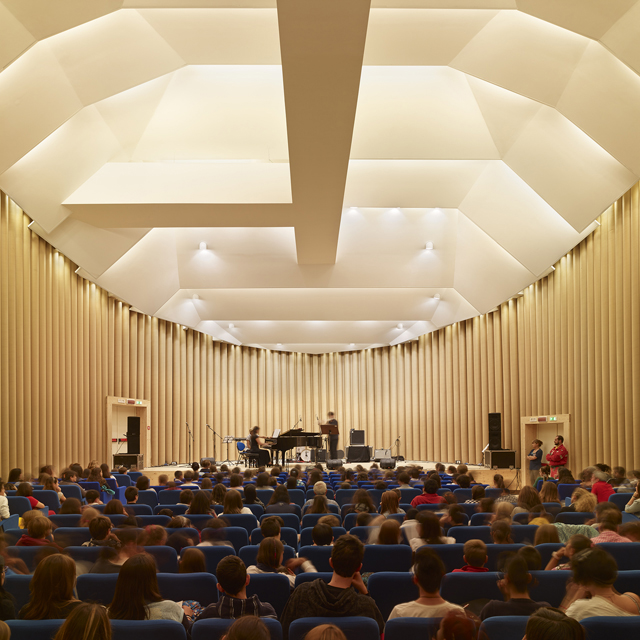
Paper Concert Hall, 2011, L’Aquila, Italy | Photo by Didier Boy de la Tour
Shigeru Ban’s humanitarian work began in response to the 1994 conflict in Rwanda, which threw millions of people into tragic living conditions. Ban proposed paper-tube shelters to the United Nations High Commissioner for Refugees and they hired him as a consultant. He works with local victims, students, and other volunteers to get these disaster relief projects built. In 1995, he founded a non-governmental organization (NGO) called VAN: Voluntary Architects’ Network. With VAN, following earthquakes, tsunami, hurricanes, and war, he has conducted this work in Japan, Turkey, India, Sri Lanka, China, Haiti, Italy, New Zealand, and currently, the Philippines.
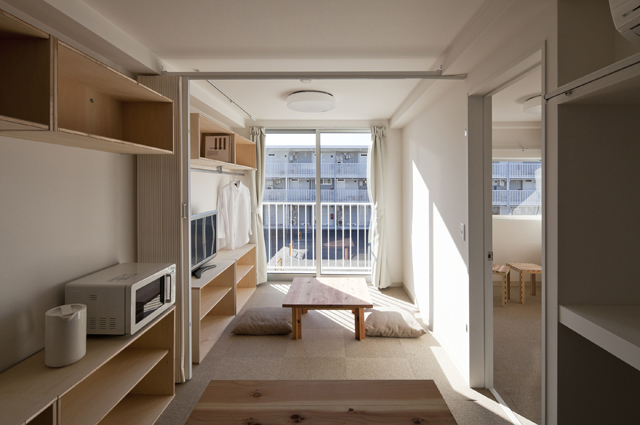
Container Temporary Housing, 2011, Onagawa, Miyagi, Japan | Photo by Hiroyuki Hirai
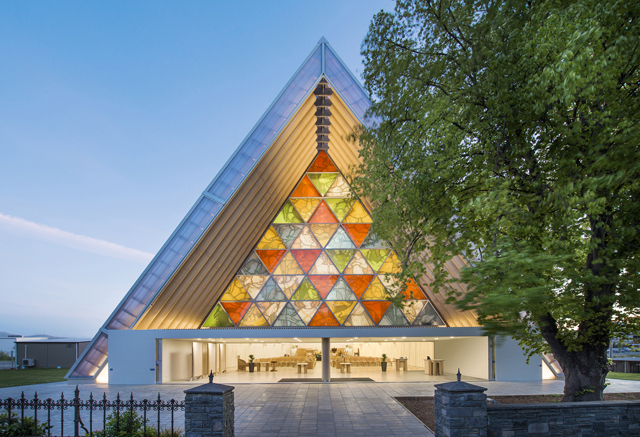
Cardboard Cathedral, 2013, Christchurch, New Zealand | Photo by Stephen Goodenough
His architecture is often called “sustainable,” and environmentally friendly, but he says, “When I started working this way, almost thirty years ago, nobody was talking about the environment. But this way of working came naturally to me. I was always interested in low cost, local, reusable materials.”
As a boy, Shigeru Ban observed traditional Japanese carpenters working at his parents’ house and to him their tools, the construction, and the smells of wood were magic. He would save cast aside pieces of wood and build small models with them. He wanted to become a carpenter. But at age eleven, his teacher asked the class to design a simple house and Ban’s was displayed in the school as the best. Since then, to be an architect was his dream.
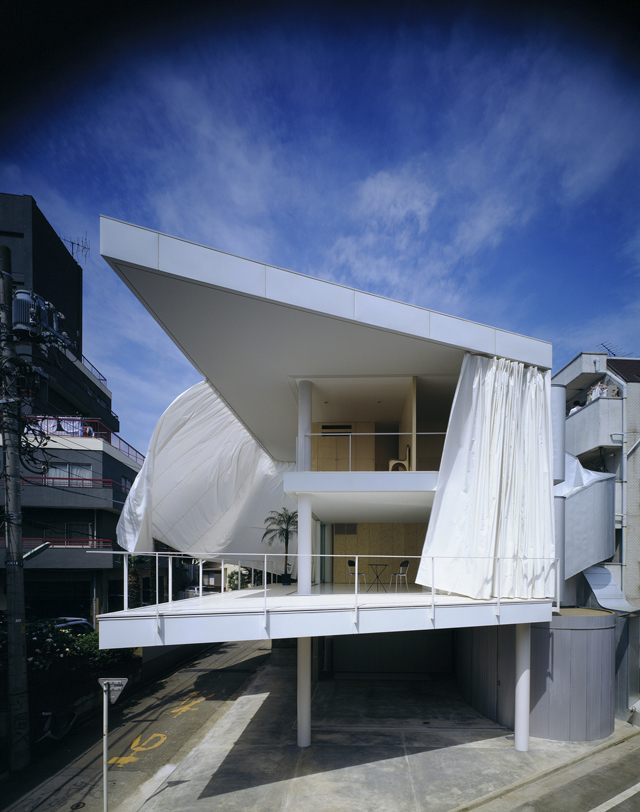
Curtain Wall House, 1995, Tokyo, Japan | Photo by Hiroyuki Hirai
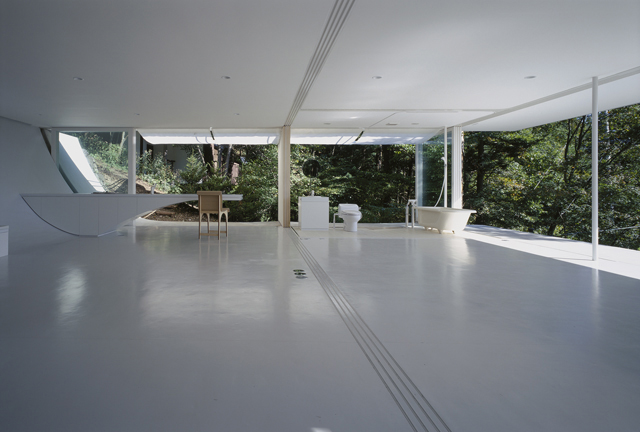
Wall-Less House, 1997, Nagano, Japan | Photo by Hiroyuki Hirai
In all parts of his practice, Ban finds a wide variety of design solutions, often based around structure, materials, view, natural ventilation and light, and a drive to make comfortable places for the people who use them. From private residences and corporate headquarters, to museums, concert halls and other civic buildings, Ban is known for the originality, economy, and ingeniousness of his works, which do not rely on today’s common high-tech solutions.
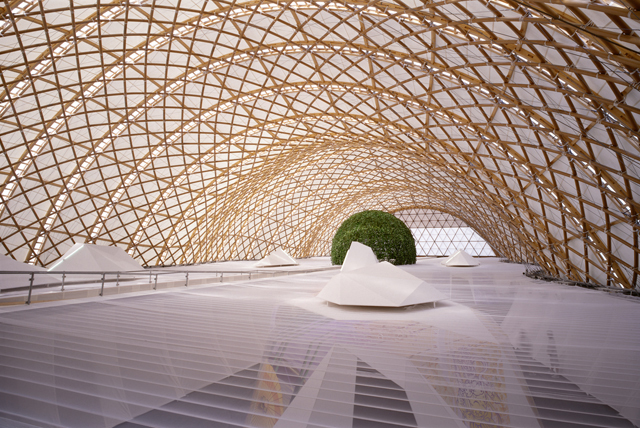
Japan Pavilion, Expo 2000 Hannover, 2000, Germany | Photo by Hiroyuki Hirai
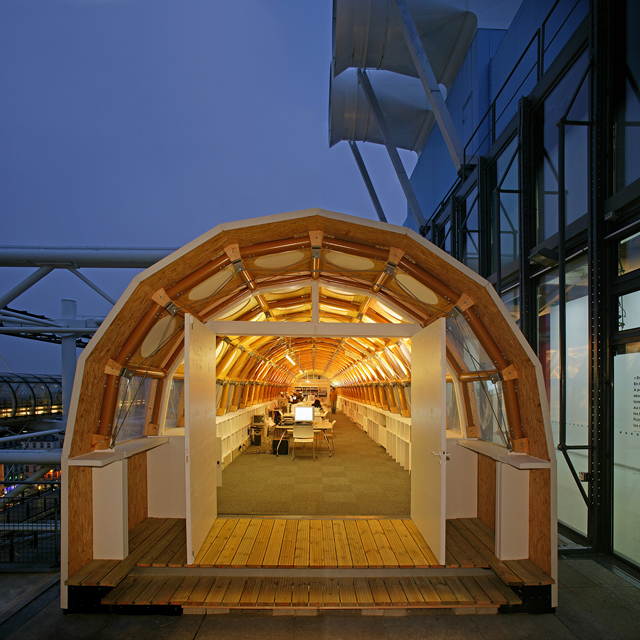
Paper Temporary Studio, 2004, Paris, France | Photo by Didier Boy dela Tour
The citation from the Pritzker Prize jury underscores Ban’s experimental approach to common materials such as paper tubes and shipping containers, his structural innovations, and creative use of unconventional materials such as bamboo, fabric, paper, and composites of recycled paper fiber and plastics.
Reached at his Paris office, Shigeru Ban said, "Receiving this prize is a great honor, and with it, I must be careful. I must continue to listen to the people I work for, in my private residential commissions and in my disaster relief work. I see this prize as encouragement for me to keep doing what I am doing – not to change what I am doing, but to grow."
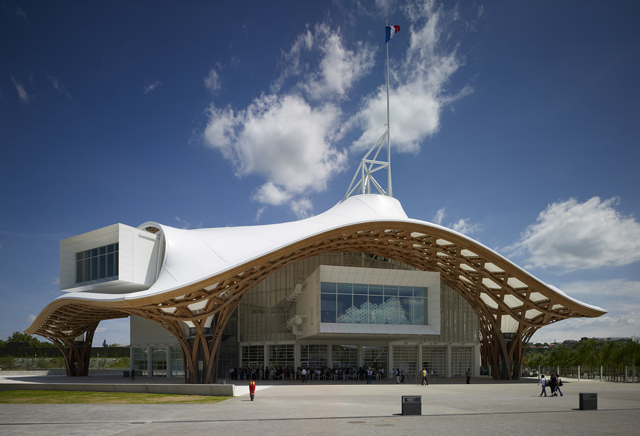
Centre Pompidou-Metz, 2010, France | Photo by Didier Boy de la Tour
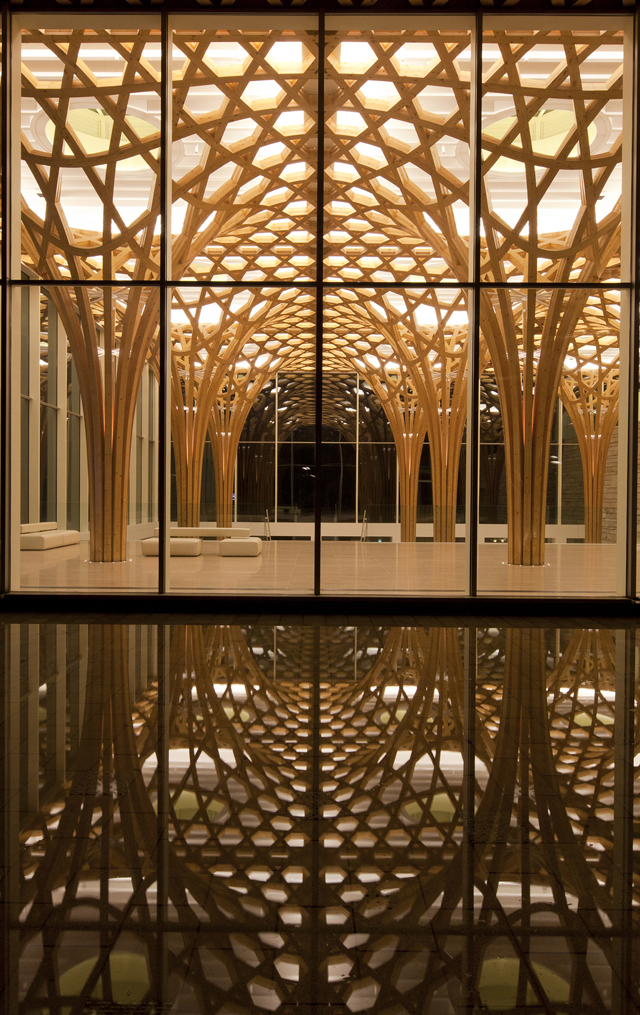
Haesley Nine Bridges Golf Club House, 2010, Korea | Photo by Hiroyuki Hirai
The award ceremony will take place on June 13, 2014, at the Rijksmuseum in Amsterdam, The Netherlands.