


The Chair “Portuguesa”
An icon of Portuguese design

|
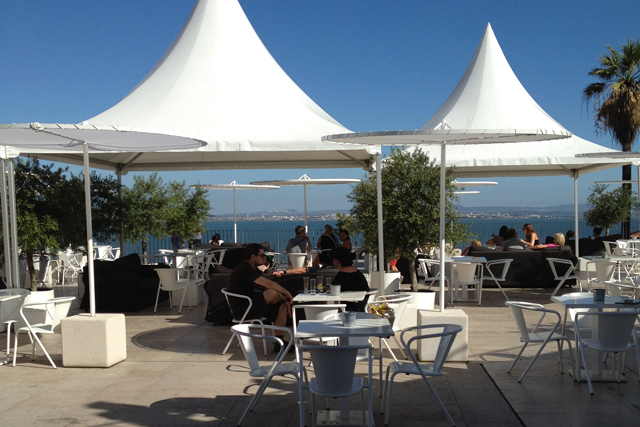
The public space of Portuguese cities is characterized by some specific features. The "Portuguesa" chair reinforces the identity of the Portuguese outdoor terraces. Historically, intellectuals, artists and common people enjoy the terraces, where they share opinions and experiences. Tourists, on the other hand, properly referenced by guides or indication of scenic spots, also seek these terraces, particularly the Brasileira in Lisbon.
The "Portuguesa" chair due to its characteristics plays an important role. Ergonomically well designed, with a pronounced slope to the back, it allows the user an extended rest and contributes to the typical Lusitanian image that is always present in any illustrated postcard.
In the late '80s, the predominance of white plastic chair almost destroyed the country's image. But in the '90s, during the preparations for the Lisbon European Capital of Culture, regarding the construction of the controversial Centro Cultural de Belém, the Italian design and architecture magazine "Domus" published a flattering article on the "Portuguesa" chair. The building designed by Vittorio Gregotti and Manuel Salgado was supported by Atelier Daciano da Costa as a team responsible for the design and selection of furnishings for the CCB, which proposed among other models, the "Portuguesa" chair. To Daciano, this was a good Portuguese modernist classic that was perfect for the CCB terraces.
At the same time, Lisbon’s Municipal Council takes the initiative against the disappearance and degradation of the traditional terraces and banishes the use of plastic chairs, by creating rules to compel the owners of bars, restaurants and cafes, particularly downtown, to adopt the “Portuguesa” chair, going to the extent of prescribing particular colours for specific areas.
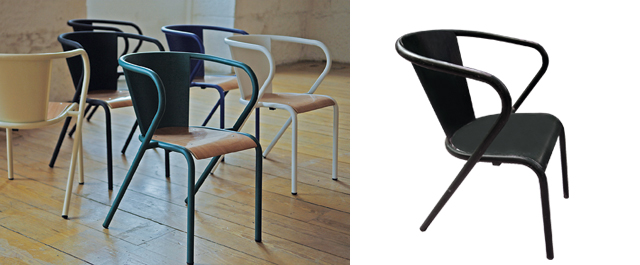
In 1992 an article in "Cadernos de Design” of the Portuguese Design Centre, of which Sena da Silva was president at the time, the chair is published on the cover and the article names it "Gonçalo" chair, after a locksmith in Arcalo firm who would have created this chair in the '50s, also from a previous model of his authorship. From here, the history of this chair became a point of contention, since similar models, have been disseminated, weakening its authenticity.
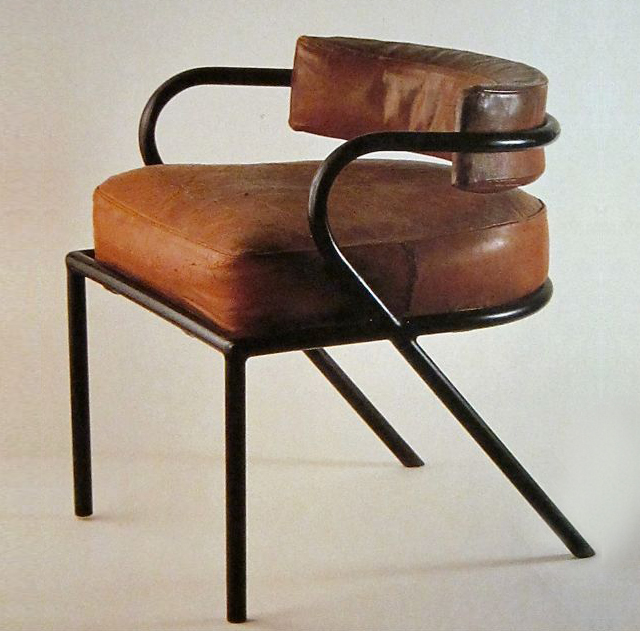
The Architect René Herbst (Paris, 1891-1982), co-founder of the Union of Modern Artists and one of the pioneers of modern design, created a distinguished upholstered chair model, suitable for indoor use. But looking back, we find out that tubular chairs appear in Portugal around the 1930s, in cafes and hospitals.
The Café Nicola, at Rossio in Lisbon, still preserves some of those chair models, inspired in Bauhaus and some of the pioneers of design tubular chairs, such as Marcel Breuer, Mies van der Rohe and Mart Stam, edited by Thonet.
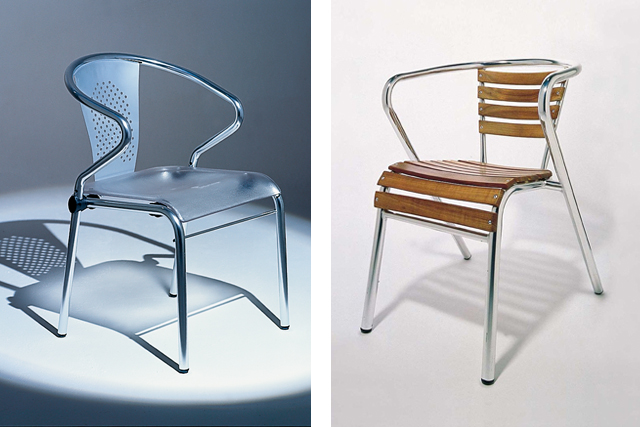
The "Portuguesa" chair became a "vintage" attraction and has been reinterpreted successively by different designers. I considered myself that this tubular steel chair structure did not suit some of the new design requirements, so in 1998 I performed its first redesign using an aluminium structure, with polycarbonate seat and back. Later, I created another version using also aluminium structure, but with the seat and back in teak wood.
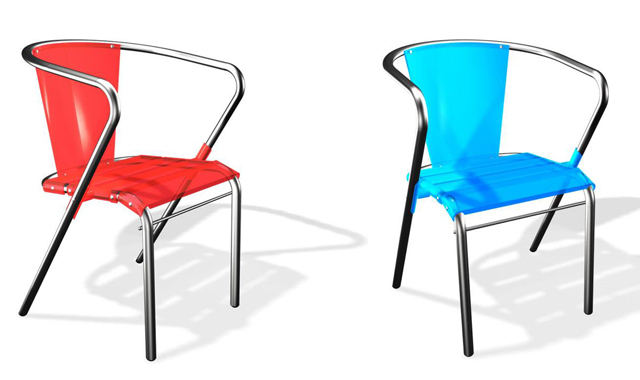
A more technical version of this chair is currently being studied to be produced from polypropylene coated fiberglass, which will be even more resistant.
Nuno ladeiro