


The five elements of Feng Shui
Balance and harmony in interior spaces

|
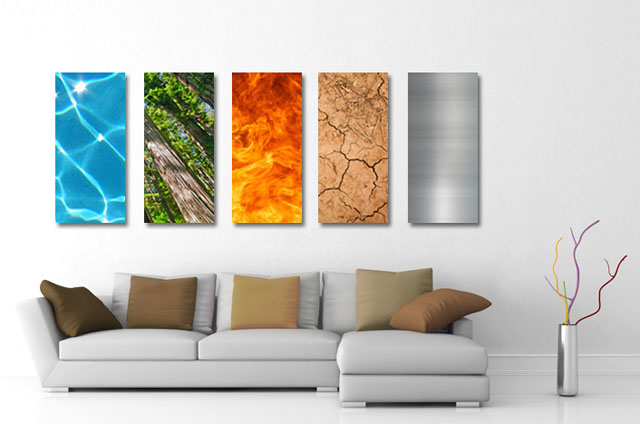
The primary objective of Feng Shui consists in finding a place which positively influences our mental and physical health, as well as our life in a general way.
As I learned Feng Shui and practiced it in my architectural and interior projects, I increasingly felt that the ancient art of Feng Shui is essential to create balance and harmony in interior spaces. Nowadays designing homes with soul is one of my priorities.
I put aside monochrome and joyless environments and opted for settings where color, natural plants and flowers, candles, decorative accessories or "inspiring" pictures are part of the project. That is, I began to put into practice the five elements of Feng Shui in interior design.
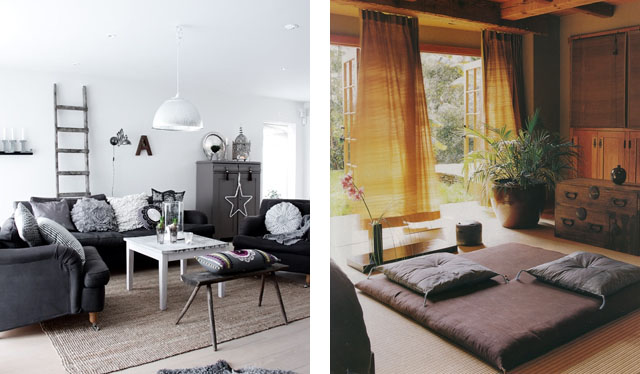
Monochromatic setting and Zen environment
It is also important to note that we can encourage certain energies, as the energy of relationships, fame and recognition or finance through Feng Shui and the five elements are the basis of this analysis.
The theory of five elements is an essential tool in Feng Shui. Each of the five elements describes a characteristic of the chi energy which is connected to a cardinal point or a section. The five elements or the five energies are connected to shapes, colors and materials, and we can represent them in our home and intensify or reduce its effect by using the different elements.
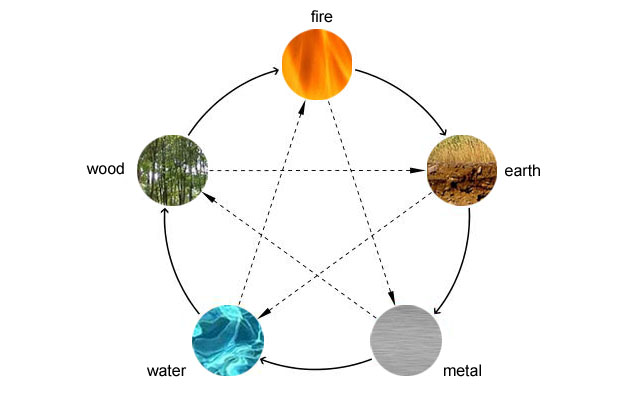
There are five elements in Feng Shui which are: Water, Wood (or tree), Fire, Earth and Metal.
Water - the colors of this element are the dark blue or black, and the shapes are asymmetrical and undulating. The objects associated with this element are fountains, aquariums and mirrors, pictures or paintings whose symbolism refers to water: waterfalls, beach, rivers, lakes or winter landscapes.
Wood - the color of this element is green shapes are rectangular and vertical. The objects associated with this element are natural plants and flowers and patterns with vertical stripes. The images or paintings with symbolism tied to the element wood are forests, green or spring landscapes.
Fire - the color of this element is red and shapes are triangular or stars. The objects associated with this element are candles, fireplaces and sharp patterns. The images or paintings with symbolism connected to the fire element include fire, sunrise or sunset, warm and bright colors or summer elements.
Earth - the colors of this element are yellow, orange or brown and horizontal rectangular or square shapes. The objects associated with this element include ceramic or clay tiles, fabrics and plaid patterns. The images or paintings with symbolism connected to this element are countryside images, still lifes or late summer landscapes.
Metal - the colors of this element are white or gray and shapes are oval or circular. Associated with this element are metal, stainless steel, cone or tin objects, circular patterned or shaped. The images or paintings with symbolism tied to this element feature minimalist or autumn elements.
The relationship between the five elements is characterized by two energy cycles: the productive cycle and the control cycle.
In the production cycle, each element generates the following element: so water feeds wood, wood feeds fire, fire nourishes earth and earth feeds metal, so metal eventually feeds water closing the cycle.
In the destructive or control cycle the energy flow is inversely to the production cycle.
There is also the weakening cycle - wood dries water, fire burns wood, earth weakens fire, earth reduces metal and metal drains water.
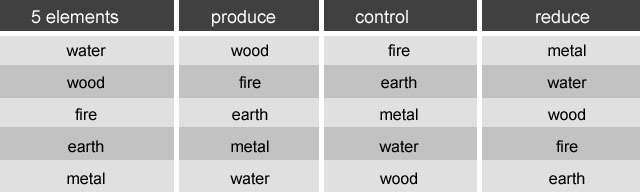
A practical example: suppose you have a children's room facing south, which may be an excessively warm and active setting. You can balance the energy of the room through the earth element, using checkerboard patterns, painting the walls light yellow; so we are "reducing fire" by using the earth element, control cycle.
Another example are kitchens that include both types of energy - fire and water - which belong to incompatible elements, so it is necessary to harmonize the environment.
In kitchens facing south can use elements of wood energy (green plants) to harmonize water and fire and also add earth elements to drain excess fire, using some porcelain items or yellow tiles.
If the kitchen is facing southwest you should use metal elements to harmonize earth energy with water. In other words, you should use the intermediate element (metal) to create harmony.
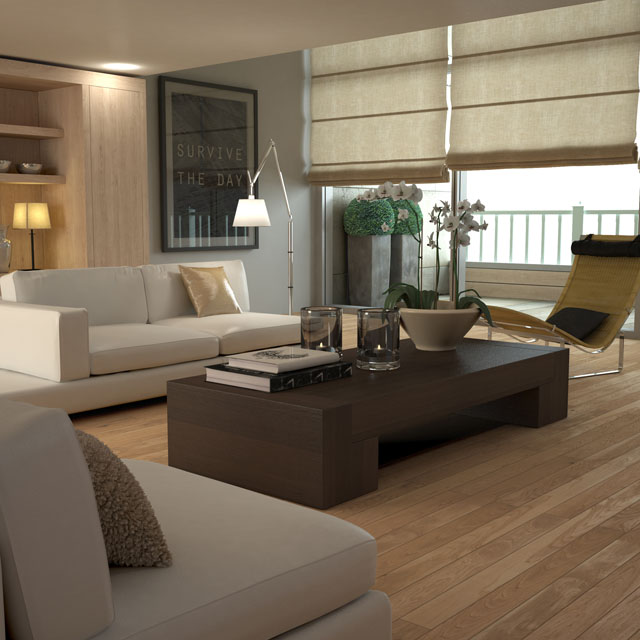
When decorating any interior spaces, living rooms, bedrooms or offices, the ideal is to use the five elements to create harmony. Whenever possible replace synthetic materials for natural fibers and use in natural plants and crystals in decoration.
Paula Margarido
Architect & Feng Shui Consultant