



Workers get paid for cycling to work
French companies lead the wayImages via Wikimedia Commons

|
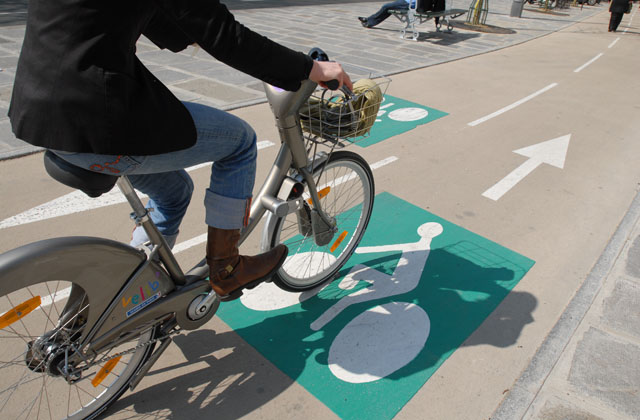
Do you like bicycles?
What if, in addition to saving money in transportation, you were also paid extra for cycling?
This was exactly the motto that took 19 French companies and institutions to pay their employees, who choose to use the bicycle as their means of transportation to go to work, about 0.25 euros per kilometer.
This measurement was implemented last June 2 as part of the Action Plan for the Development of Active Modes of the French Government, and it is estimated that it could benefit about 10,000 people, representing a saving of € 5.6 billion in healthcare, compared with an investment of € 20 million on the project. The amount spent on the initiative will be in charge of the companies in exchange for tax exemptions.
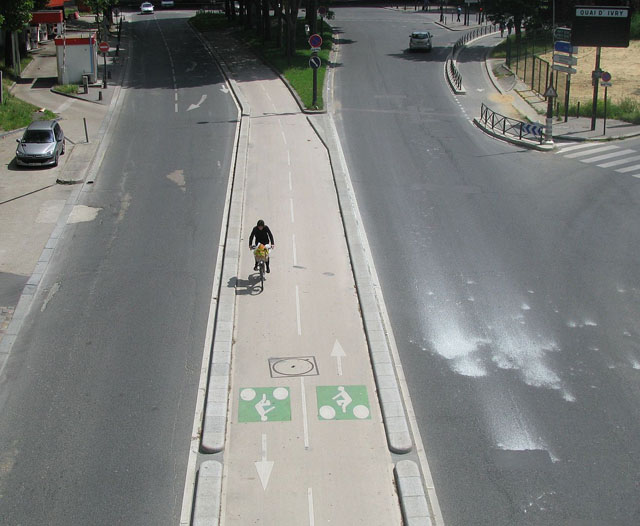
Bicycle Lane in Paris, Quai d'Ivry 13eme
The project has an experimental character and it will last six months. The main goals are to improve the health of the French, reduce fuel consumption and, consequently, pollution generated by motor vehicles. The expectation is that there may be a 50% increase in bicycle use for traveling from home to work.
This incentive integrates a broad program to improve transport conditions for bicycle users in French cities, and includes initiatives such as the construction of bicycle parking facilities at strategic points such as train, metro and bus station terminals, and security measures to prevent theft and robbery.
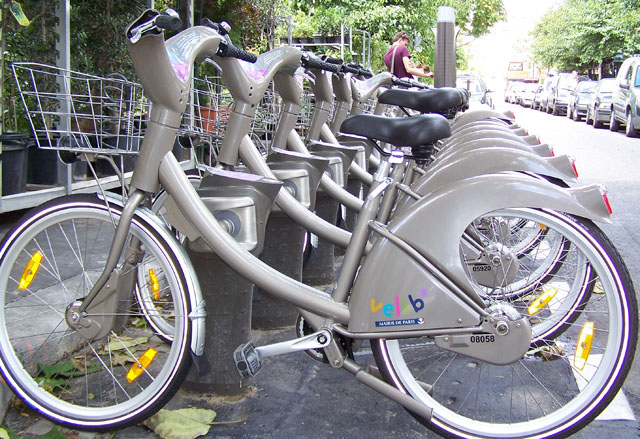
Vélib ' large-scale public bicycle sharing system in Paris, France
The incentives are not combinable with travel vouchers, except in cases of intermodal transport train / metro and bike or vice versa. During the six month duration of the project, information about employers and workers shall be collected:
- evolution of bicycle daily commuting;
- abandoned travel modes in favor of the bicycle;
- favorable or unfavorable factors to the effectiveness of the measure;
- physical organization established in different structures.
Results will become available by the end of the year and, if the measure is successful, a second phase will be considered on a larger scale.
Currently, 2.4% of home-work trips are made by bicycle with an average distance of 3.5 km per route. Other countries such as Germany, Belgium, Denmark, Netherlands and the UK have adopted projects to encourage the use the bicycle as primary means of transportation.
In Belgium about 8% of all trips are made by bicycle and the Netherlands, a country with excellent cycling infrastructure, 25% of workers use the bicycle as their primary means of transportation.
It is estimated that if every European cycle 2.6 kilometers per day instead of using the car, there would be an approximate 15% reduction in CO emissions from motor vehicles.
Cities like Paris currently have a wide range of public services to facilitate transportation by bicycle. The Municipality of Paris's own website provides a portal to answer questions of residents and tourists with maps, road maps, route simulators, tourist tips and recommendations of conduct for cyclists on public roads.
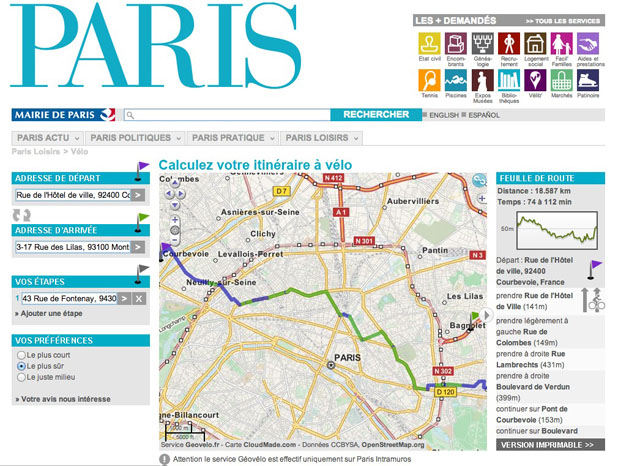
Map of bike lanes and route simulator at the municipal portal vgps.paris.fr
We hope that such a measure can become a huge success and provide inspiration for companies and public institutions throughout the world.
For now, let's cycle in this direction...
More at: vadebike.org