



Biological Pools
Advantages and DisadvantagesImages: FG+SG / Elsa Soares da Cunha

|
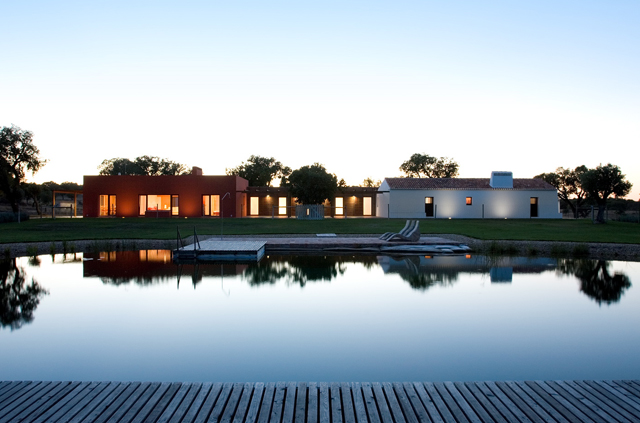
Ecology and sustainability assume an increasingly important role in our society. Besides economic factors, saving water and preserving the environment are two major concerns to be considered when building a swimming pool.
Biological pools are increasingly being adopted as ecological and sustainable solutions that contribute to preserving and enhancing the environmental context which they are inserted.

Biological pools are essentially artificial ponds that are dug in the ground and protected through a waterproof pond liner. In addition to its natural appearance, the main difference that distinguishes a biological swimming pool of a traditional swimming pool is the absence of artificial or chemical treatments. The quality of water is ensured by aquatic plants which guarantee the cleaning and maintenance of the biological swimming pool by releasing oxygen during their photosynthesis process.

The great asset of this type of solution is its sustainability, particularly in terms of maintenance, since aquatic plants are subsistent and continuously regenerate themselves. This way, the only maintenance requirements are to remove any debris or leaves that may accumulate on the surface of the pool, and periodically vacuum the bottom of the pool to avoid any excessive formation of limestone which can affect the quality of water.
However, depending on the size and the materials used, the costs of building a biological swimming pool may still be high when compared to building a traditional swimming pool.
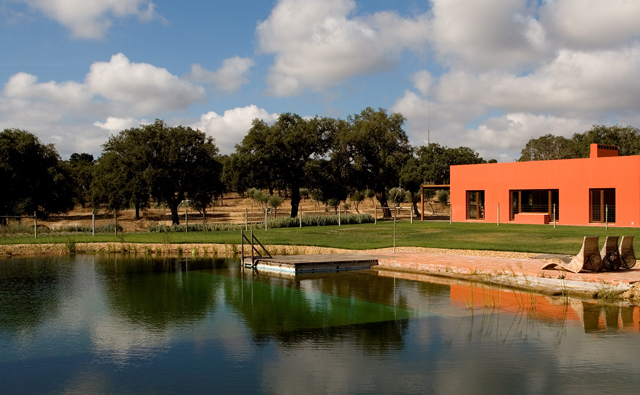
Also, the required area for a biological swimming pool is considerably larger as compared to a traditional swimming pool. A biological swimming pool comprises two distinct areas: one swimming area and an area for aquatic plants, responsible for the pool maintenance.
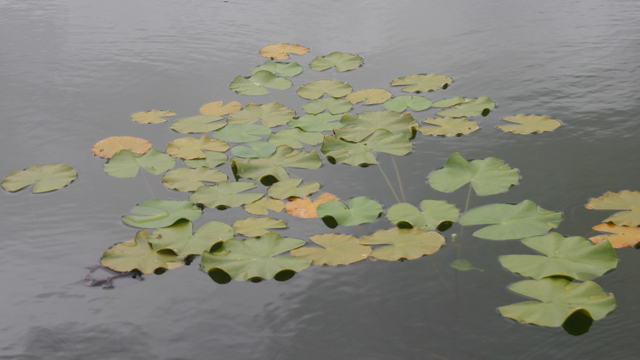
Aquatic plants play a key role in the quality and maintenance of a biological swimming pool and are entirely responsible for the cleanliness and quality of water through their process of photosynthesis, which allows a constant oxygenation of the water, preventing the production of microorganisms and bacteria, in a 100% natural manner, without the use of any filters or chemicals commonly used in other swimming pools maintenance.
This feature allows water from a biological pool can return to the natural environment without compromising it. This means that water can be used for irrigation with no negative effect. Biological pools also serve as a large water deposit near houses, serving for water supply in case of fire.
Main conditions required for a biological pool:
- Available area over 100 m2
- Good solar exposure
- Absence of trees that release large amounts of pollen and leaves, or whose roots in the presence of water may cause damage to the waterproof pond liner
- Ability to prevent access form pets for reasons of hygiene, safety and maintenance
- Surrounding area free from pesticides, fertilizers, etc.
- Possibility to install an access structure to the pool, to avoid damaging the waterproof pond liner
- Do not add any chemicals that can unbalance the created ecosystem
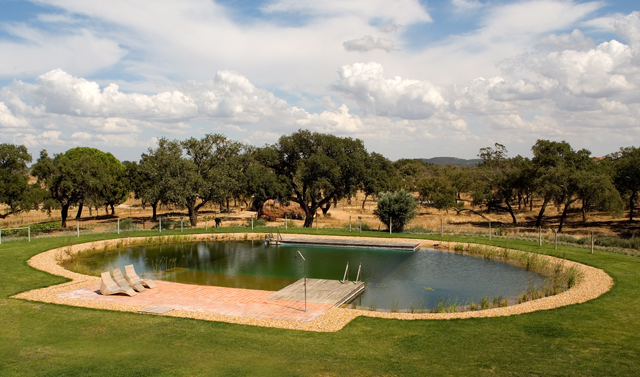
Find out the most suitable solution for you by analyzing the main advantages and disadvantages of biological swimming pools compared to traditional swimming pools:
Advantages
- Sustainable solution: 100% natural, ecological and healthy, no need for artificial chemicals
- Low maintenance
- No energy consumption (electricity)
- Integration with the natural environment
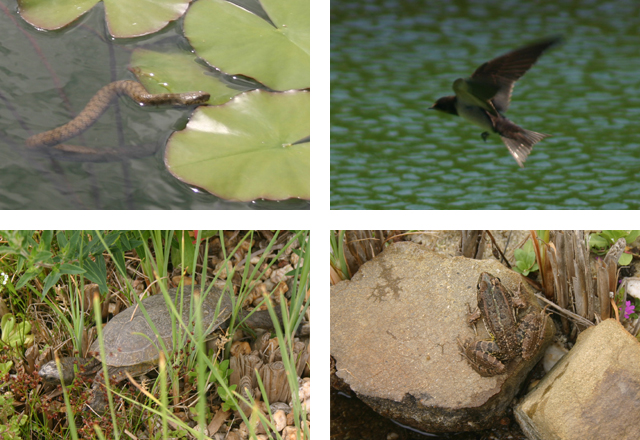
- Aquatic animals and plants contribute to the enrichment and balance of the local ecosystem and to the promotion of biodiversity
- Aquatic animals and plants help to reduce the presence of insects
- Aquatic plants are subsistent and don’t need to be replaced
- Waterproof pond liners are less expensive and have greater longevity
- You can opt for a more architectonic pool by adding a border around the pool or create banks to a natural pond look
Disadvantages
- Higher initial cost
- There are few companies specialize in biological swimming pools, so the reduced range of supply and transport requirements may increase construction costs
- Some amphibians may occasionally arise in the swimming area, coming from the aquatic plants area
- Requires regular use of a vacuum pool cleaner