


Vico Magistretti
The rigor of designText: Nuno Ladeiro | Images: Courtesy of De Padova

|
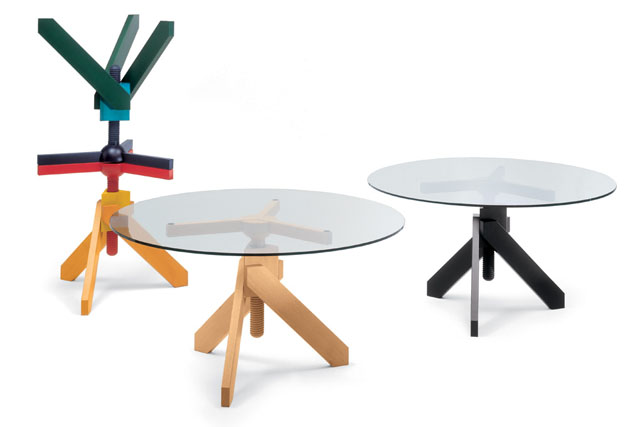
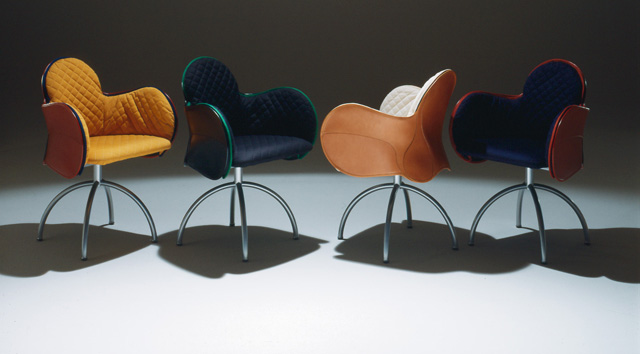
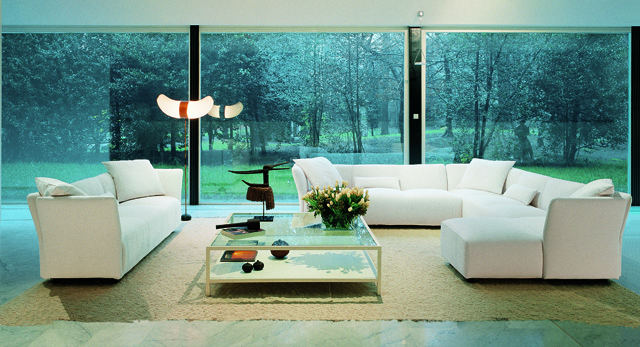
Vidun by Vico Magistretti (1987) | De Padova
Vico Magistretti, along with Joe Colombo, Gio Ponti and Achille Castiglioni, is one of the best known Italian designers worldwide. After attending the Faculty of Architecture at the Regio Politecnico of Milan, between 1943 and 1944, he studied at Lausanne in Switzerland. Later he returned to Italy and, in 1945, he graduated in architecture. He began working with his father, the architect Piergiulio Magistretti. But it was at the Milan Triennale he caught the eye, particularly in editions VIII and IX when he got the first Gold Medal. His creations are timeless and even today they remain updated. To talk about the rigor of his work is to go back in time. Back to historical events that shaped the course of design, such as the great exhibition "Machine Art," organized by the young architect Philip Johnson at the Museum of Modern Art in the USA and that contributed to creating the idea of rigor in Bauhaus design. [1]
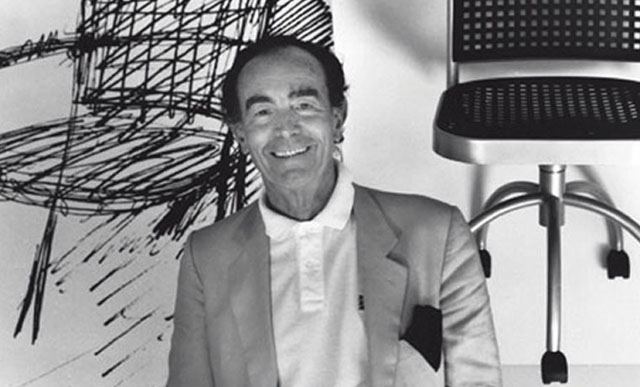
Vico Magistretti
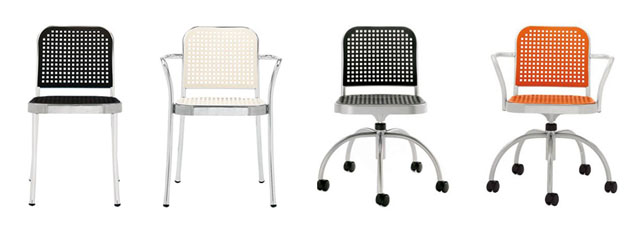
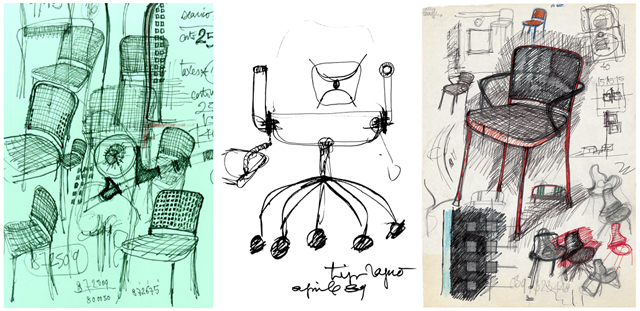
Silver by Vico Magistretti (1988) | De Padova
For their particular formal quality, certain objects deserve to be considered exemplary (referenced by Bauhaus). In the catalog of this exhibition, one could read: «Useful objects […] chosen for their aesthetic quality», written by himself curator Philip Johnson, who speaks of a conscious design, as opposed to styling (and streamling) where there is no rigor but only aesthetics. The exhibition featured machines, tools, machinery parts and components, scientific instruments, household items, furniture (among these Breuer’s chair and footstool). He has shown the world the way to go, the rigor that design should have. The exhibition also contributed to spread the ideals of Bauhaus across the world. Thus justifies that rational and purist design would have so many enthusiasts in the period immediately after the war.
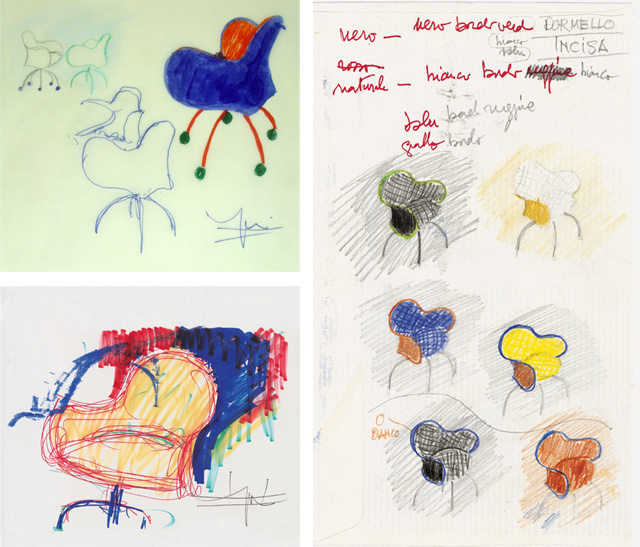
Incisa by Vico Magistretti, Centro Design Binfaré (1992) | De Padova
According to Teixeira Coelho (1995), [2] modernity promoted union attempts between art and industry, art and machine, and further, art and technique. This process, though lengthy and contentious, sought harmony between the artistic product and industrial output. The omnipresence of art characterized the aesthetics aspect of modernity and was one of the decisive factors of design’s conformation. Functionalism was decisive for the understanding of modernity. Reason, the only way for the emancipation of societies and also the elimination of economic and social contradictions resulted in functionalism. The aesthetic aspect would depend solely on the utilitarian aspect.
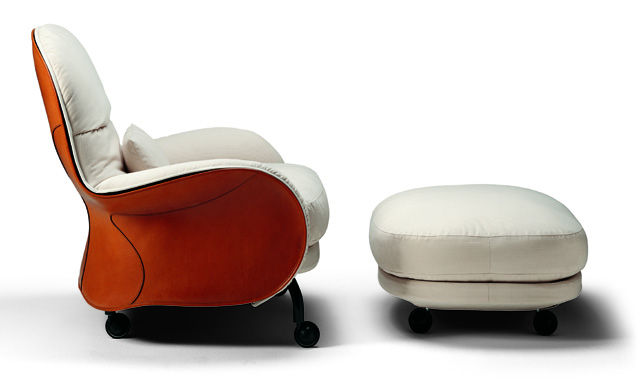
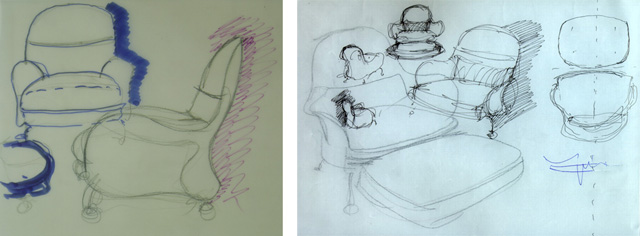
Louisiana by Vico Magistretti (1993) | De Padova
Later, post-modernity liberated design from the old paradigms and started designing for people instead of designing to Man. [3] It was with postmodernism that aesthetic values dissociated from political and ideological factors, as well as industrial technology. With postmodernity, design frees itself and begins to explore aesthetic appearance and to value beauty. There is a call to irony, historical references, and sometimes a valuation of ordinary. The flexibility of new styles and visual culture allows the designer to be more free and instinctive. It is in this context that Vico Magistretti stated in design, influenced by illuminist and universalist values. The transition from modernity to postmodernity has made design reborn again. The old dogmas were repudiated and new alternatives were sought, plural and contextualized. This change was supported by technological innovations and social diversity, but for Vico Magistretti the rigor of design remained.
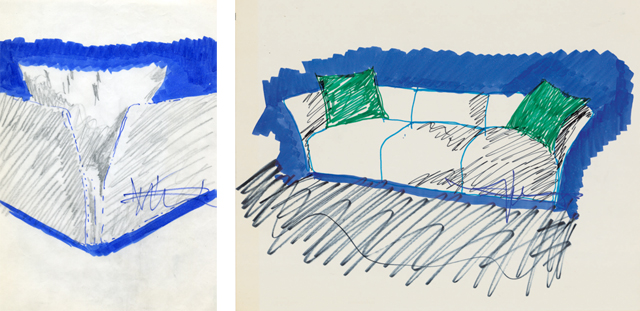
Tuareg by Vico Magistretti (1994) | De Padova
Within this context, arises in the 50s the restricted group of Italian architects called "third generation" and from which Vico Magistretti was part. This was the period of the Cusano Milanino Town Hall (1966-1969) Milano-San Felice neighbourhood (1966-69, working with Luigi Caccia Dominioni), the house in piazza San Marco (1970-73); and it is also when he was awarded a Golden Compass for the Eclisse lamp (1966), Atollo lamp (1977, prize awarded in1979) and Maralunga sofa (1973, prize awarded in 1979). This was also when he started working with important companies, such as Artemide, Campeggi, Cassina, De Padova, Flou, Fontana Arte, Fritz Hansen, Kartell, Olivari, Oluce, Poggi, Schiffini Mobili Cucine, and Gebrüder Thonet Vienna.
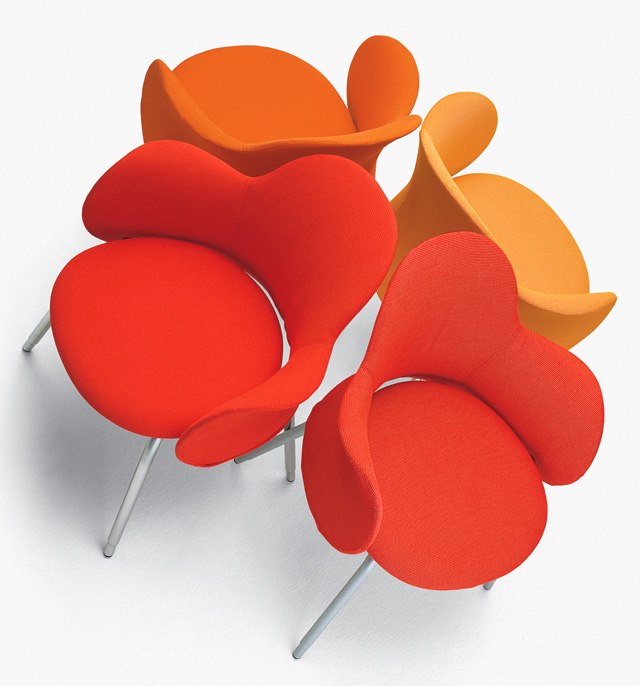
Flower by Vico Magistretti, Patricia Urquiola (1996) | De Padova
Today, his creations are exhibited in permanent collections of some important international museums such as the Moma in New York.
More information at: www.dimensaonova.com
[1] Maldonado, T. (2006) Design industrial. Lisboa: Ed. 70
[2] Teixeira Coelho, J.(1995) Moderno pós-moderno. São Paulo: Editora Iluminuras.
[3] Harvey, D. (1992) Condição pós-moderna. São Paulo: Edições Loyola.