


The European Prize for Public Spaces
Get to know more about the six winning entriesImages via CCCB

|
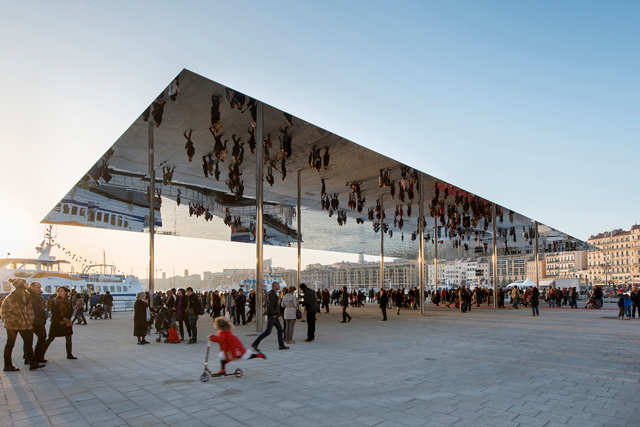
Coverage over the new port | Design by Michel Desvigne and Norman Foster
Out of the 25 finalists, 6 transcended the competition for the European Prize for Urban Public Spaces.
It was a competition of projects that envisioned equality, plurality and progressive ideas for different European cities.
A great portion of society's problems are expressed in public spaces: segregation, unregulated construction and the housing crisis that originated most of our economic problems of today. This bianual event seeks to incentivize creation, recuperation and innovation in public spaces as a way of contributing for a better civic and urban sense for Europe.
The prize consisted in a diploma and a plaque to add near the works themselves.
274 projects on 30 different countries participated, resulting in 25 finalists. Out of these finalists two winners and four honorable mentions were selected by the jury composed of elements from 6 different institutions that participated in the organization of the event.
The due date was the 30th of January and the results were published on the 25th of April. In that same day, the prices were given at the Center for Contemporary Culture of Barcelona.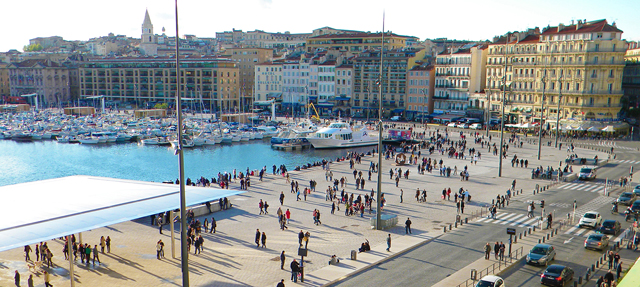
Old port renovation | Design by Michel Desvigne and Norman Foster
Even though Marseille is the second most populous city in France and the oldest, it's port has not been the city center of maximum interest that it could be.
This old port was founded by the Greeks in the year 600 a.C. and survived until nowadays as the biggest urban port in Europe.
On the other hand, this port did not have public access until 2009, when this intervention took place.
80% of the port area was out of bounds for he public, only automobiles and yachts could enter.
It's restructuring in 2009 was part of a competition sponsored by the City Council and the Marseille Provence Métropole institution which generated a process of multiple phases, starting with the removal of obstructions for the public and car lanes from the three main entrances to the port along with new pavement in clear and rugged granite. Floating docks were created to clear up the views and pedestrian flows and a 1000 square meter shade was made.
Attending to the different requests from its inhabitants, businessman and local associations, the port has recovered it's leisure, economic and community activities - revitalising it and opening it up to the public again.
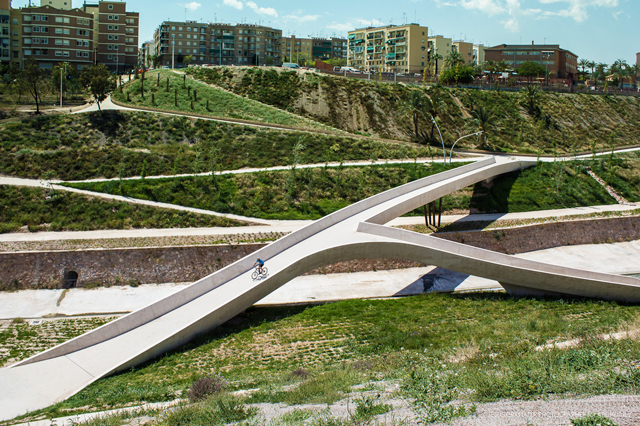
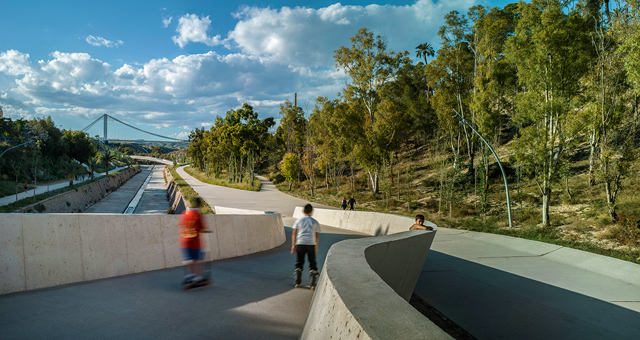
The Braided Valley | Design by Grupo Aranea
Over the Vinalopo river, in the town of Elx over at the southeastern spanish coast, you may find the second winner of this contest.
After several years of floods and landslides from this river, the sides became unpassable. Thus came the need to transform it into a water canal - an unfortunate barrier that divided the city.
The aranea group came up with a project to mend this at the request of another contest in 2009 by the Elx City Council.
The original request was to reunite both sides of the canal as a 3 kilometer long park by the sides of the river.
This had several phases planned and in this great ambition arose the work known as The Braided Valley - a series of paths that intersect themselves whilst crossing over the river.
As politics changed, so did the project.
All of these ambitions did not pass beyond its first phase and wasn't even officially opened, but the public made it their own.
Indigenous trees were planted and structuring elements of concrete were erected in such a way of impressive craftsmanship, engineering and architecture that it became an emblem of the City.
In the hope of finally finishing this project beyond its first phase the jury decided that the project for the Vinalopo river needed all the attention it truly deserves!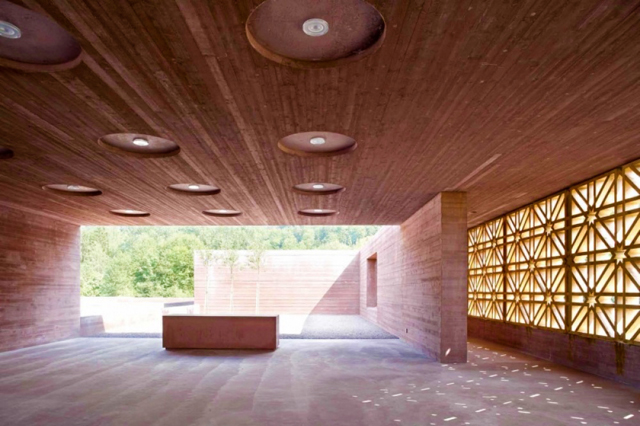
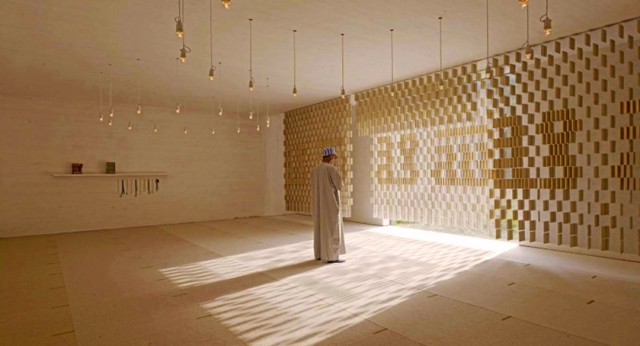
The Islamic Cemetery of Altach | Design by Bernardo Bader Architects
The Islamic cemetery of Altach is the second Islamic faith cemetery made in all of Austria.
As a work of impressive symbolism and contemporary architecture, it is not a surprise that it as deserved a honorable mention.
Its spaces were designed according to the guidelines of its faith, combined with the woodworking tradition of this region.
The most astonishing abstract geometric patterns can be found all across this project.
These abstract patterns reflect Islamic art and surround the big outdoor patio, protected by the 6 spaces around it.
Its openness and minimalism make this public space a unique work of inclusion and reflection for all.
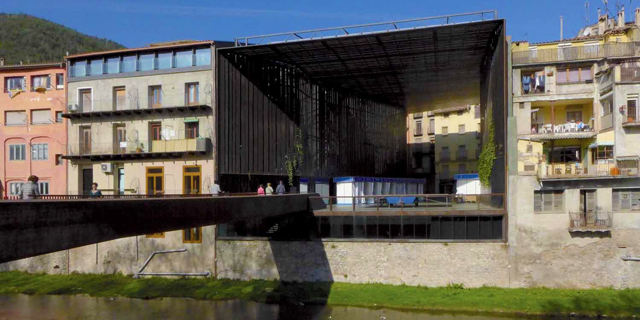
"La Lira” Theatre in Ripoll, Spain | Design by RCR Aranda Pigem Vialta Arquitectes
In 2003, the Ripoll City Council made a contest for a space made thanks to the demolition of the old La Lira theater.
The result was a new La Lira open air theater with a metal terrace that shades its visitors and its diverse multipurpose spaces underneath.
Although its coverage is rainproof, it lets the light pass through, creating a comforting pattern that opens as a window towards the views of the river and the mountains of the region.
Besides its visual connection, a physical connection was made with a bridge that crosses the river Ter, giving access to the historical city center.
In contrast with the old facades of the surrounding neighborhood, the cities metalworking spirit reflects itself here in the multiplicity and variety of metal treatments used.
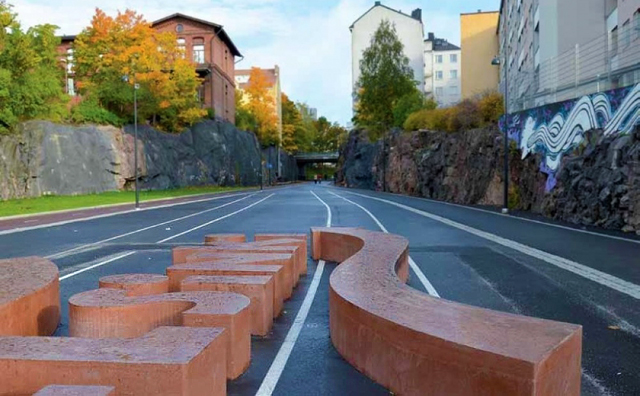
Baana: Pedestrian | Design by the Department of City Planning of the City of Helsinki
Banna is an intervention of utmost intelligence and and delicate intervention in the city of Helsinki.
The department of city planning transformed a limit imposed by an old railway in the city, reforging it as an urban public pathway.
The concept is simple: the transformation of a closed down pathway for the transport of goods, into a pathway for the transportation of people without the need for big infrastructures!
Even though the path exists since 1894, in it genesis as a railway that fed the ports and Finnish industry, only recently in 2012 it opened itself to the public, recycling an axis of the city for all kinds of community uses.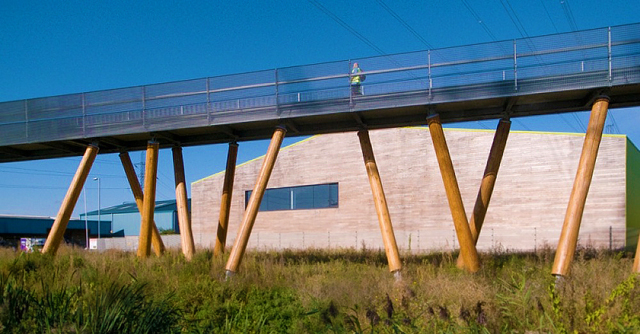
Opening of the Rainham Marshes | Design by Peter Beard
The Rainham Marshes are in the eastern limit of London as the biggest river basin north of the Thames river.
After considering its proximity to one of the biggest cities in Europe, it's astounding to note how the natural presence makes a stand in this location!
The objective of the project was the opening of this area to the public and its preservation as a space of unaltered nature.
The rare species of plant life and migratory birds give livelihood like no other to the place. It works as a way draw a breath of fresh air and escape from the city!
Its projects like these that remind us that the city is not only its center, but of all its parts - even its extremities and the nature that encompasses them!